Books That Celebrate Asian Heritage and Culture

Meagan Ledendecker • June 21, 2021

Over the past several months, there has been a disturbing increase in hateful actions toward people of Asian descent. Most of us watch the news in horror, and while we disagree with what’s happening, it can be hard to know what actions to take.


We believe one of the most powerful social justice actions parents can take is to instill positive values in our children. They are never too young to learn about acceptance, equity, and the beauty in humanity’s differences.


This is why we would like to share this very special book list: A Celebration of Asian Heritage and Culture. Children’s books should be both a reflection of who they are and their life experiences, but also an illuminating peek into the lives and experiences of others. No one explains this better than children’s author Grace Lin. The Windows and Mirrors of Your Child's Bookshelf | Grace Lin | TEDxNatick


Hush! A Thai Lullaby by Minfong Ho, illustrated by Holly Meade

A Thai mother and her gentle exasperation plead with various animals to please stay quiet as her baby sleeps. They stomp and shriek past her home, and she meets each one in turn asking them to hush. Finally, as the moon rises above them, she falls asleep with her head resting on the windowsill, with (of course) her smiling and wide-awake baby beside her.


Round is a Mooncake: A Book of Shapes by Roseanne Thong, illustrated by Grace Lin

Round, square, rectangle...young children love to notice shapes around them in their everyday lives. The main character in this book is no exception. A beautiful blending of her family’s heritage and their modern life, she notices shapes in traditional Asian items as well as familiar everyday items.


We Are Inspiring: The Stories of 32 Inspirational Asian American Women by Angel Trazo

Author/illustrator Angel Trazo created this book to celebrate Asian heritage while being accessible to multiple age groups. Perfect for upper elementary students to read on their own, it can also be used as a read aloud book for younger children.


Suki's Kimono by Chieri Uegaki, illustrated by Stéphane Jorisch 

Suki is so excited to wear her new kimono on the first day of school. It was given to her by her obāchan and she has such fantastic memories attached to it! Besides, it’s beautiful and it shows who she is. With her sisters admonishing her choice of attire and pretending they don’t know her the whole way to school, and with some of her classmates teasing her, Suki holds her head high and takes an opportunity to tell the story of her kimono. Her bravery and strength pay off in the end, and Suki dances her way home after school.


The Name Jar by Yangsook Choi

Unhei and her family have just moved to the United States from Korea. After an embarrassing moment on the schoolbus involving a boy making fun of her name, she tells her classmates that she doesn’t have a name and needs to choose one. They all get to work helping her decide on one, until one girl discovers Unhei’s real name. The class works together to learn to pronounce it correctly, and Unhei is finally able to feel comfortable as her true self.


The Year of the Dog by Grace Lin

A perfect book for upper elementary-aged children, The Year of the Dog is the first in a three-book series that follows Pacy, a Chinese American girl. She navigates many typical coming-of-age events that are faced by most children, while simultaneously figuring out her own identity and how it is often stretched between two worlds.


In the Year of the Boar and Jackie Robinson by Bette Bao Lord

Young Bandit lives in China with her mother, cousins, grandmother, aunts, and uncles. The only one missing is her father, who has traveled abroad to seek his fortune. One day, he sends for Bandit and her mother, who leave the family behind and make the long journey to Brooklyn. Before leaving, Bandit is asked to choose a name, and she chooses to call herself Shirley Temple. In Brooklyn, she can’t speak English and feels lost and out of place, until she discovers Jackie Robinson. Her new hero doesn’t exactly fit in either, but he inspires her to thrive in her new home.


Green Lantern: Legacy by Minh Le, illustrated by Andie Tong

This is a great option for graphic novel lovers! There are elements of adventure, superheroes, honoring ancestors, and figuring out one’s place in the world. What could be more perfect for upper elementary and early middle schoolers?


Inside Out and Back Again by Thanhhà Lai

Told in gorgeous lyrical poetry, Inside Out and Back Again is based on Thanhhà Lai’s own childhood. She and her family lived in Vietnam during the war, and were eventually forced to flee, moving across the world to Alabama in the United States. But being in a new country, with her father missing in action, is the type of challenge no child should have to face. Sadly, it is the tale of many refugees around the world and throughout history, and an important story for us all to learn from. A National Book Award Winner and a Newbery Honor book, both upper elementary and middle school students will appreciate reading this novel.


The Great Wall of Lucy Wu by Wendy Wan-Long Shang

Lucy is a Chinese American girl who is headed into the sixth grade and loves basketball. With her sister Regina heading off to college soon, Lucy is eagerly anticipating the day she can have a room to herself...until it doesn’t quite work out that way. Regina (who speaks perfect Chinese and adores every aspect of her family's customs) does leave, but their grandmother’s friend comes for an extended stay - in Lucy’s room. She expects her year to be completely ruined, but readers can expect a few surprises.
By Meagan Ledendecker February 23, 2026
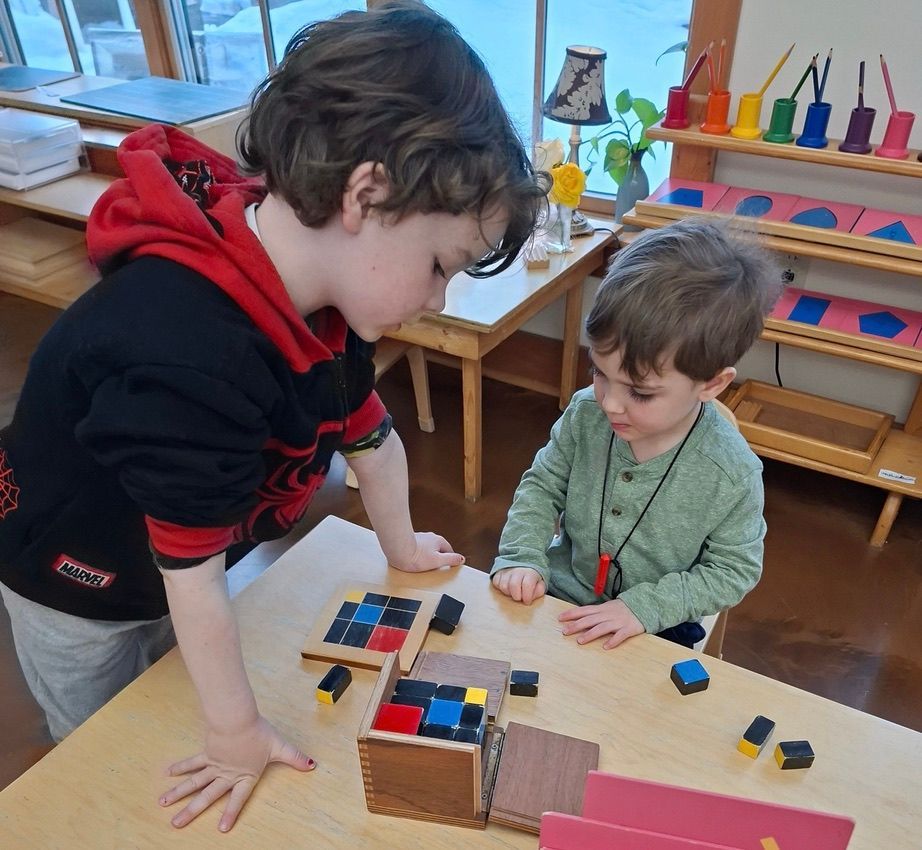
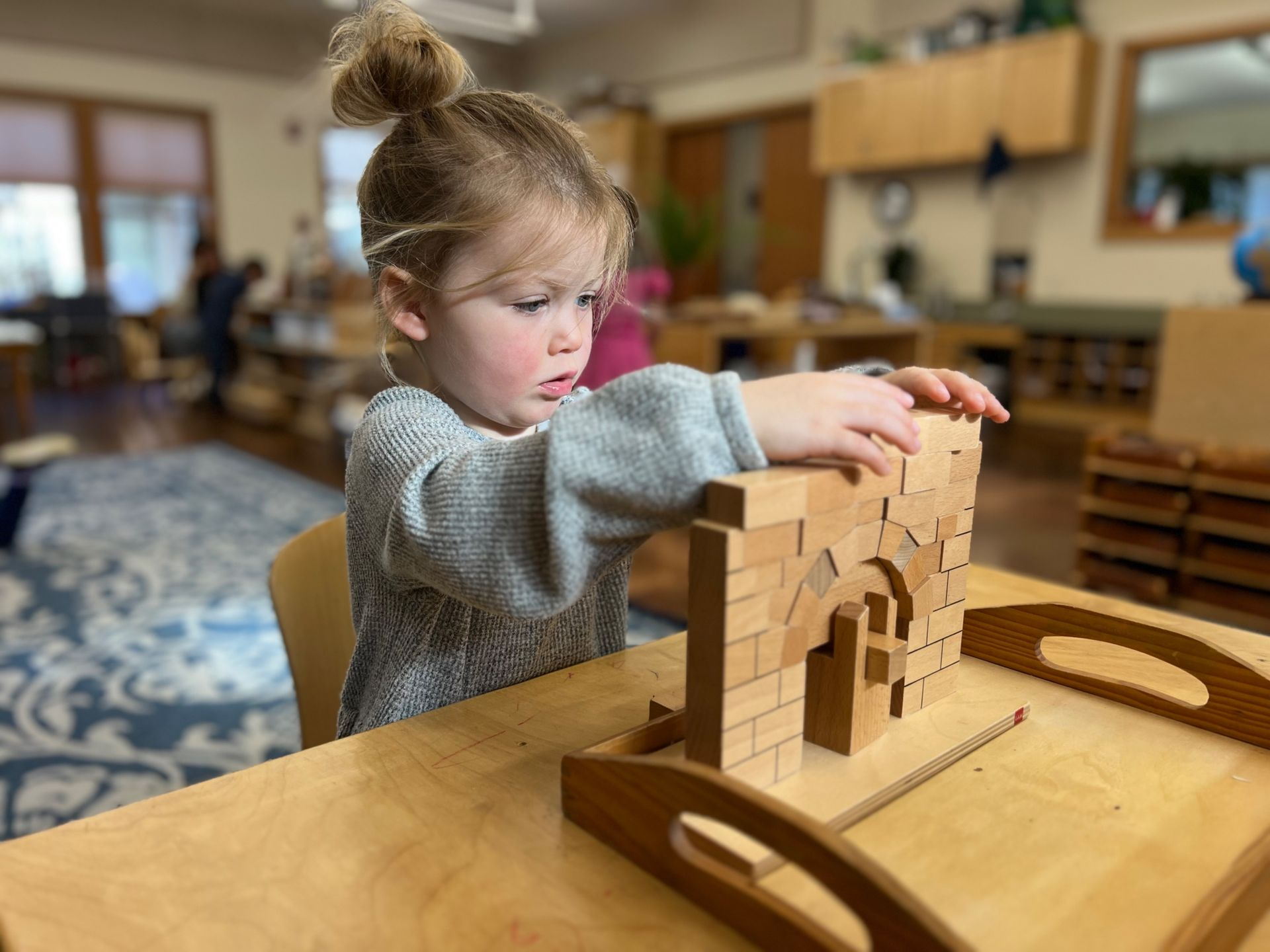
One of the quieter, less visible practices in a Montessori elementary classroom is the Child-Guide conference. You may never see it listed on a schedule or mentioned in a weekly update, yet it plays a profound role in children’s experience at school. Relationship Comes First The primary purpose of these conferences is to establish, maintain, and strengthen the relationship between the adult and each child. This focus shifts the dynamic from a teacher looking for faults or scolding about unfinished work. Rather, it’s a collegial conversation that enables children to take an active and engaged role in their own education. These connective conversations are grounded in relationship-building because when children feel emotionally safe and genuinely respected, they are far more willing to reflect, stretch themselves, and take responsibility for their growth. Every Child, as Often as They Need Montessori Guides aim to meet regularly with every child, but what “regularly” looks like can vary based on individual needs. Some children benefit from a longer, more formal conference every few weeks. Others need brief, frequent check-ins, sometimes lasting only a minute or two. These short moments might look like a quick conversation at the beginning of the morning, a gentle pause beside a table, or a quiet walk across the room together. The length of the meeting is not what matters. What is important is the message it sends: “I see you. I know your work. I care about how this is going for you.” What Happens in a Child-Guide Conference? While conferences vary based on each individual and the moment, they often include: The child bringing their learning journal or work (finished and unfinished) The guide bringing observational records A shared look at what has been accomplished Gentle reflection on what still feels unfinished Planning for what might come next Scheduling new lessons or presentations Support with larger projects: breaking them into steps, mapping timelines, imagining the finished product This collaborative time also provides an opportunity to experiment with new strategies (“Would you like to try creating a prioritized list?”), celebrate successes (“You worked so hard on your presentation! How did it feel to share your work?”), and reflect upon challenges (“It seems like you’ve been feeling a bit stuck in your research project. Tell me more about what is going on.”). Learning to Define “Finished” One of the most freeing lessons children learn in Montessori is that not every piece of work must be finished to an adult’s standard. Sometimes children accomplish exactly what they set out to do, and continuing would add nothing meaningful. Other times, interest has naturally ended, and letting go is healthy. This is not about lowering expectations. It is about honoring children’s internal sense of completion and learning when to release what no longer serves a purpose. Trusting Children’s Self-Assessment A cornerstone of these conferences is trust. Guides listen carefully to how children assess their own work and articulate their goals. When an adult truly accepts children’s self-assessment, something powerful happens: children begin to see themselves as capable, thoughtful, and worthy of being taken seriously. Children often receive more from the tone and sentiment of these meetings than from the actual content discussed. The Whole Child Matters Because Montessori education is concerned with the whole child, conferences may naturally move beyond academics. A Guide might gently offer support with social dynamics or ask about recent struggles during outdoor time. These moments provide a safe space for children to reflect on their own social, emotional, and physical development, and to recognize that there is a network of support. When Relationships Need Repair Even in the most thoughtful classrooms, relationships can become strained. What matters is how adults respond. It is never too late for a Guide to sit with a child and say, honestly: “I’ve been thinking about how we’ve been interacting recently, and I’d love to brainstorm with you about what I could do differently.” When an adult takes responsibility, without demanding the child do the same, something shifts. Trust begins to rebuild. Real dialogue becomes possible. Children learn from this modeling. In time, after they feel safe, they often step forward to take responsibility themselves. What Children Are Really Learning Through these quiet, intentional meetings, children learn that:  their thoughts and feelings matter, adults can be trusted, mistakes are part of growth, reflection leads to independence, and relationships can be repaired. And while these conferences may happen quietly in a corner of the classroom, their impact echoes far beyond it. This is true preparation for life. To learn more about the long-term benefits of Montessori, visit us here in Lenox, MA!
Image of a preschool aged student sitting on the floor with a moveable alphabet
By Meagan Ledendecker February 16, 2026
Explore how Montessori children learn to write through sound work, movable alphabet exploration, and a joyful, developmentally prepared process.
Image of two parents with two children hugging their children after school
By Meagan Ledendecker February 9, 2026
Learn why children need quiet decompression after school and how a “quiet landing” supports regulation, connection, and meaningful conversation.
Image of three elementary students sitting at a table with red equivalence shapes set in green frame
By Meagan Ledendecker February 2, 2026
Discover how Montessori geometry introduces equivalence through hands-on exploration, helping children build deep understanding of area, fractions, and mathematical reasoning.
Image of three elementary students holding a triangle of rope between them
By Meagan Ledendecker January 26, 2026
Explore the Montessori story of geometry’s origins, from ancient Egyptian rope-stretchers to modern classrooms, inspiring children’s wonder and curiosity.
By Meagan Ledendecker January 19, 2026
A Montessori approach to understanding disrespect: why children use strong words, how adults can stay calm, and ways to protect connection over conflict.
Show More