Culturally Responsive Practices: An Interview

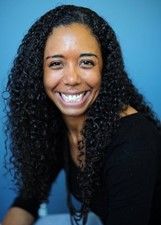
Allison Jones is a primary- and elementary-trained Montessorian with 20 years of experience, including teaching, coaching, special education, school administration, bilingual Montessori, and DEI in school settings. She holds an M.Ed. from Loyola University. Her passion is ensuring that Montessori is implemented in a way that serves all children and is rooted in each child's identity and community. Allison recently shared a bit about her journey to culturally responsive teaching in a Montessori context.
To support our children most effectively, it seems like we, as parents and caregivers, need to make our own cultural lens visible. How do you recommend starting this process?
Making our cultural lens visible is actually the first step for everyone, no matter our background. One of my favorite authors in the education space is Zaretta Hammond who wrote Culturally Responsive Teaching and the Brain. She says that culture is the way the brain makes sense of the world. We all come from a cultural background. We all come from families who told us things about the world.
One of the things my mom did when I was a child was to always tell me that brown was her favorite color. She would call it beautiful, warm brown. As an adult, I realized she was actually purposefully counteracting the messages I was getting from the rest of the world. So that is a piece of cultural messaging from my mom that I really, really appreciate and stand behind as an adult.
On the other hand, my mother would always say “put your knees together and sit like a lady.” As an adult, I can question what sitting has to do with gender and also what sort of expectations are we reinforcing. My thinking brain knows that, but every time I sit down and my knees are spread, my mother’s voice still comes into my head. Sometimes I listen to it and sometimes I don’t, but it is something that is so deeply ingrained in me.
Our cultural lens and cultural background are like that. They are all these tiny things engrained into us: how close we stand to someone, what voice to use in different settings, and how much time to leave until someone else is finished talking. Many of these are harmless or cause mini-misunderstandings. But others can be actively harmful depending upon what your family or society has told you about what makes people intelligent or the characteristics of people of different races and genders.
Some frameworks present this cultural awareness as an iceberg. There is the tip of the iceberg above the water, like the language we speak and the music we listen to. Then there is the part below the surface of the water, which is largely unconscious.

This is the unconscious basis upon which we make decisions. It is the work of a lifetime to uncover those many unconscious factors.
So when we realize those unconscious assumptions that are part of our own cultural lens and cultural background, it allows us to judge situations with more clarity and to allow for different perspectives. For teachers, families, and all humans in the world, we can’t necessarily do this work by ourselves. We can do a lot of reflection by ourselves, but we need a coach or outside view to help us see those unconscious aspects.
You have done a lot to support culturally responsive practices. What led you to this work?
Part of this is based on my identity characteristics. The other is that my journey in Montessori was a little different from what other folks have experienced.
I started as a Montessori child at a school in Metro Detroit that was about 80% Southeast Asian and South Asian, with a smattering of white kids, a smattering of black kids, and some Middle Eastern kids. It was very diverse and I was a minority, but in a different way than has been true for the rest of my life.
As an adult, I took Montessori primary training in France where we had a very international cohort of folks. Then I worked with a woman from Côte D’Ivoire to open a school in Senegal. It wasn’t until I came back and did my elementary training at the Washington Montessori Institute [in Maryland], and heard other people talking about their Montessori experiences, that I realized how different my experience had been.
As a black queer woman within the Montessori space who had a childhood Montessori background where I was both represented and not, it was always sort of immediately obvious to me that children need to feel socially and psychologically safe and see themselves represented in environments, in order to learn and grow.
Although Maria Montessori originally founded this pedagogy in a homogenous society in Italy in the 1900s, I believe that the philosophy itself is meant to be adapted to and reflect the identities of the children, families, and community in which it is seated. So I feel it is really important that we actually do that, which is adult work.
Will you share a little more about how this is adult work?
It is really fascinating that the education world is so focused on children and what children do. Are they doing enough? Are they learning enough? Are they doing the right things?
As Montessorians, we know the prepared environment and prepared adult are the foundation of children’s experience. If something isn’t going right, we first look to the environment and then we look to ourselves. We also need to take an additional step back and look at who we are and what we are bringing into the environment.
When we are talking about making sure classrooms are culturally responsive and reflect the experiences of the children who are in them, it is easy to talk about this as window dressing. Are your books diverse? Is your art diverse? Those things are important. Yet it’s really about having a strengths-based lens, examining our own biases, and understanding that in order for children to grow we need to be really individualized when understanding their strengths and building their abilities.
This is work that adults need to do on themselves. It isn’t about what the children do or how the children learn. It is about the adult figuring out where they are seeing clearly and where they aren’t, what knowledge they have and what knowledge they don’t have.
We need to be okay with being in that growing and learning space, which can be hard because it requires dismantling a lot of unconscious beliefs that everyone holds.
Do you have recommendations for how adults can start some of that work, for ourselves and with our schools?
For adults, this work starts with reaching out and doing research. We, as human beings, tend to be afraid of what we don’t understand. Researchers say that this is biologically programmed into us as a defense mechanism. So part of it is just figuring out what are the facts and learning what is true. There are a lot of organizations that lead folks in this work and help bring information into your environment that actually widens your perspective.
This answer is also different for folks who are and aren’t in the global majority. For folks of the global majority, especially in the United States, often perspectives that are outside of our own are just part of life all the time. It’s not something we can avoid. Whereas if you are white or have other majority identities, you need to actually take steps outside of the world where most of the folks around you share your identities. Find out about considerations that are super present for other folks but not for you.
To partner with schools, be an advocate, but also understand that everyone is on a different part of their journey, including schools. A lot of schools are trying to figure out how to best support all the children in their care, which goes beyond race and includes gender, sexual orientation, different types of families, ability status, and citizenship status. There is a lot of work that needs to be done.
While the onus shouldn’t be on the person or family experiencing discrimination or not getting an equal experience, it is also important to be an advocate for your child. I see a lot of families, especially families who are multilingual, or who are from under-resourced communities, be less vocal when things go wrong. So I would say advocate.
There are folks out there that provide support. There is a great resource from Learning for Justice called Speak Up at School. They have a whole packet with four strategies for how to respond when you see injustice. It also talks about the difference between calling folks in and calling folks out, and when you make a decision to do each.
The other thing I would recommend to families is to spend time with teachers and spend time in the classrooms. Also, know that Montessori is a hard way to teach. It is a lot easier to have all the children doing the same thing at the same time. Teaching in a methodology that focuses on individual work, builds up children’s intrinsic motivations, where every child in the classroom might be working on something different and at different levels and at all kinds of different places, and where we are trying to build children’s ability to interact with a minimal amount of adult support in like a microcosm of society – that is not small work! So Montessorians are often hesitant to include other adults in that practice.
That being said, I believe that Montessorians need to do a better job of explaining to families the why of what is going on and providing deep and thoughtful opportunities for families to engage with their children’s learning and with the co-creation of curriculum.
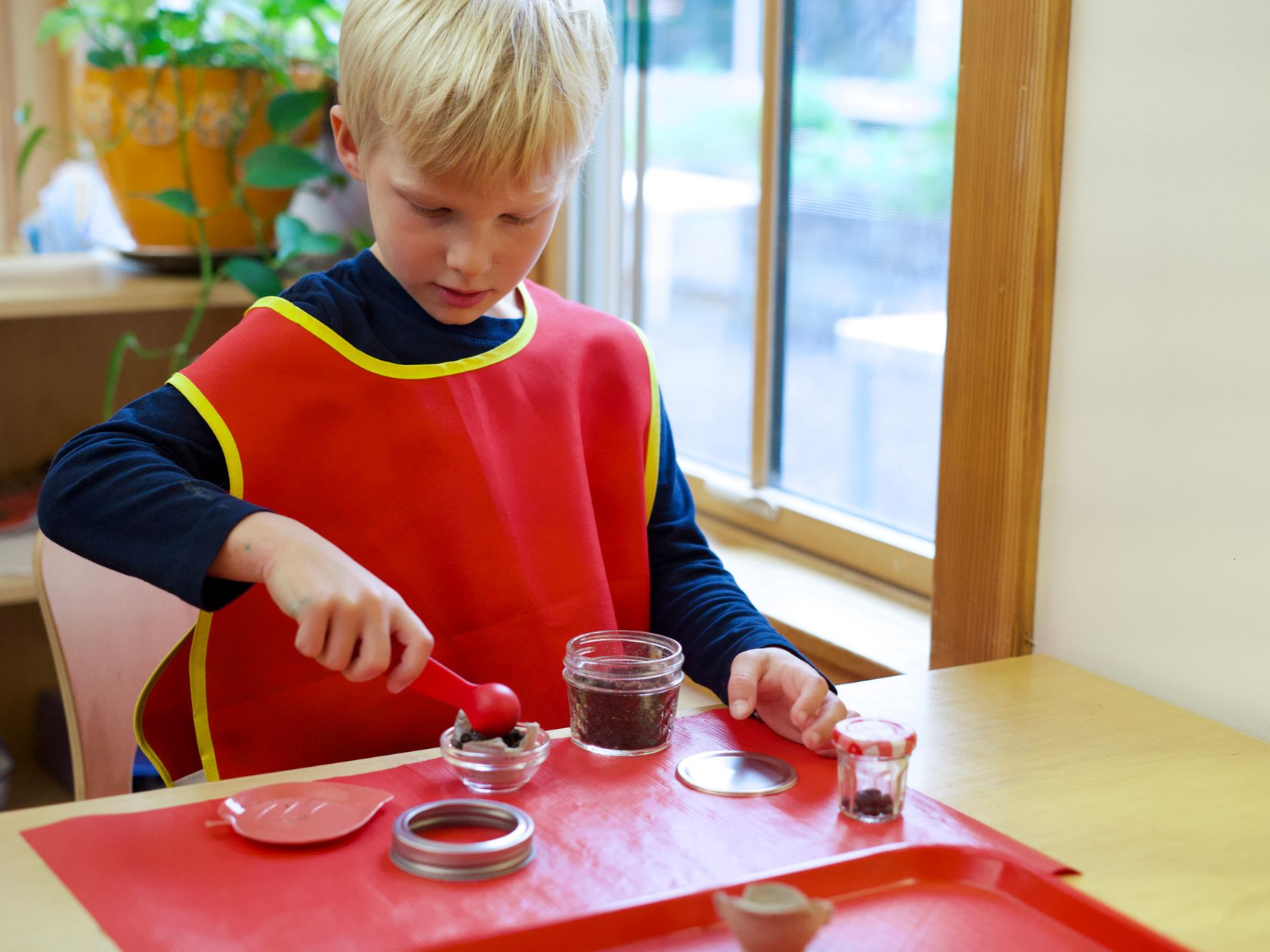
There are some parts of the Montessori curriculum in which families can have a huge contribution. One example in the primary classroom is practical life. The practical life curriculum is meant to reflect children’s activities in their own homes. So a way families can engage is to offer classroom experiences, like providing small group cooking or showing how to do different activities from home. For example, some cultures use upright mops while some use floor cloths. Sharing some of those activities with the classroom allows both your child’s identity to be reflected and other people’s eyes to be opened and perspectives broadened. So that is one clear opportunity where families can interact to co-create the curriculum.
In elementary, another place for collaboration is the history curriculum where children are learning about how people satisfy their fundamental needs. Families do this in different ways. This is a great opportunity for families to be interviewed, explain ways they do things at home, talk to children about what they celebrate and why, and share their traditions. This helps children learn about different customs.
When it comes to children and their identities and feeling comfortable, unfortunately, it often falls on families to get ahead of that in some environments. For example, family members might come in to read a book about adoption or work with the teacher to coach their child about talking about adoption. We can help children who have started gender transitions to lay the groundwork for that awareness or support children on the autism spectrum who at some point want to explain to friends how their brains work. Families can lean in to help educators grow and to make sure their children have a safe space in school.
Knowing there is work that needs to be done collectively, what resources would you share to help folks along their journey?
That depends on how you learn! For some, reading is the first step. There are book lists out there and some have little workbooks. One wonderful resource is Collectively Renewing Montessori: An Invitation.
For some, watching or listening is the first step. There are podcasts, Instagram reels, and YouTube videos to watch.
For some, conversations are the first step. What I would not do is go up to your nearest person of the global majority or non-binary person, and say, “Hey, can you tell me about your experience?” That is a little tiring for them.
Find places where folks are already having these conversations. There are free groups in many cities and online where folks get together for discussions and to do social justice work. Embedding yourself in those communities widens your lens. There are also actual classes and organizations, like Embracing Equity or Crossroads, that support folks in this work.
Those are first steps, yet this is work that takes a lifetime. There are a lot of facets to it. Talking the talk and walking the walk are different. This isn’t about learning and saying the right things. It is about developing our lens for analysis. We are all continually learning. Have the willingness to do your own work and examination. Continue to reach out with a lens of curiosity and inquiry.