More Than a Method: Honoring the Legacy of Dr. Maria Montessori
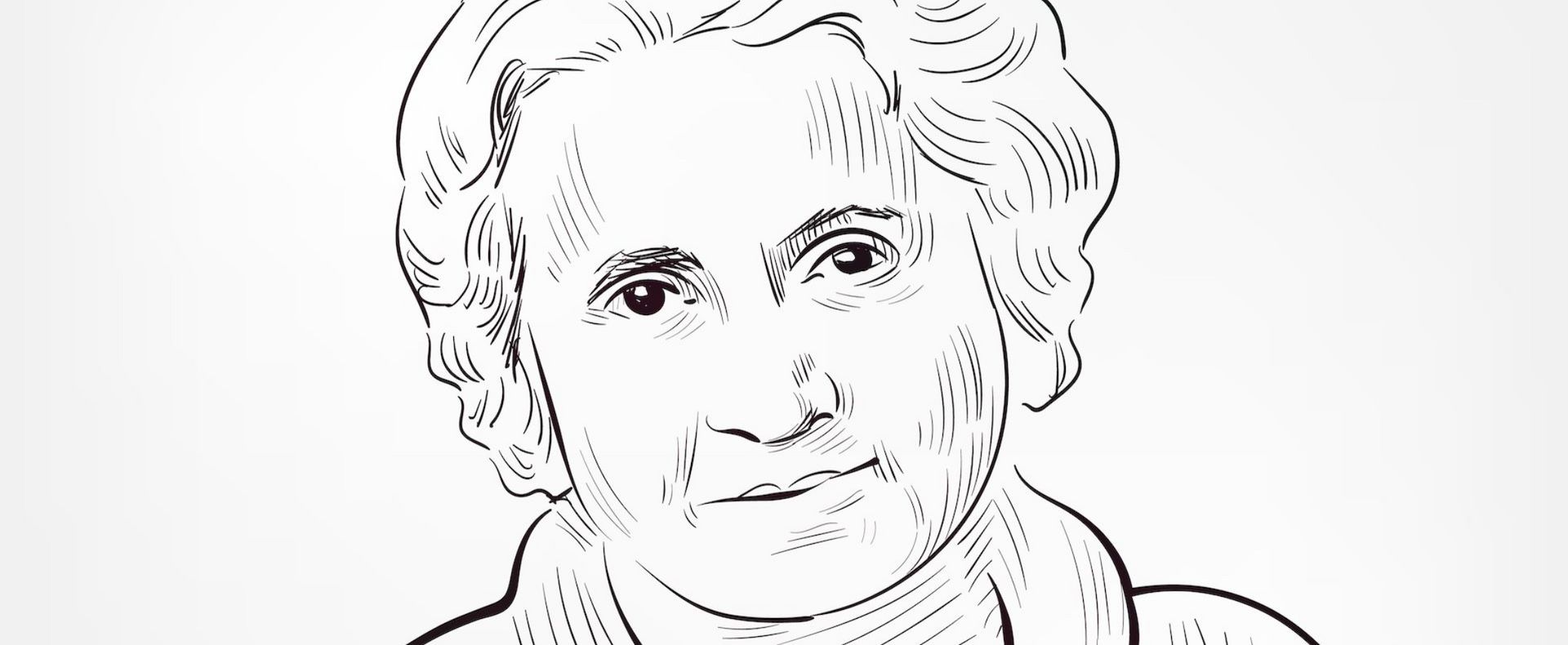
August 31 marked the birthday of Dr. Maria Montessori. Thus, we want to take time to honor the roots of this movement, the visionary contributions of Dr. Montessori herself, and our shared responsibility to carry her legacy forward.
At the heart of Montessori education is a deep respect for human potential. Unlike traditional models that begin with the adult's idea of what a child should learn, the Montessori approach emerged from deep observation and genuine curiosity. Dr. Montessori did not set out to create a new educational system. Rather, she observed children with scientific curiosity and developed an approach in response to their needs.
It’s important to remember that Dr. Montessori was first and foremost a scientist. She was one of the first female physicians in Italy, graduating in 1896 with a specialization in pediatrics and psychiatry. In her medical practice, she encountered children who were often seen as uneducable. However, rather than accept this assumption, Dr. Montessori looked closer.
A Discovery That Changed Everything
In 1900, Dr. Montessori was appointed director of a university program for children with developmental delays. Observing their sensory-seeking behaviors in bleak institutional settings, she began studying how sensory experiences affect cognitive development. She designed hands-on materials and engaged the children in purposeful activity. The results were stunning: children who had been dismissed by society not only improved, but some went on to pass the same standardized exams given to their peers in traditional schools.
Dr. Montessori’s response was not one of self-congratulation. Instead, she challenged the broader education system, asking: If children with significant delays could thrive when given the right environment and tools, why weren’t typically developing children doing better in school?
This question launched a lifetime of work dedicated to understanding and supporting the natural development of all children.
The Birth of the Montessori Method
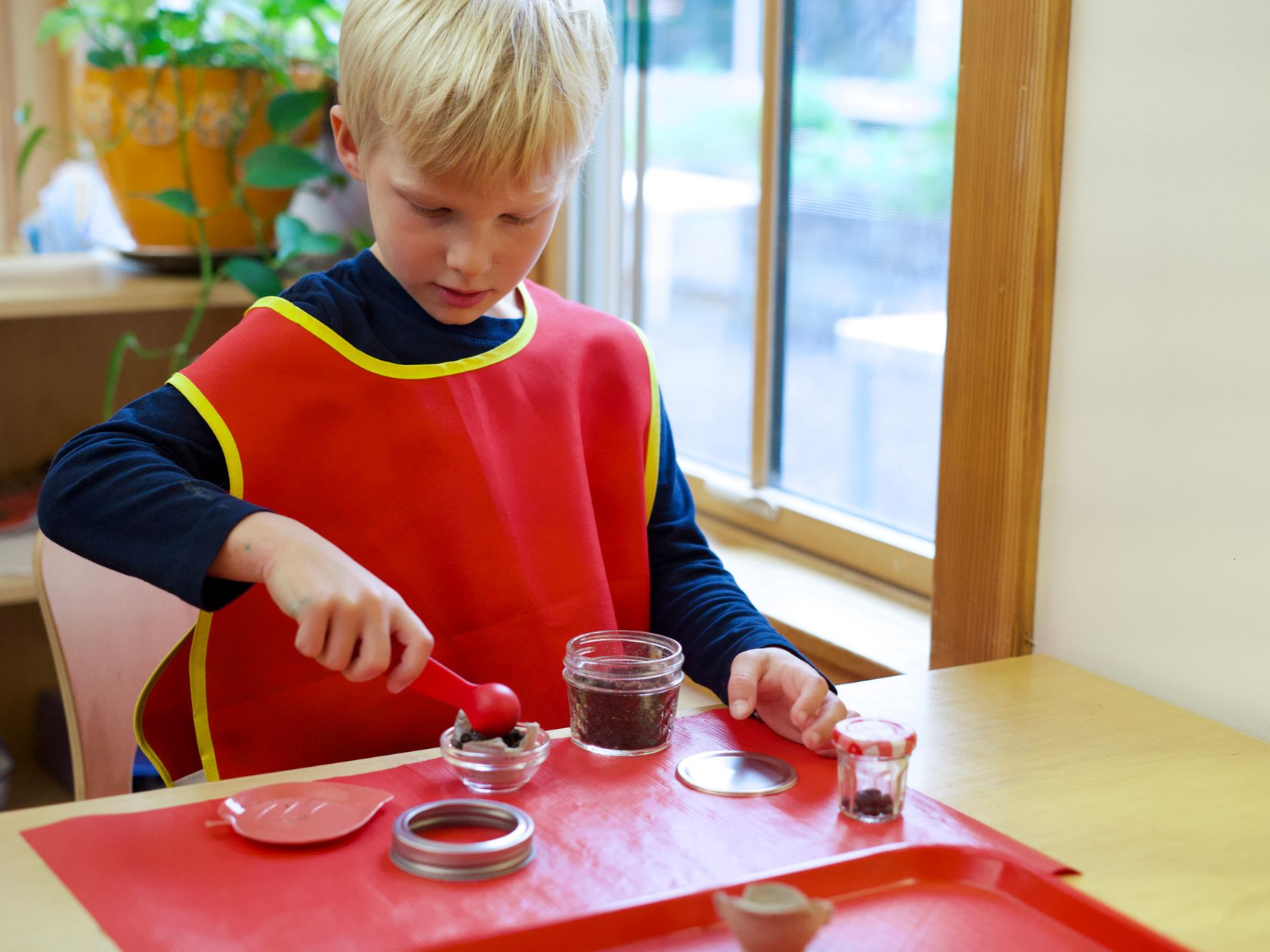
In 1907, Dr. Montessori opened her first classroom, the Casa dei Bambini, in the working-class neighborhood of San Lorenzo in Rome. Tasked with overseeing daycare for children too young for public school, she began by introducing simple, practical activities, starting with self-care and environmental care. She also provided an array of materials designed to engage children’s hands and minds.
The transformation was extraordinary. Children who had previously been described as wild and unruly became calm, focused, and joyful. They took pride in their appearance and their surroundings. They concentrated for long stretches of time, developed social awareness, and, unprompted, began asking to learn how to read and write.
Dr. Montessori was fascinated by what she called “spontaneous discipline” and the deep love of work she observed in the children. Through observation and experimentation, she continued to refine the materials, the environment, and the adult's role.
Education Rooted in Development
What emerged was a revolutionary approach: an educational philosophy based on the science of human development. Rather than seeing the adult as the source of knowledge and the child as an empty vessel, Dr. Montessori recognized that children come into the world with innate potential and a deep drive to learn.
Montessori education supports this natural unfolding by honoring what Dr. Montessori called human tendencies, such as exploration, orientation, order, communication, work, and repetition, through carefully prepared environments that meet the specific needs of each developmental stage. The adult's role is not to instruct, but to guide, observe, prepare, and support.
This vision of human development extends beyond the individual to a larger understanding of humans as part of a cosmic web of interrelationships. In this interconnected world, every part plays a role in maintaining balance and harmony. Humans have a unique place in this system, and our role requires conscious awareness, humility, and stewardship.
In addition to fostering rich academic growth, Montessori education cultivates mature, adaptive, and compassionate individuals who are capable of making meaningful contributions to our interconnected world.
The Enduring Impact of Montessori’s Vision
Dr. Montessori eventually left her medical practice and professorship to fully devote her life to this work. She lectured around the world, trained teachers, wrote extensively, and advocated for children’s rights. She also always insisted that the focus remain on the children, not on her.
Through decades of scientific observation, experimentation, and cross-cultural study, Dr. Montessori discovered that children, when provided with the right conditions at the right time, flourish. Her insights have stood the test of time. Today, there are approximately 15,000 Montessori schools worldwide, with over 3,000 located in the United States alone.
For over a century, Montessori education has empowered children to reach their full potential—academically, socially, and emotionally. Yet Montessori is not just about individual success. It’s about building a better society.
We know that children are not just preparing for the future. They are the future. By focusing on children’s holistic development, we are supporting a generation of individuals who are more connected to themselves, to one another, and to the planet.
Carrying the Legacy Forward
Dr. Montessori’s vision asks us to do more than remember her birthday. We need to believe in children, observe them closely, and prepare environments that honor their needs. This also means that we, as adults, approach our role with humility and a sense of curiosity. Our job is to accompany children as they create the future.
In this way, Montessori education becomes not just a method, but a movement, one rooted in peace, interdependence, and the full development of the human being. Thank you for being part of this vision. Together, here in Lenox, MA, we are carrying the Montessori legacy forward, not only by what we teach, but by how we believe in the children before us. Come visit to learn more!