
From Impulse to Intention: Raising Capable, Conscious Kids
Meagan Ledendecker • July 28, 2025


In our culture, we often think of “will” in terms of willpower—gritting our teeth to do something difficult or pushing ourselves to achieve a goal. But in the Montessori approach, the will is something far more profound. We understand that, rather than being about discipline or determination, the will is the very force that propels children forward in life, guiding them from unconscious action to conscious choice.


In Montessori, supporting the development of the will is a significant part of our work. It is through this development that children become truly independent, capable of acting thoughtfully, responsibly, and with purpose.


What Is the Will?


Dr. Montessori described the will as a universal force of life. Like memory or language, it is part of our cognitive development, something we are born with and must nurture. It isn’t created. It’s cultivated. And like our muscles, the will grows stronger through repeated use and practice.


From birth, children are guided by natural instincts and unconscious drives, which create windows of opportunity in their development. Around age four or four and a half, those internal motivators begin to fade. That’s when the will begins to take over and become the children’s primary internal guide. At this stage, children start to act not just out of impulse, but from conscious decision-making.


The Four Stages of Will Development


Montessori described four stages in the development of the will:


Instinctual behaviors: These are the reflexes of infancy, such as rooting, suckling, grasping, and crying. They are unconscious and essential for survival.


Deliberate actions: Soon, babies begin to act with intention. We see this as they turn their head toward a voice or reach for a toy. These actions, while still not entirely rational, demonstrate a developing sense of cause and effect.


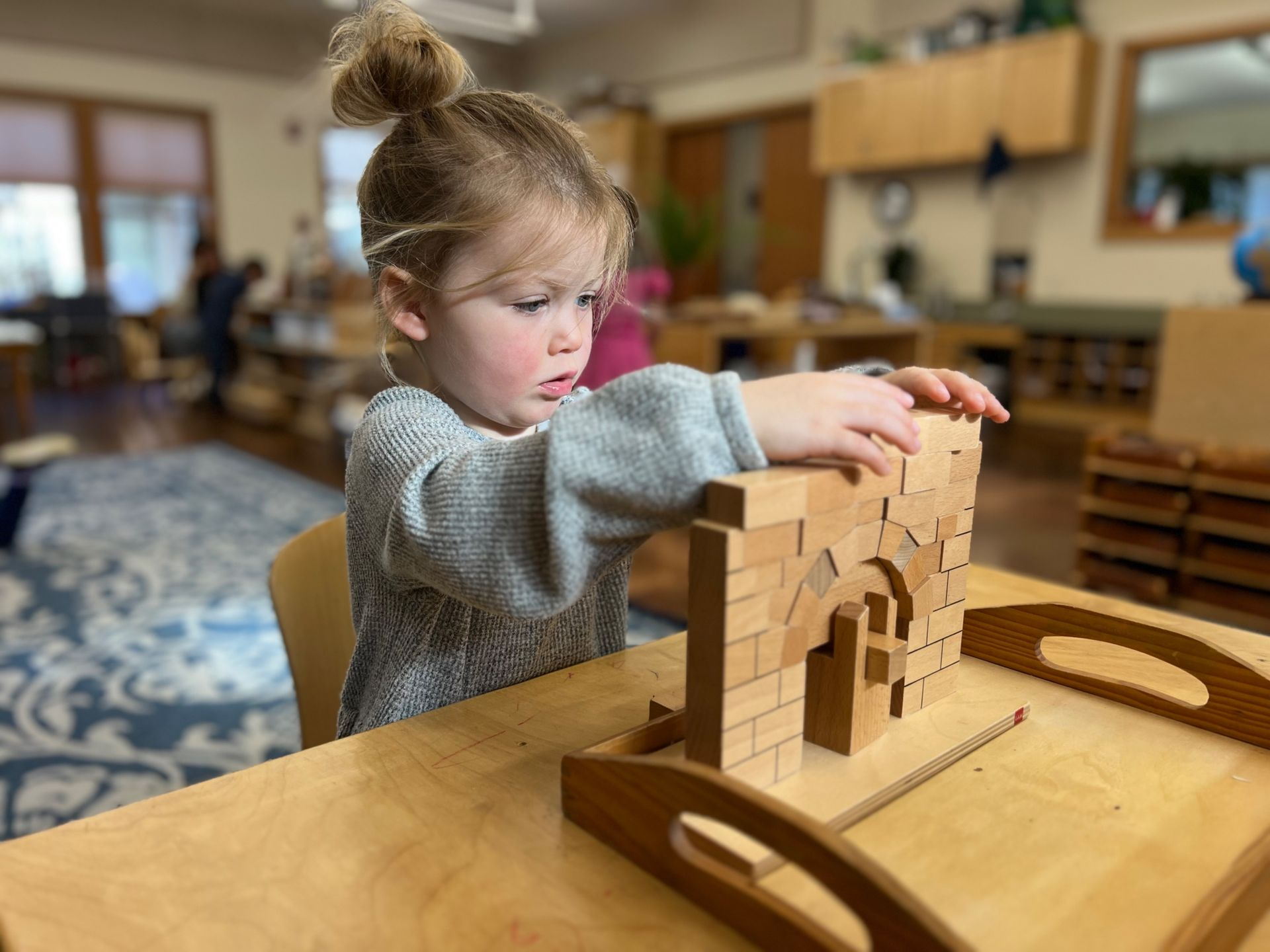
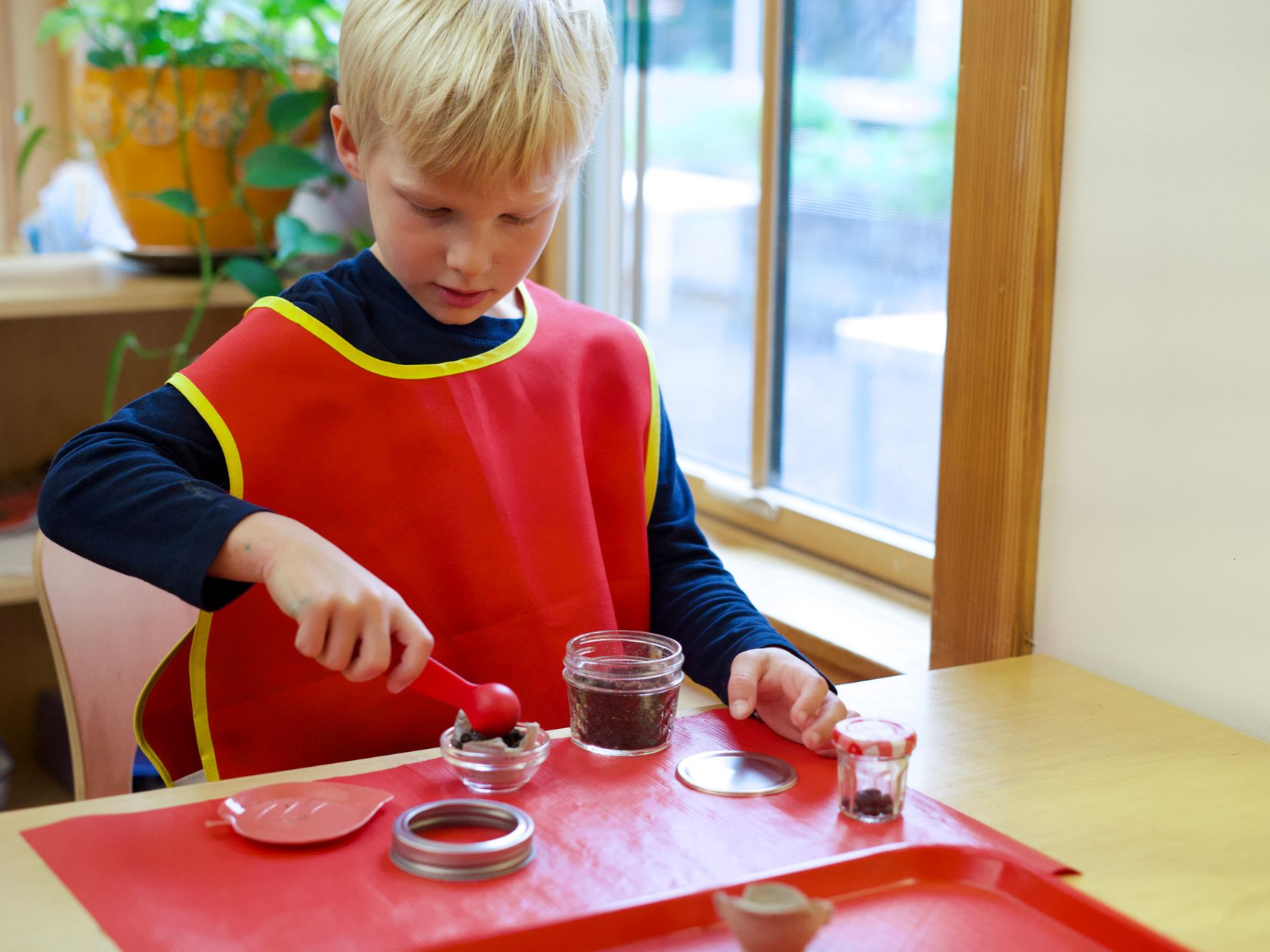
Voluntary actions: As children grow, they begin to make intentional choices, and this is when their will really begins to form. When children choose which snack to eat, which material to use, or whether to carry a tray with two hands, they are practicing using their will.


Conscious actions: Around age four and a half, children’s motivation increasingly comes from within. The choices they make are guided by thought, deliberation, and understanding.


The Role of the Environment


The will develops through experience. This means children’s environment, and how they’re allowed to interact with it, plays a central role.


Montessori classrooms are designed to give children opportunities to make real choices and experience natural consequences. This freedom, within clear boundaries, helps children learn how to act with purpose and to reflect on their actions.


By giving children appropriate levels of choice—“Would you like to carry the tray or the underlay?” “Do you want to walk by yourself or hold my hand?”—we offer them chances to practice decision-making in manageable ways. And every time children make a choice, they are exercising their will.


Balancing Impulse and Inhibition


Dr. Montessori also spoke of two fundamental forces in all of us: impulse and inhibition. Young children are often driven by impulse, an intense curiosity to act, explore, and move. That being said, they must also learn how to regulate those impulses.


The will is what helps children find balance. It allows them to move from reacting to choosing. In a well-prepared environment, children develop the capacity to think, “I want to do this…but should I?”


This balance supports their formation of character. We don’t want children to become compliant. Instead, we want them to develop their internal strength to persist, overcome challenges, and act with integrity. Today, we might call this “grit,” but over a century ago, Dr. Montessori recognized it as the outcome of a well-developed will.


Obedience: A Natural Outcome


Montessori’s approach to discipline is often misunderstood. In many traditional systems, obedience is demanded early, sometimes before the child is developmentally capable of giving it. But Montessori believed that internal discipline is a choice, and a well-developed will must support that choice.


She described three stages of obedience:


Children cannot obey: They do not yet have the control or skills to carry out a request.


Children can obey sometimes: As abilities grow, children can follow directions, but not consistently.


Children choose to obey joyfully: They align their will with the will of trusted adults out of love, respect, and understanding.


At this highest level, obedience isn’t about power or fear. Rather, it’s about harmony and mutual respect. But to reach it, children must first be allowed to develop their own will.


Why It Matters


The development of the will is not about producing obedient children or compliant workers. It’s about raising thoughtful, capable individuals who understand themselves, make choices with care, and live harmoniously within a community.


The Montessori approach offers something radically different: an environment where children can grow into themselves with dignity, strength, and self-direction. Schedule a tour to learn more!
By Meagan Ledendecker February 23, 2026
One of the quieter, less visible practices in a Montessori elementary classroom is the Child-Guide conference. You may never see it listed on a schedule or mentioned in a weekly update, yet it plays a profound role in children’s experience at school. Relationship Comes First The primary purpose of these conferences is to establish, maintain, and strengthen the relationship between the adult and each child. This focus shifts the dynamic from a teacher looking for faults or scolding about unfinished work. Rather, it’s a collegial conversation that enables children to take an active and engaged role in their own education. These connective conversations are grounded in relationship-building because when children feel emotionally safe and genuinely respected, they are far more willing to reflect, stretch themselves, and take responsibility for their growth. Every Child, as Often as They Need Montessori Guides aim to meet regularly with every child, but what “regularly” looks like can vary based on individual needs. Some children benefit from a longer, more formal conference every few weeks. Others need brief, frequent check-ins, sometimes lasting only a minute or two. These short moments might look like a quick conversation at the beginning of the morning, a gentle pause beside a table, or a quiet walk across the room together. The length of the meeting is not what matters. What is important is the message it sends: “I see you. I know your work. I care about how this is going for you.” What Happens in a Child-Guide Conference? While conferences vary based on each individual and the moment, they often include: The child bringing their learning journal or work (finished and unfinished) The guide bringing observational records A shared look at what has been accomplished Gentle reflection on what still feels unfinished Planning for what might come next Scheduling new lessons or presentations Support with larger projects: breaking them into steps, mapping timelines, imagining the finished product This collaborative time also provides an opportunity to experiment with new strategies (“Would you like to try creating a prioritized list?”), celebrate successes (“You worked so hard on your presentation! How did it feel to share your work?”), and reflect upon challenges (“It seems like you’ve been feeling a bit stuck in your research project. Tell me more about what is going on.”). Learning to Define “Finished” One of the most freeing lessons children learn in Montessori is that not every piece of work must be finished to an adult’s standard. Sometimes children accomplish exactly what they set out to do, and continuing would add nothing meaningful. Other times, interest has naturally ended, and letting go is healthy. This is not about lowering expectations. It is about honoring children’s internal sense of completion and learning when to release what no longer serves a purpose. Trusting Children’s Self-Assessment A cornerstone of these conferences is trust. Guides listen carefully to how children assess their own work and articulate their goals. When an adult truly accepts children’s self-assessment, something powerful happens: children begin to see themselves as capable, thoughtful, and worthy of being taken seriously. Children often receive more from the tone and sentiment of these meetings than from the actual content discussed. The Whole Child Matters Because Montessori education is concerned with the whole child, conferences may naturally move beyond academics. A Guide might gently offer support with social dynamics or ask about recent struggles during outdoor time. These moments provide a safe space for children to reflect on their own social, emotional, and physical development, and to recognize that there is a network of support. When Relationships Need Repair Even in the most thoughtful classrooms, relationships can become strained. What matters is how adults respond. It is never too late for a Guide to sit with a child and say, honestly: “I’ve been thinking about how we’ve been interacting recently, and I’d love to brainstorm with you about what I could do differently.” When an adult takes responsibility, without demanding the child do the same, something shifts. Trust begins to rebuild. Real dialogue becomes possible. Children learn from this modeling. In time, after they feel safe, they often step forward to take responsibility themselves. What Children Are Really Learning Through these quiet, intentional meetings, children learn that:  their thoughts and feelings matter, adults can be trusted, mistakes are part of growth, reflection leads to independence, and relationships can be repaired. And while these conferences may happen quietly in a corner of the classroom, their impact echoes far beyond it. This is true preparation for life. To learn more about the long-term benefits of Montessori, visit us here in Lenox, MA!
Image of a preschool aged student sitting on the floor with a moveable alphabet
By Meagan Ledendecker February 16, 2026
Explore how Montessori children learn to write through sound work, movable alphabet exploration, and a joyful, developmentally prepared process.
Image of two parents with two children hugging their children after school
By Meagan Ledendecker February 9, 2026
Learn why children need quiet decompression after school and how a “quiet landing” supports regulation, connection, and meaningful conversation.
Image of three elementary students sitting at a table with red equivalence shapes set in green frame
By Meagan Ledendecker February 2, 2026
Discover how Montessori geometry introduces equivalence through hands-on exploration, helping children build deep understanding of area, fractions, and mathematical reasoning.
Image of three elementary students holding a triangle of rope between them
By Meagan Ledendecker January 26, 2026
Explore the Montessori story of geometry’s origins, from ancient Egyptian rope-stretchers to modern classrooms, inspiring children’s wonder and curiosity.
By Meagan Ledendecker January 19, 2026
A Montessori approach to understanding disrespect: why children use strong words, how adults can stay calm, and ways to protect connection over conflict.
Show More