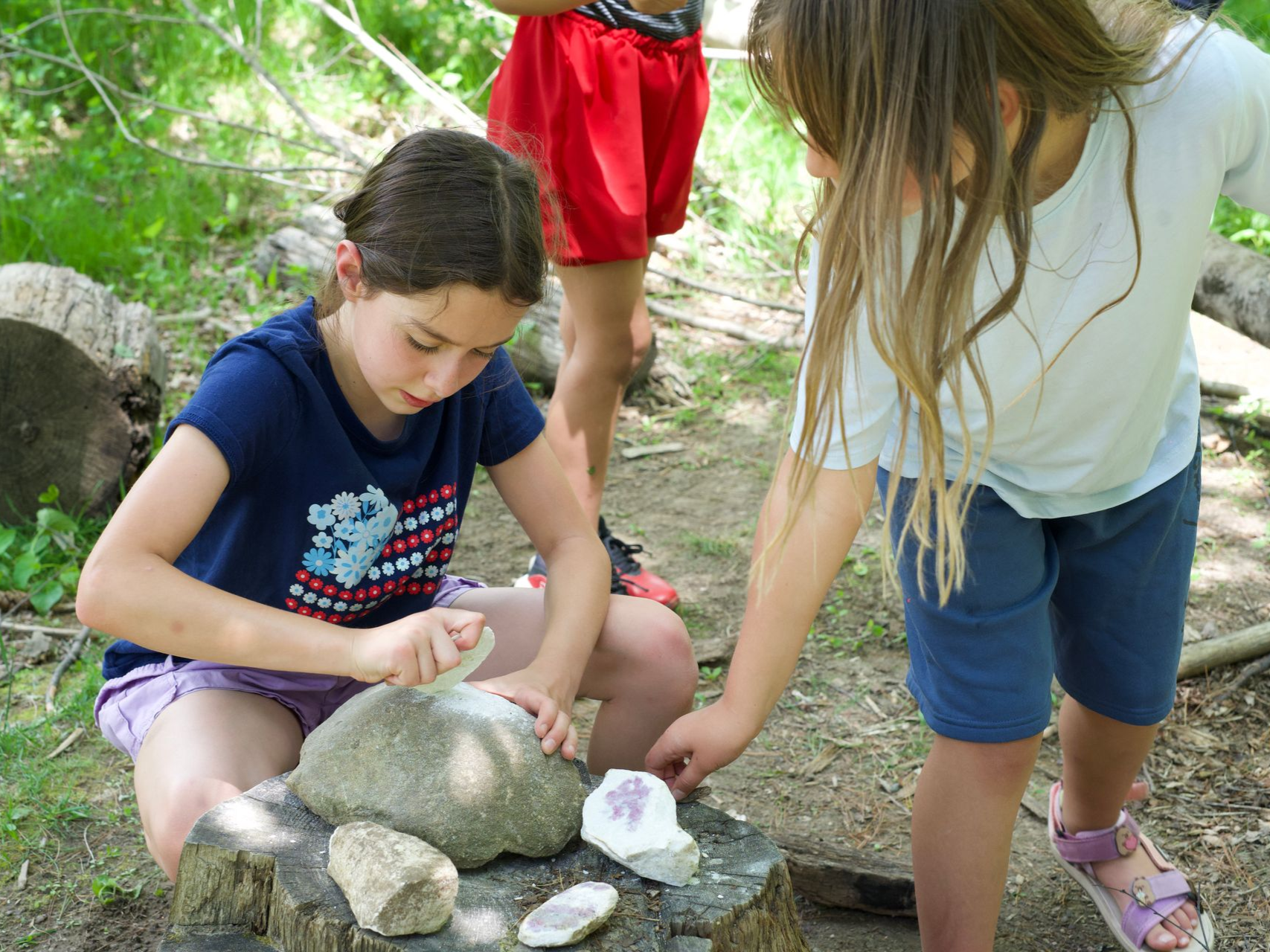

Supporting Our Adolescents

Meagan Ledendecker • May 29, 2023

Tanesia R. Hale-Jones is a Montessorian, educator, social activist, poet, artist, and parent, who believes deeply in the importance of community engagement and teaching young people to be global citizens. Tanesia serves as Jr. High Level Director and Adolescent Guide at Escuela del Sol Montessori, where she guides 7th and 8th-grade students and oversees a team of teachers and community partners. Tanesia lives and works on Tiwa Territory in Albuquerque, New Mexico, with her 18-year-old, two cats, and many house plants. She recently shared some of her insights from her many years of working with adolescents.
As a Montessori adolescent guide (and a parent of an adolescent), how do you see the role of adults needing to shift for teens? What is your advice for caregivers of adolescents? 


It’s important to remember that our children aren’t living their parents’ adolescence. I talk to so many adults who had a traumatic or really emotional adolescence. Think back to being an adolescent and that moment of recognizing being connected to something bigger than ourselves. This is both really inviting and also pretty terrifying because it means leaving something behind. Adolescence is marked with a kind of grief of separating from family and yet wanting to separate. It isn’t as dramatic as people or movies sometimes make it out to be, but there is a separation that happens and a yearning for something bigger. I always reminded parents that this experience is really normal and healthy. Our job is to hold space for it to happen. 

As a Montessori adolescent guide (and a parent of an adolescent), how do you see the role of adults needing to shift for teens? What is your advice for caregivers of adolescents? 


It’s important to remember that our children aren’t living their parents’ adolescence. I talk to so many adults who had a traumatic or really emotional adolescence. Think back to being an adolescent and that moment of recognizing being connected to something bigger than ourselves. This is both really inviting and also pretty terrifying because it means leaving something behind. Adolescence is marked with a kind of grief of separating from family and yet wanting to

Also, watching someone going through their adolescence brings up a lot for parents, including our own feelings or insecurities. So the invitation is to do your own work. There is a healing process to go through–either by yourself or with partners, friends, or whomever you have in your adult community–that can allow you to be really present for the young people in your life. 


There is also value in meeting it all with humor. That doesn’t mean laughing at our adolescents, but rather being able to recognize that you don’t have to get on the roller coaster with them. You can respond, acknowledge, and listen well. This means asking curiosity questions and pulling away from the need to fix it for them, which is hard because we don’t want them to be in pain. We love them so much. We long for them to be safe and whole. Yet we need to hold a space for curiosity. 


My own adolescent is leaving their adolescence at the age of 18. They have been a beautiful reminder that can I be in the presence of someone else’s growth and that I don’t have to do anything about it. I can witness it and support it. Supporting that growth is the gift I can give.


How can we, as caregivers, support our adolescents while also giving them the space they need? Do we hold space or give space?


I think it is both. So many parents talk about how their adolescents just want to be in their rooms. Parents of one of my students told me how they were going to be away and realized their adolescent was old enough to be home alone. The parents checked in and found out their child was so excited about having the day to themselves. Their adolescent had a day of feeling respected and trusted. They had that space. 


We can also hold space because when our adolescents do emerge, they often want cuddles and tenderness. Often we can be surprised by that need. But we can just be really present with and accept what they need right now. It might be something very different in the next moment! So just hold it now. It is precious. These moments are like building blocks for the emergence of their adult self.


With this awareness of how teens are building their adult selves, what is your take on how important electronics and social media are for our adolescents? How do we stay aware and sensitive to teens’ need to connect through social media platforms while also being aware of the challenges of social media channels?


A lot of younger adolescents have grown up in this [high-tech] world and there is a learning curve for adults and parents. I think about how to stay interested in what adolescents are interested in. What are they listening to? What are they watching? In some ways, it’s about getting ahead of it all. For example, so many songs are sampled, so I often go back and ask if they know who wrote the original song. 


With social media, it’s so tricky. I talk with parents about this all the time. I think a lot of it is about really being honest about who social media was designed for and the repercussions of it for adults and young people. We can help our adolescents examine the content they look at and help them build a critical lens. Building critical awareness and visual acuity about who is being represented leads to great conversations about equity, race, and gender roles and appeals to an adolescent's desire for justice and personal dignity. We can engage in conversations about what they are getting out of the content and what it says to other people. 


This process isn’t about changing their minds. That’s not really the point. The point is that we are teaching our adolescents to be critical thinkers about what they are consuming and why they are consuming it. We can ask, how does it make you feel? We can explore other moments when they felt that way and how to amplify those moments as well. Do you feel connected? Great! Are there other experiences or activities that make you feel just as connected? It is about teaching discernment, critical analysis on multiple levels, and visual acuity. 


In some ways, it is also about rooting back to the values you hold as a family and maybe even helping your adolescent to develop their own personal values. This can be hard, especially if our adolescent’s values start to become different from our family’s values. 


How do you approach these kinds of difficult conversations with adolescents in a way that is respectful of adolescents’ emerging adulthood?


It goes back to what I said earlier: you have to do your own work. Difficult conversations can be tricky even when we are communicating adult to adult. When confronted with difficulty or tension, what do we do? I have been practicing stepping toward the conflict or conversation, not with an “I’m going to win” approach, but rather with curiosity. I can explore what is going on for me in that difficult moment. When I am shutting down, how can I turn toward that experience with curiosity? What is getting activated in me when my adolescent says something triggering? 


We can respond by asking questions: What does this mean to you? What do you mean by that? For example, there are many young folks who are pushing the rigid boundaries of gender and trying on new pronouns. This is both identity formation and also discarding, putting on, and taking off. We can just ask questions and then not get too precious about the answers. If we can tell they are trying something on, we can explore how to be less attached to their process of experimentation. For me, it is always about coming from a place of curiosity and entering from a place of wonder. This is different than getting stuck in a place of thinking that what our adolescent does or says means I have failed as a parent. 


We want what is best for our children and want them to be successful. Sometimes that means looking at what we think success is. What does the world need from our adolescents? What is the world asking of them? These two things can be really different. So that means looking at the reality that young people are met with and then being willing to be open. 


I have students who range from having no phones to having TikTok accounts and starting YouTube channels so they can be YouTube stars. As their teacher, I can feel myself getting precious about it and wanting them to be something like an inventor of healing technology! But really, social media can be fun and silly. So I ask questions about it. Which ones do you like? What do you like about them? Oh, that little sample of a song came from a whole song. We could listen to the whole song together! 


My kid loves memes, which can be so snarky. But there is something really cool about memes and the way they have distilled culture and humor. I think about how there is something clever here. I see the process as my kid understanding their own humor better and being able to critique society in a way that is pithy and ridiculous.


Both as a parent and a teacher, I’ve tried to step into adolescents’ world. I often say, “I love that for you.” I don’t have to like it, but I can start to get why they like it. 


Sometimes adolescence hits and it takes everybody by surprise. With that in mind, do you have any recommendations for entry points or resources for families and caregivers?


There is so much written about adolescent brain development, which has been helpful. The work of Sarah-Jayne Blakemore is really powerful. She has a great TED talk and short articles, as well as her book, Inventing Ourselves: The Secret Life of the Teenage Brain.


Britt Hawthorne’s book, Raising Antiracist Children: A Practical Parenting Guide, is really, really great and she posts nice videos that are short and to the point.


I do think there is something valuable to articles that Montessori adolescent practitioners have published through the years. They are really powerful tools. I will often choose one or two to send to my families during the school year. It’s about rooting back to who these young people really are. This helps me to remember where they are and what they need. Then I can reflect more accurately on who I need to be for them. 


I think being outside and doing projects is important. Resources for this can range from engaging with local and national parks or restoration projects–things that inspire them to connect with the land– to going to farmers' markets. Adolescents need things that make them feel a little adult and also are opportunities for them to be independent. 


There is something really great about connecting adolescents to support groups if they need that. For example, where I live we have a transgender resource center that is gender-affirming. There are also resources like GLSEN [Gay, Lesbian and Straight Education Network] and GSAs [Genders & Sexualities Alliances], depending on what kids need. I also think therapy is great for adolescents! Especially when you can find people who are good at working with adolescents. It can be nice to have another person to talk to who isn’t your family. 


Any other last thoughts?


Adolescence brings up a lot for the adults who are offering love and care. But it is a magical time to witness. It’s really fun to watch. There is a tenderness of exploring what the end of something means and how young people are beginning something that they don’t have any clue of how to begin. It is such a liminal space. As adults, we are very much in our thinking brains and can’t really imagine hanging out in a liminal space. However, think about being in the presence of something that is yet to be! That is the invitation that Montessori gives.


Adolescence is very internal time. Sometimes adolescents externalize their experience, but often it is very internal. We realize that there is so much happening. Accept the invitation of being curious, playful, and joyful with our young people. Enjoy it and remember what a gift it is to be witness to this process. New Paragraph


separate. It isn’t as dramatic as people or movies sometimes make it out to be, but there is a separation that happens and a yearning for something bigger. I always reminded parents that this experience is really normal and healthy. Our job is to hold space for it to happen. 


Also, watching someone going through their adolescence brings up a lot for parents, including our own feelings or insecurities. So the invitation is to do your own work. There is a healing process to go through–either by yourself or with partners, friends, or whomever you have in your adult community–that can allow you to be really present for the young people in your life. 


There is also value in meeting it all with humor. That doesn’t mean laughing at our adolescents, but rather being able to recognize that you don’t have to get on the roller coaster with them. You can respond, acknowledge, and listen well. This means asking curiosity questions and pulling away from the need to fix it for them, which is hard because we don’t want them to be in pain. We love them so much. We long for them to be safe and whole. Yet we need to hold a space for curiosity. 


My own adolescent is leaving their adolescence at the age of 18. They have been a beautiful reminder that can I be in the presence of someone else’s growth and that I don’t have to do anything about it. I can witness it and support it. Supporting that growth is the gift I can give.


How can we, as caregivers, support our adolescents while also giving them the space they need? Do we hold space or give space?


I think it is both. So many parents talk about how their adolescents just want to be in their rooms. Parents of one of my students told me how they were going to be away and realized their adolescent was old enough to be home alone. The parents checked in and found out their child was so excited about having the day to themselves. Their adolescent had a day of feeling respected and trusted. They had that space. 


We can also hold space because when our adolescents do emerge, they often want cuddles and tenderness. Often we can be surprised by that need. But we can just be really present with and accept what they need right now. It might be something very different in the next moment! So just hold it now. It is precious. These moments are like building blocks for the emergence of their adult self.


With this awareness of how teens are building their adult selves, what is your take on how important electronics and social media are for our adolescents? How do we stay aware and sensitive to teens’ need to connect through social media platforms while also being aware of the challenges of social media channels?


A lot of younger adolescents have grown up in this [high-tech] world and there is a learning curve for adults and parents. I think about how to stay interested in what adolescents are interested in. What are they listening to? What are they watching? In some ways, it’s about getting ahead of it all. For example, so many songs are sampled, so I often go back and ask if they know who wrote the original song. 


With social media, it’s so tricky. I talk with parents about this all the time. I think a lot of it is about really being honest about who social media was designed for and the repercussions of it for adults and young people. We can help our adolescents examine the content they look at and help them build a critical lens. Building critical awareness and visual acuity about who is being represented leads to great conversations about equity, race, and gender roles and appeals to an adolescent's desire for justice and personal dignity. We can engage in conversations about what they are getting out of the content and what it says to other people. 


This process isn’t about changing their minds. That’s not really the point. The point is that we are teaching our adolescents to be critical thinkers about what they are consuming and why they are consuming it. We can ask, how does it make you feel? We can explore other moments when they felt that way and how to amplify those moments as well. Do you feel connected? Great! Are there other experiences or activities that make you feel just as connected? It is about teaching discernment, critical analysis on multiple levels, and visual acuity. 


In some ways, it is also about rooting back to the values you hold as a family and maybe even helping your adolescent to develop their own personal values. This can be hard, especially if our adolescent’s values start to become different from our family’s values. 


How do you approach these kinds of difficult conversations with adolescents in a way that is respectful of adolescents’ emerging adulthood?


It goes back to what I said earlier: you have to do your own work. Difficult conversations can be tricky even when we are communicating adult to adult. When confronted with difficulty or tension, what do we do? I have been practicing stepping toward the conflict or conversation, not with an “I’m going to win” approach, but rather with curiosity. I can explore what is going on for me in that difficult moment. When I am shutting down, how can I turn toward that experience with curiosity? What is getting activated in me when my adolescent says something triggering? 


We can respond by asking questions: What does this mean to you? What do you mean by that? For example, there are many young folks who are pushing the rigid boundaries of gender and trying on new pronouns. This is both identity formation and also discarding, putting on, and taking off. We can just ask questions and then not get too precious about the answers. If we can tell they are trying something on, we can explore how to be less attached to their process of experimentation. For me, it is always about coming from a place of curiosity and entering from a place of wonder. This is different than getting stuck in a place of thinking that what our adolescent does or says means I have failed as a parent. 


We want what is best for our children and want them to be successful. Sometimes that means looking at what we think success is. What does the world need from our adolescents? What is the world asking of them? These two things can be really different. So that means looking at the reality that young people are met with and then being willing to be open. 


I have students who range from having no phones to having TikTok accounts and starting YouTube channels so they can be YouTube stars. As their teacher, I can feel myself getting precious about it and wanting them to be something like an inventor of healing technology! But really, social media can be fun and silly. So I ask questions about it. Which ones do you like? What do you like about them? Oh, that little sample of a song came from a whole song. We could listen to the whole song together! 


My kid loves memes, which can be so snarky. But there is something really cool about memes and the way they have distilled culture and humor. I think about how there is something clever here. I see the process as my kid understanding their own humor better and being able to critique society in a way that is pithy and ridiculous.


Both as a parent and a teacher, I’ve tried to step into adolescents’ world. I often say, “I love that for you.” I don’t have to like it, but I can start to get why they like it. 


Sometimes adolescence hits and it takes everybody by surprise. With that in mind, do you have any recommendations for entry points or resources for families and caregivers?


There is so much written about adolescent brain development, which has been helpful. The work of Sarah-Jayne Blakemore is really powerful. She has a great TED talk and short articles, as well as her book, Inventing Ourselves: The Secret Life of the Teenage Brain.


Britt Hawthorne’s book, Raising Antiracist Children: A Practical Parenting Guide, is really, really great and she posts nice videos that are short and to the point.


I do think there is something valuable to articles that Montessori adolescent practitioners have published through the years. They are really powerful tools. I will often choose one or two to send to my families during the school year. It’s about rooting back to who these young people really are. This helps me to remember where they are and what they need. Then I can reflect more accurately on who I need to be for them. 


I think being outside and doing projects is important. Resources for this can range from engaging with local and national parks or restoration projects–things that inspire them to connect with the land– to going to farmers' markets. Adolescents need things that make them feel a little adult and also are opportunities for them to be independent. 


There is something really great about connecting adolescents to support groups if they need that. For example, where I live we have a transgender resource center that is gender-affirming. There are also resources like GLSEN [Gay, Lesbian and Straight Education Network] and GSAs [Genders & Sexualities Alliances], depending on what kids need. I also think therapy is great for adolescents! Especially when you can find people who are good at working with adolescents. It can be nice to have another person to talk to who isn’t your family. 


Any other last thoughts?


Adolescence brings up a lot for the adults who are offering love and care. But it is a magical time to witness. It’s really fun to watch. There is a tenderness of exploring what the end of something means and how young people are beginning something that they don’t have any clue of how to begin. It is such a liminal space. As adults, we are very much in our thinking brains and can’t really imagine hanging out in a liminal space. However, think about being in the presence of something that is yet to be! That is the invitation that Montessori gives.


Adolescence is very internal time. Sometimes adolescents externalize their experience, but often it is very internal. We realize that there is so much happening. Accept the invitation of being curious, playful, and joyful with our young people. Enjoy it and remember what a gift it is to be witness to this process.
image of a preschool aged child on a carpet with the geometric prism lesson
By Meagan Ledendecker April 3, 2026
Explore the Montessori three-period lesson and how its quiet simplicity unites words and meaning during a child’s sensitive period for language.
By Meagan Ledendecker March 30, 2026
Rivers are so important to our human story. They are sources of nourishment, transportation, and connection. We see how children are naturally drawn to water, and rivers offer a powerful way to understand ecology, interdependence, and our place within the natural world. With this in mind, we want to share some of our favorite books about water, rivers, and watersheds. Through story and illustration, children can trace the journey of a single drop of water, observe how land and water shape one another, and begin to understand how human choices affect the health of our planet. We’ve grouped the following collection of river and water-focused books by developmental stage. Each title offers language, beauty, and meaningful context for deeper exploration. Whether you are reading with a toddler, a younger elementary child, or an emerging researcher, these books invite wonder, responsibility, and reverence for one of Earth’s most essential elements. For the Youngest
Image of an elementary child sitting on the floor with the Racks and Tubes math material
By Meagan Ledendecker March 23, 2026
In Montessori classrooms, long division unfolds very differently, giving children a real sense of why it works instead of the confusing sequence of steps to memorize and repeat that many of us remember. Learn more in this post.
Image of a toddler sitting at a table with arms raised in celebration while a smiling adult looks on
By Megan Ledendecker March 16, 2026
For children in the first three years of life, adults are not simply caregivers or teachers. We are models of movement, language, emotional regulation, and relationships. Learn more in this post.
Close up image of a child's hands holding a small green square card printed with the word
By Meagan Ledendecker March 9, 2026
In this blog post, learn more about how Montessori classrooms help children bring to consciousness language they already use every day by learning about how language functions and how meaning is carried when words stand in for each other.
Image of a toddler sleeping face down on a mat with a brightly colored blanket
By Meagan Ledendecker March 2, 2026
March 1 marks Baby Sleep Day, so we thought we’d take a moment to reflect on the alignment between Montessori philosophy and modern sleep science. In Montessori, we focus on independence as a path toward self-sufficiency. This is a gradual, mindful process of becoming capable. For our youngest children, this journey begins with mastery of the most fundamental human needs: eating, toileting, and sleeping. These areas matter deeply because they are ultimately under a child’s control. No one can make a child eat, use the toilet, or sleep. Our role, then, is not to force outcomes but to remove obstacles. As adults, we can provide thoughtful structure and support children as they develop the skills that build confidence and trust in their own bodies. Language Shapes Our Intentions In Montessori, our language reflects our values. For example, we don’t talk about “toilet training.” Instead, we focus on “toilet learning” because children are learning how to care for their bodies within the cultural norms. We are not training behavior. We are supporting development. The same is true for sleep. Rather than “sleep training,” Montessori invites us to think in terms of supporting independent sleep skills. We help children learn how to settle their bodies, self-soothe, and eventually fall asleep independently, all skills they will rely on for the rest of their lives. Why Sleep Matters So Much Research continues to affirm that sleep is foundational. Healthy sleep supports brain development and learning, emotional regulation, physical growth and immune function, and memory and attention. During sleep, children’s bodies perform essential functions, including muscle growth, tissue repair, protein synthesis, and the release of growth hormones. Deep sleep stages are when the most restorative processes occur. How Sleep Works  Two systems guide sleep: circadian rhythm and sleep pressure. Circadian rhythm is the body’s internal 24-hour clock, regulated by light and darkness. When it’s dark, the brain releases melatonin (the sleep hormone). When it’s light, melatonin decreases, and cortisol helps us wake. This is why darkness supports sleep, blue light from screens disrupts it, and consistent bedtimes matter. Newborns are not born with a mature circadian rhythm. It begins developing around six weeks and becomes more established around three months, which explains why early baby sleep can feel unpredictable. The other factor is sleep pressure. The longer we’re awake, the stronger the drive to sleep. This pressure builds during the day and resets after a long stretch of rest. When children miss their sleep window and become overtired, stress hormones (adrenaline and cortisol) kick in, creating that familiar “second wind.” Suddenly, a child who desperately needs sleep seems wired and alert. Understanding sleep pressure helps us time sleep before children tip into exhaustion. A Montessori Framework for Healthy Sleep To support both healthy attachment and independence, Montessori encourages clear, loving boundaries. Sleep is no different. We can focus on four key factors: a prepared sleep environment, predictable and respectful routines, healthy sleep associations, and limits with flexibility. A Prepared Sleep Environment Just as we prepare our Montessori classrooms, we want to be intentional about preparing our child’s sleep space at home. Key components include ensuring that the space is: Dark (blackout curtains help melatonin production) Quiet and calm Free of stimulating toys Slightly cool A good question to ask ourselves is: Would I easily fall asleep here? Predictable, Respectful Routines Children feel secure when they know what comes next. A simple home routine might include: The final feeding Putting on pajamas Toileting/diapering Tooth brushing A short story or song A hug and kiss goodnight Long baths or extended reading are best before the sleep window, not during it. Healthy Sleep Associations Children form associations with the conditions present when they fall asleep. If a child falls asleep being rocked, fed, or held, they will often need that same support during natural night wakings. Instead, we want to place a child in bed drowsy but awake, so they can practice falling asleep independently. Comfort objects, such as a small blanket or stuffed animal, can support this process. Limits with Flexibility Sleep needs change as children grow. Consistency matters, but we don’t want to be unnecessarily rigid. It’s important to keep in mind, though, that older children may test boundaries, delay routines, or negotiate endlessly. Calm, consistent follow-through reassures children that the structure is dependable. And just as importantly, adults need support, too! Holding limits is much harder when we are sleep-deprived, so self-care is essential. Why Independent Sleep Is an Act of Care Babies naturally cycle through light and deep sleep many times each night. When they wake briefly between cycles, a child who knows how to self-settle can drift back to sleep without distress. Independent sleep skills: Reduce frequent night wakings Support early morning sleep Improve mood and learning Protect parents’ well-being Plus, poor sleep in infancy is linked to challenges later in childhood, including difficulties with emotional regulation and health concerns. Supporting sleep early is preventative care. A Closing Thought for Baby Sleep Day Supporting sleep is not about forcing independence. It’s about preparing the conditions so independence can emerge naturally, with confidence and trust. If you’re navigating sleep challenges, please know this: you don’t have to do it alone. Sleep is learned, supported, and refined over time (just like every other human skill!). We want to honor sleep not as a struggle to overcome, but as a vital rhythm to protect, for both our children and ourselves. If you are interested in learning more, schedule a visit here in Lenox today!
Show More