
Why do Montessori Classrooms Have Long, Uninterrupted Work Periods?

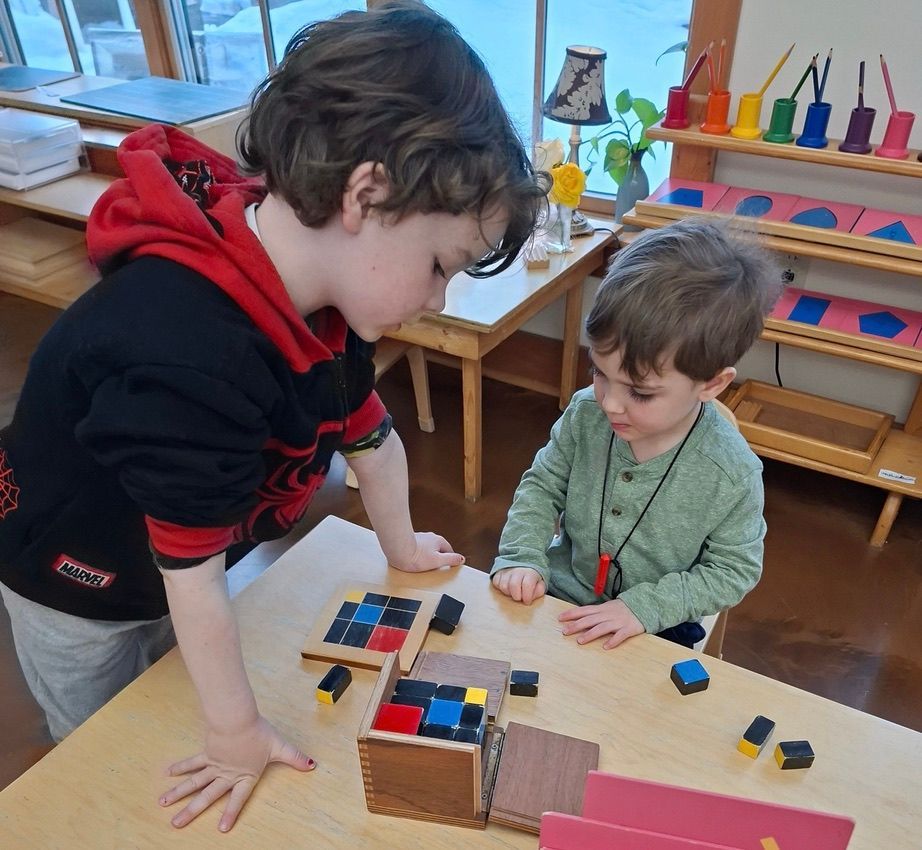
The Montessori method of education was born from Dr. Montessori's scientific observations as she explored how to support children’s optimum development. In her studies, Dr. Montessori found that children need a block of uninterrupted time to go through cycles of focus and consolidation. Children two and a half and older need at least three hours to move through rhythms of focus. Often, the most growth and meaningful work happens toward the end of a three-hour block of time.
The Flow State
We can think about this in terms of the current-day understanding of what it means to get into a flow state. Sometimes, people describe a flow state as “being in the zone.” It’s when we are so immersed in and focused on what we are doing that a sense of time and our surroundings disappears.
This concept of “flow” was introduced in the 1970s by Mihaly Csikszentmihalyi, a psychologist whose studies of happiness and creativity led to his articulation of this highly focused mental state conducive to creativity and productivity. When Csikszentmihalyi’s grandchildren started going to a Montessori school, he was delighted to see how Montessori learning environments allowed young children to achieve this state of flow.
Long Uninterrupted Periods of Time
In order to get into their state of flow, children need about a three-hour block of uninterrupted time. Therefore, we have designed school and classroom schedules so that children can benefit from an interrupted morning work cycle.
Part of the morning routine involves children having enough time to greet their peers and go through their transition process without being rushed as they enter the classroom environment. When children are ready and in the classroom, the teachers (also known as guides) can focus on giving lesson presentations and supporting children as they start their day.
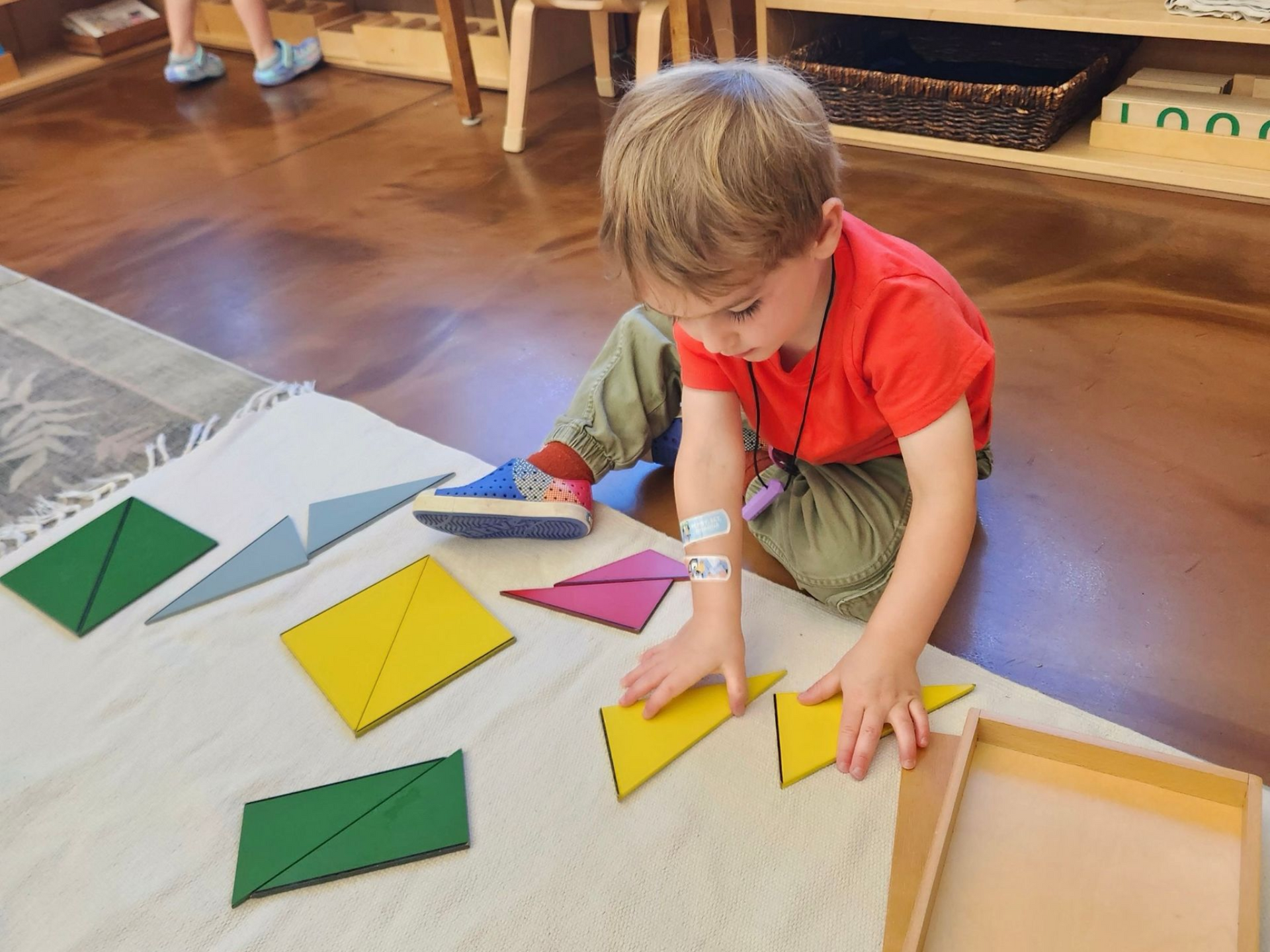
During the work cycle, children are engaged in a variety of activities–some they choose, some the adult guides them toward, and some individual or small group lessons. This opportunity to make choices of activities that have personal meaning and engagement provides several cognitive, emotional, and social benefits.
Benefits of the Work Cycle
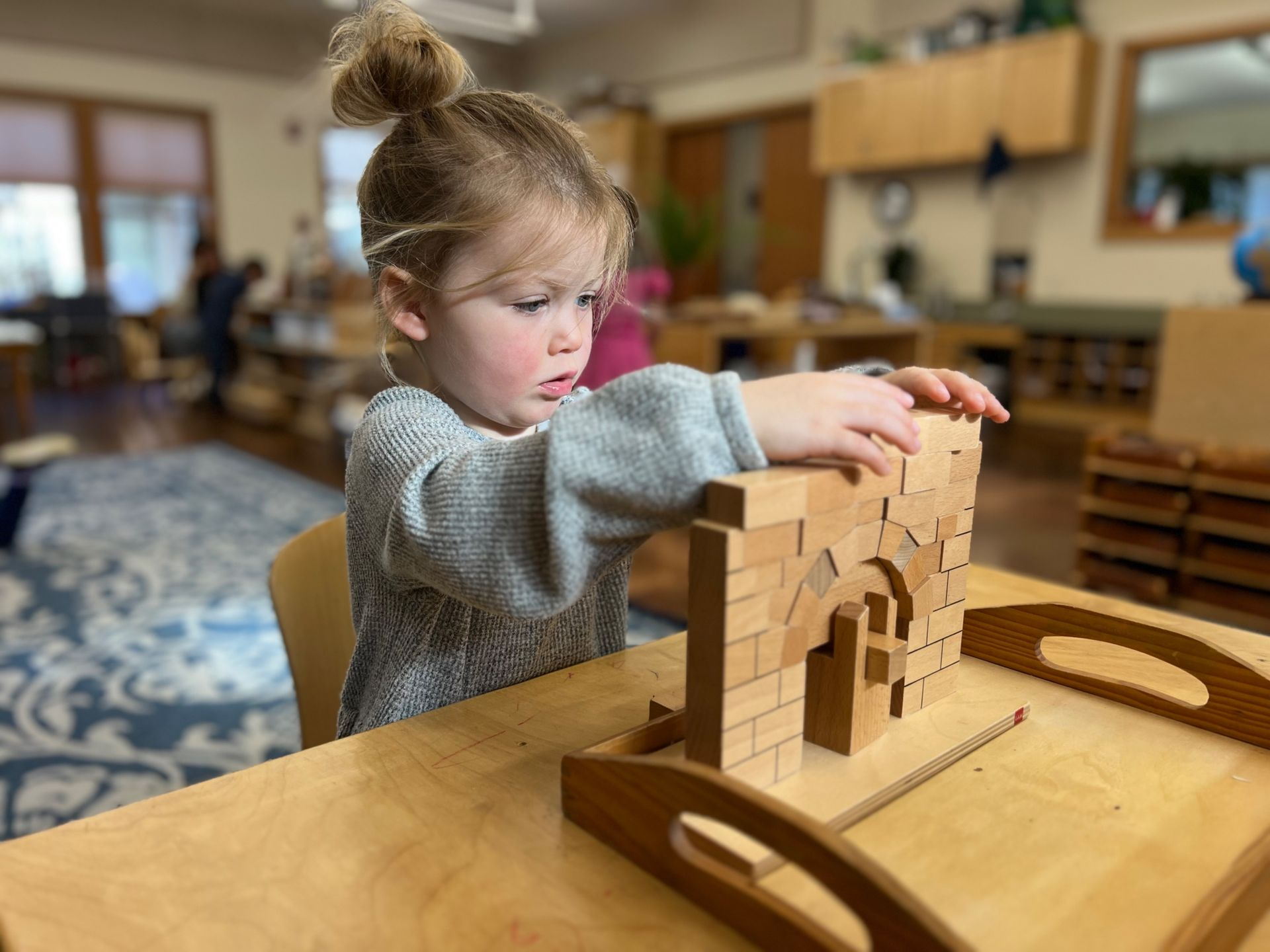
When children can focus without interruption or externally driven transitions to another activity, they experience deep concentration. With all of the competing distractions in our world, this extended time to settle into their tasks and explore without pressure allows children to develop the “mental muscles” to sustain their focus.
Neuroscience shows that deep focus activates the prefrontal cortex, the brain area responsible for executive functions like planning, decision-making, and problem-solving. When frequent interruptions happen, the prefrontal cortex can’t engage fully, leading to fragmented thinking. Basically, when interruptions occur, the brain must reset and reorient itself, which can significantly impair learning and problem-solving. Plus, we know it takes time to transition into a focused state mentally, and shorter periods don’t allow this natural process to unfold.
Deep focus enhances memory retention, comprehension, and problem-solving skills. When children aren’t stressed by racing against a clock or knowing they will be pulled out of an engaging activity, they develop a more relaxed and open mindset. This mindset helps children retain their learning, approach challenges confidently, and solve problems more effectively. Children who concentrate deeply are also more likely to feel a sense of calm and satisfaction, which helps them manage their emotions more effectively.
In summary, Montessori’s uninterrupted work periods allow children to fully utilize their cognitive resources, making the learning process more efficient and satisfying.
Work Periods in Action
In her book, The Absorbent Mind, Dr. Montessori wrote about the profound benefits of deep concentration. She also observed that when children are allowed to work without interruption, they often become calmer, more focused, and more confident.
The list of benefits goes on and on! From promoting responsibility and time management to strengthening intrinsic motivation and curiosity, long, uninterrupted work periods have broad implications for children’s success as lifelong learners.
The teacher also plays a vital role in observing and supporting children during these work cycles so that children can be guided into healthy challenges, new learning, and necessary practice. Children learn that with the freedoms of this uninterrupted time, there are also clear boundaries and expectations. Thanks to the calm, respectful atmosphere of Montessori learning communities, work periods tend to have an ordered, busy hum.
Are you curious about the multifaceted benefits of long, uninterrupted work periods? We would love to have you visit and see them in action. Reach out today to schedule a time to observe.