
From Fingertips to Formulas: How Montessori Builds the Mathematical Mind
Those blocks and cylinders aren't just play — Montessori sensorial materials are secretly building the mathematical foundations children need for a lifetime of learning.
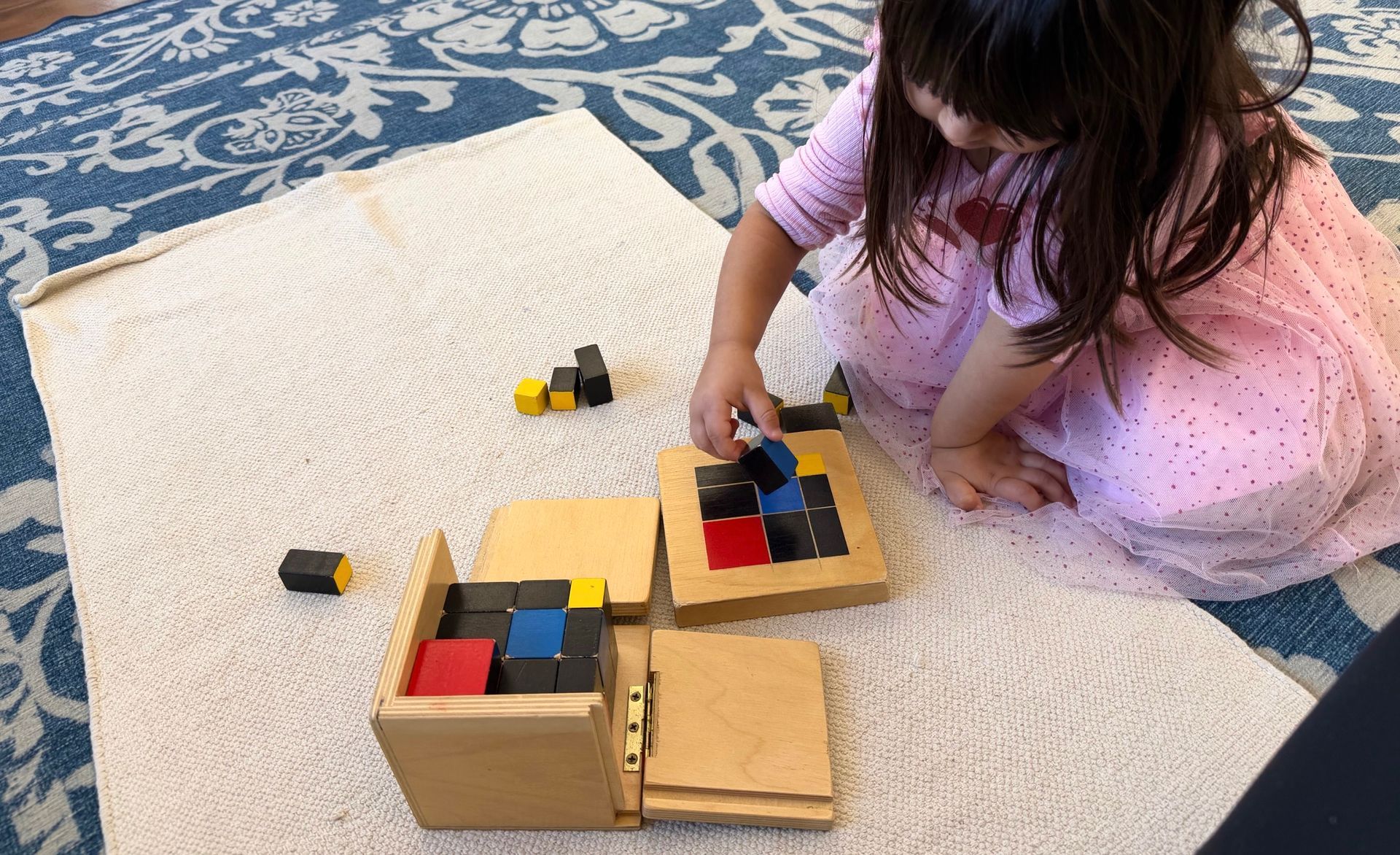
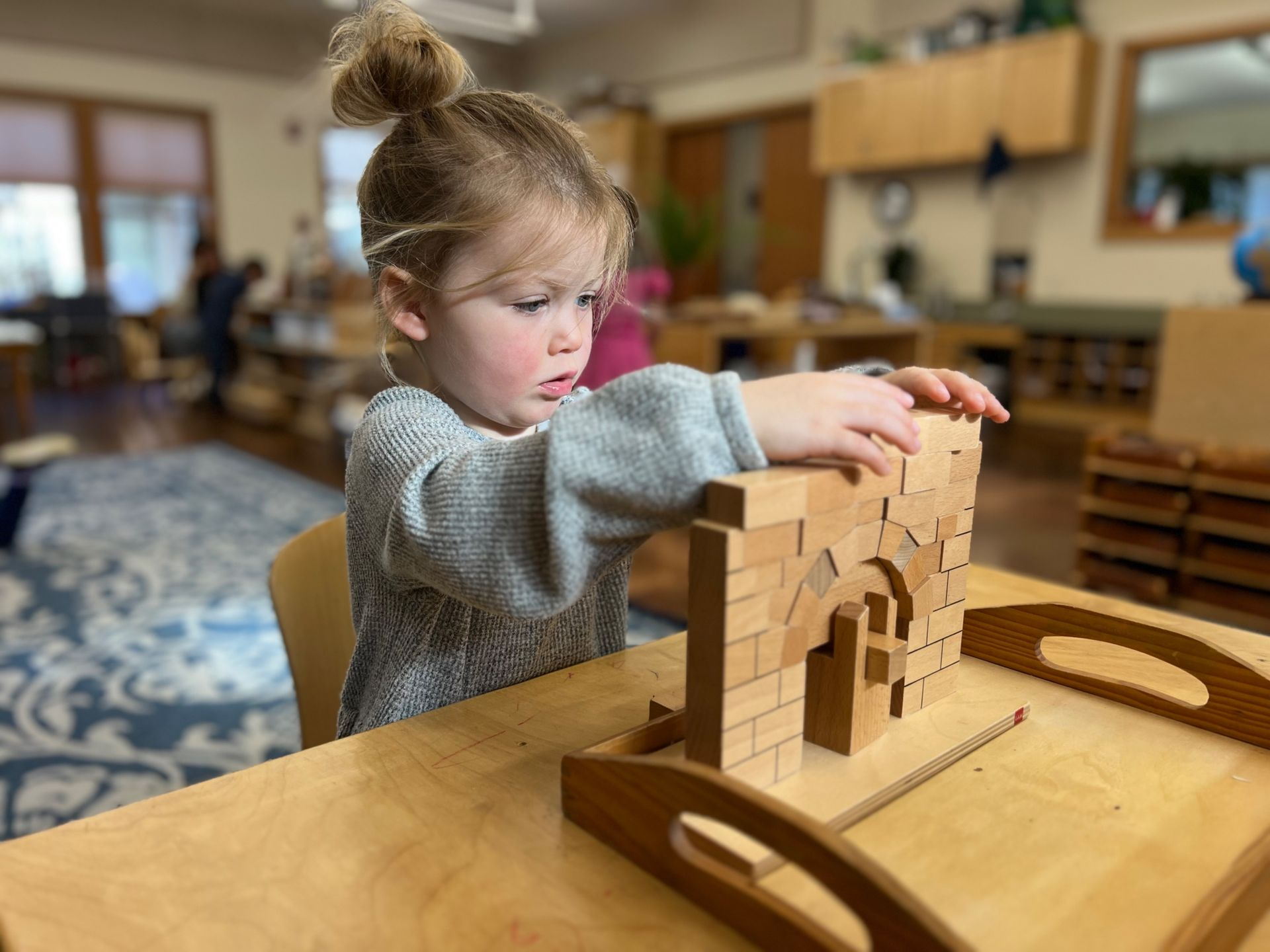
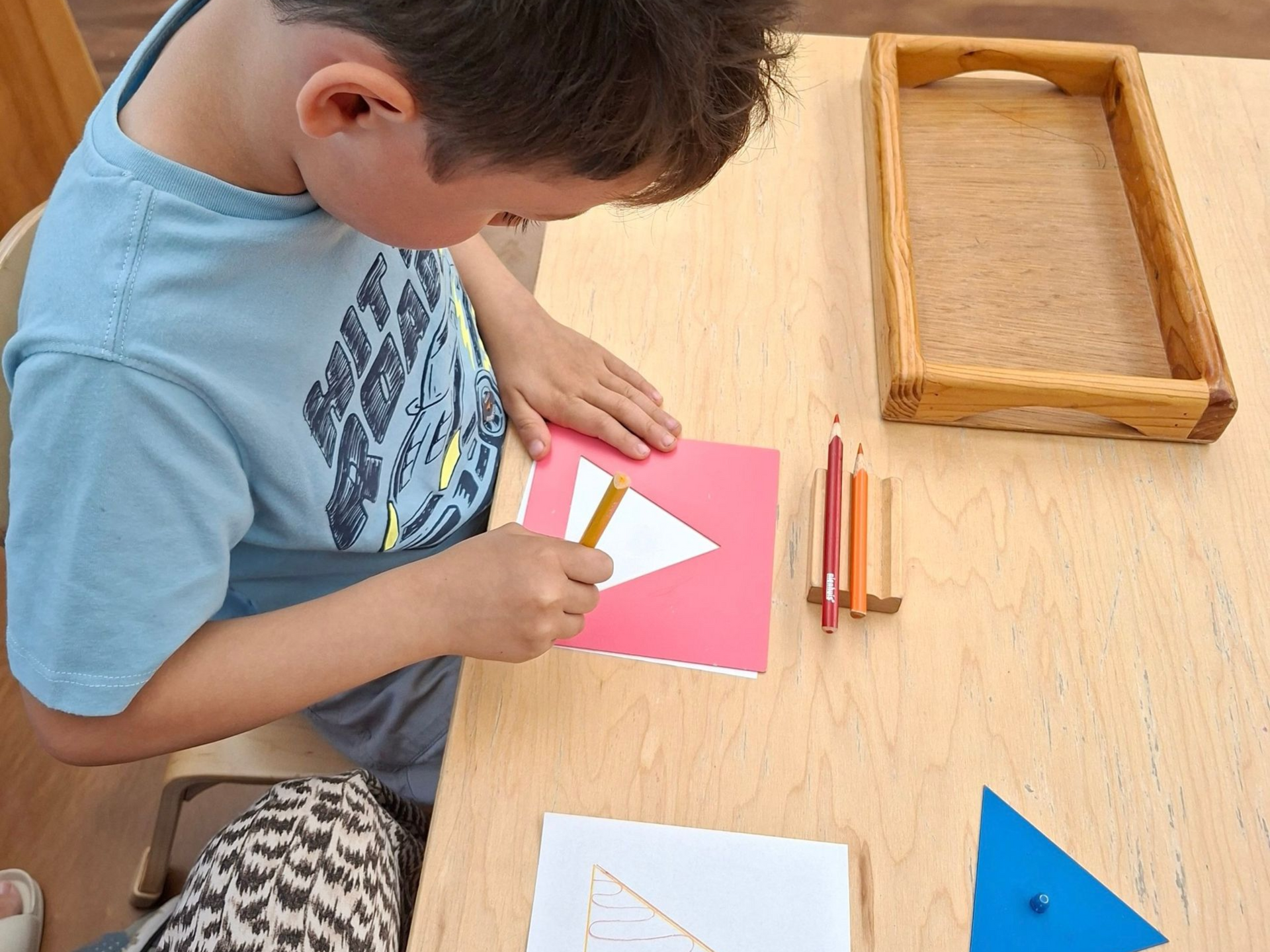
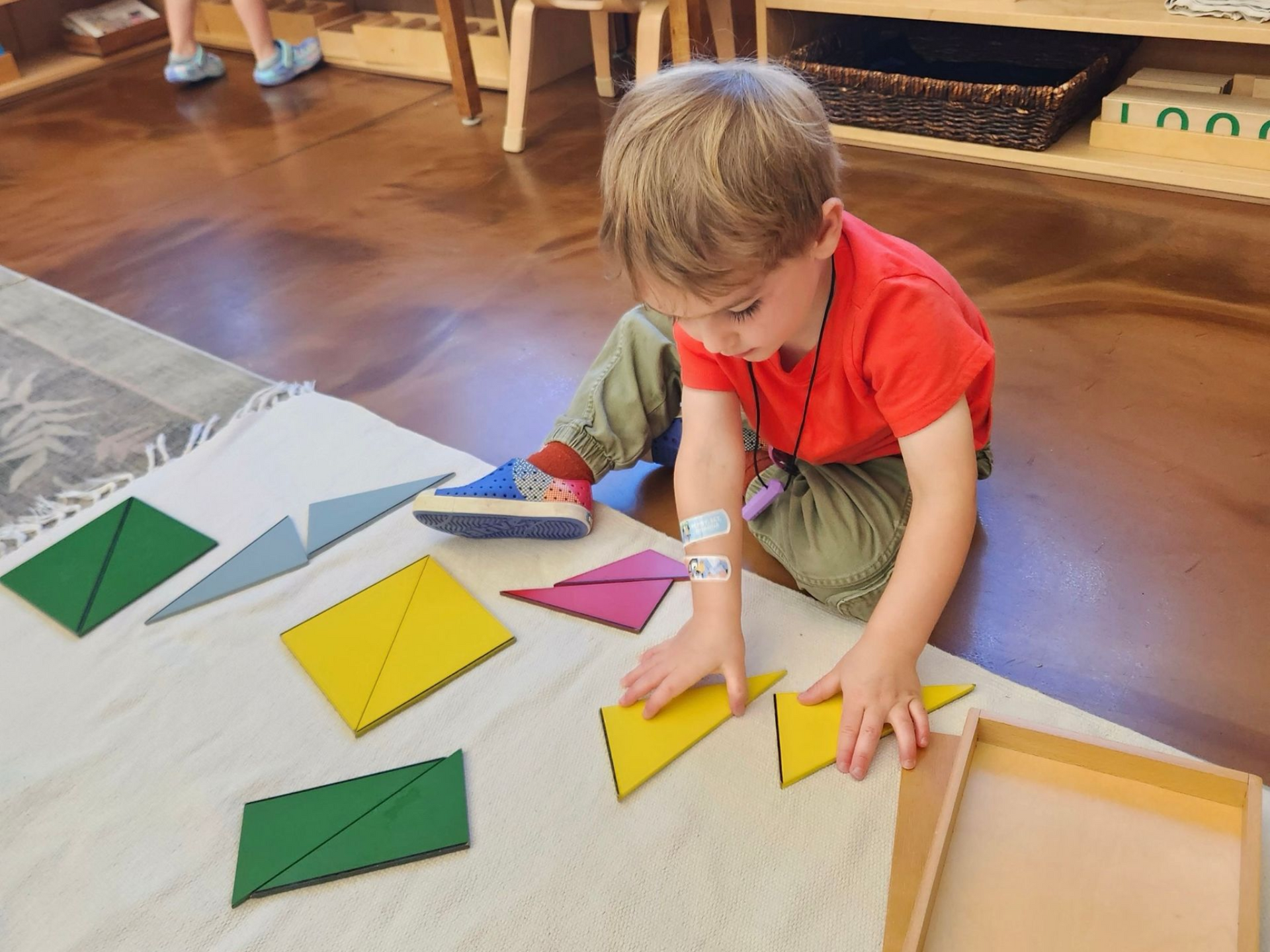
In a Montessori classroom, you’ll see children stacking blocks of the same color, fitting cylinders into precisely graduated holes, and putting colorful wooden pieces together to create a cube. At first glance, this may look like what happens in a typical preschool, but actually, Montessori children are doing foundational math in each one of these activities.
The Mathematical Properties of the Sensorial Materials
One of the most striking things about the Montessori environment is the mathematical properties woven into so many of the sensorial materials (and conversely the sensorial qualities woven into so many of the math materials). This is not a coincidence! Both the sensorial materials and the mathematical materials provide children with a tactile and visual understanding of numbers and proportions, while also helping them build a clear, organized mental framework for the mathematical concepts and operations that will come later.
Through early sensory experiences, children begin to make visual and spatial distinctions. The Montessori math materials build directly upon these sensorial foundations. For example, the color-coded bead bars (which are used for addition, subtraction, and multiplication), allow children to make a mental association of color to quantity rather than relying on counting alone. This provides multiple neural pathways for arithmetic operations. As Dr. Montessori observed, "Little by little the child ceases counting the beads and recognizes the numbers by their color.... Almost without realizing it he comes now to count by colors instead of by quantities of beads, and thus performs actual operations in mental arithmetic."
When children begin learning the actual numerals, they use sandpaper number cards and rely upon the quality of touch as they trace the rough shapes of each numeral. The blue and red number rods directly relate to the sensorial red rods. They are essentially the same material, but through color-coding establish direct mathematical meaning. This connection between a sensorial material and a math material is intentional. As Dr. Montessori wrote, "What is this moving and joining of quantities, if it is not the beginning of arithmetical operations?" The red and blue rods give children entry into quantity and into measuring quantity in units. After learning the numerals through the sandpaper numbers, children can then combine the concrete and the abstract by labeling the rods themselves with numeral cards.
Specific Materials, Specific Pathways
Connections continue throughout the Montessori mathematical curriculum. Children learn length and multiples through the bead chains. They understand odd and even numbers by seeing which quantities pair evenly across the bottom. They explore multiplication through geometric patterns on the multiplication board or by laying bead bars in a column. They handle geometric shapes and solids and find real-life examples. They build the binomial and trinomial squares and cubes, and in doing so, manipulate concrete representations of algebraic patterns, establishing a physical understanding of an abstract formula long before encountering the formula itself.
The knobbed cylinders offer another example. As children discover the differences in dimensions of the precisely graduated cylinders, they begin to think mathematically by noticing, comparing, and reasoning with their hands. "A mathematical proportion may be found in the relative differences in the three different series of blocks," explains Dr. Montessori. Even the pink tower (which is so iconic that it is often the first image that comes to mind when people think of Montessori) carries deep mathematical meaning that unfolds over time. Through all of this sensorial work, children become so aware of fine distinctions that they establish a mental foundation which allows for what Dr. Montessori described as "a clear and strong mentality."
The Path from Concrete to Abstract
The movement from the sensorial to the mathematical is not a sudden leap. It is a carefully sequenced progression in which each material prepares children's minds for the next level of understanding. The materials always help children move from concrete experience toward abstraction, and always build on what children’s hands have already learned.
Dr. Montessori was clear about both the direction and the destination of this journey: "This system in which a child is constantly moving objects with his hands and actively exercising his senses also takes into account a child's special aptitude for mathematics. When they leave the material, the children very easily reach the point where they wish to write out the operation. They thus carry out an abstract mental operation and acquire a kind of natural and spontaneous inclination for mental calculations."
Dr. Montessori’s conclusion about how mathematics should be taught remains as relevant today as it was when she first wrote it: "The teaching of arithmetic should be completely transformed. It should start with sense perceptions and be based on a knowledge of concrete objects."
What This Means for Families
Understanding this progression is important for how we think about our children's work in a Montessori classroom. Rather than worrying that our children are spending too much time fitting cylinders into their matching holes, building and rebuilding the pink tower, or constructing a cube, we can appreciate how they are building a neural architecture that will support mathematical reasoning for years to come.
Come visit us in Lenox, MA and see the math materials in action. We'd love to show you the full arc of the Montessori mathematics sequence and answer any questions you have.