
Adolescence: Time of Transformation

Meagan Ledendecker • June 26, 2023
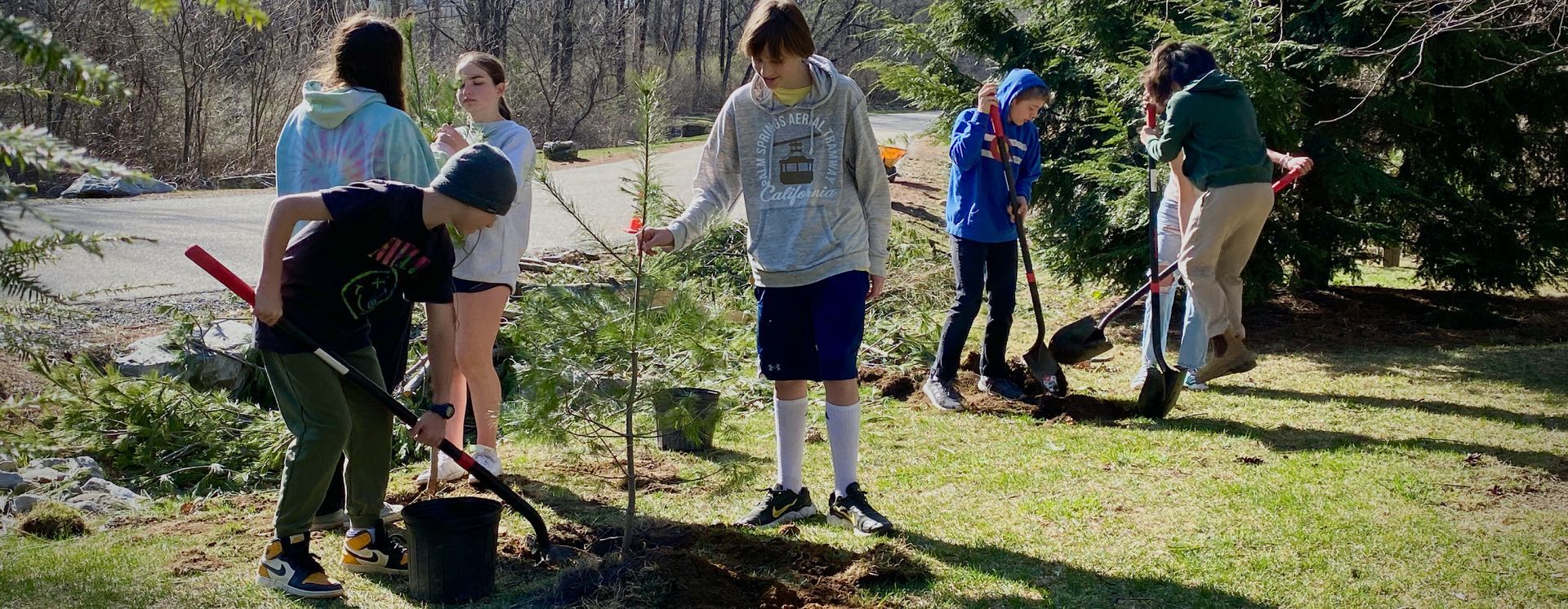
An image of six adolescent students with shovels working to plant small trees

Adolescents have such power and potential. They can achieve so much when they have a supportive space that helps them develop their incredible abilities and ultimately realize their possibilities.


The book, The Teenage Brain: A Neuroscientist’s Survival Guide to Raising Adolescents and Young Adults, shares a helpful analogy for understanding adolescence: “...the teenage brain is almost like a brand-new Ferrari: it’s primed and pumped, but it hasn’t been road tested yet. In other words, it’s all revved up but doesn’t quite know where to go.” 


To best support adolescents who are all primed to go but don’t yet know where, we can work to better understand their developmental characteristics and needs. 


Time of Transformation


The first three years (ages twelve to fifteen) of adolescence are comparable to the physical and cognitive transformation that happens from zero to three. Adolescents are forming themselves, physically and psychologically, into the adults they will become.


This is a transition from childhood into adulthood, evidenced by dramatic bodily changes. The relative calm and stability of the previous years shifts to a more tumultuous time. During this period of intense change, adolescents’ health becomes more fragile. They require more sleep and are more prone to acne, depression, bulimia, anorexia, mono, etc. As Frances E. Jenson, MD, and Amy Ellis Nutt explain in The Teenage Brain: A Neuroscientist’s Survival Guide to Raising Adolescents and Young Adults: “Adolescence is a time of increased response to stress, which may in part be why anxiety disorders, including panic disorder, typically arise during puberty. Teens simply don’t have the same tolerance for stress that we see in adults. Teens are much more likely to exhibit stress-induced illnesses and physical problems, such as colds, headaches, and upset stomachs. There is also an epidemic of symptoms ranging from nail biting to eating disorders that are commonplace in today’s teens.” 


Adolescents need a special kind of care and protection during this time of transformation. Like caterpillars that need a chrysalis in order to metamorphose into a butterfly, adolescents need a protective space for reconstruction.


Neural Changes and Emotional Needs


The adolescent brain is also undergoing dramatic changes, from neural pruning when unneeded neural synapses are removed, to an increase in myelination which allows for faster neural transmission. 


Due to these dramatic physical and cognitive changes taking place, adolescents can have difficulty concentrating and staying focused. This also leads to a decrease in their organizational skills and judgment, as well as a reduction in their executive functioning abilities like working memory, flexible thinking, and self-control. Because of this diminished executive functioning ability, adolescents often make decisions based on emotion. Their brains are relying upon the limbic system rather than their developing prefrontal cortex. 


Thus, adolescents can experience strong and tumultuous emotions and it can be a struggle for them to gain mastery over these emotions. As such, adolescents need time for personal self-reflection, and yet this need exists in the midst of an intense desire to be within and accepted by a group. 


Rational and logical expression can be challenging during this time, thus adolescents also need creative outlets for releasing and exploring emotions, thoughts, and any conflicting experiences. Creative outlets can include dance, writing, art, music, sports, etc. In addition to providing an expressive outlet, physical activities also release endorphins and help regulate hormonal balance. 


Finding Equilibrium


Because adolescents are working to integrate their new physical and emotional selves, they need as many opportunities as possible to integrate manual work (work of the hand) and academic work (work of the head). In addition to experiencing an equilibrium in mental and physical activities, adolescents need opportunities to explore their personal identity in the context of their social identity. 


Like younger children, adolescents are somewhat ego-centric. After leaving the elementary years of calm and confidence, early teens become self-conscious and are highly sensitive to peer acceptance. This results in a sensitivity to the looks, comments, or actions of others, which is further complicated by adolescents having difficulty reading facial expressions. It’s no surprise, then, that our teens often imagine that someone is upset with them or thinking negatively of them. Close relationships and feeling accepted by their peer group become extremely important to balance these feelings. 


Being Valued


Because this is a time of extreme vulnerability, adolescents need to be treated with understanding and respect. They want to know their value, their role, their contributions, and their worth. Adolescents benefit greatly from opportunities to contribute to their community in meaningful ways. This is best achieved through adult-level work. When this contribution is acknowledged by their peers, adolescents feel valorized, or recognized, which leads to a bolstering of their self-confidence.


Having choices is also a vital component of adolescents’ work. This opportunity to make a choice about what to do and when to do it provides teens with a strong sense of empowerment and allows them to practice making constructive choices. 


Role of Adults


Adolescents need the guidance and support of adults. They also rely upon and appreciate the opportunity for side-by-side work. We can shift into more of a supportive, coaching role with our adolescents, which can more easily be achieved when we are working alongside each other. Adolescents relish this opportunity to collaborate in what it means to be an adult by engaging in adult-level work.


This side-by-side work also offers us, as adults, the opportunity to respectfully share information and teach skills, without risking offending our adolescents. In “Three Ways to Change Your Parenting in the Teenage Years,” Christine Carter explains: “When we give our adolescents a lot of information, especially when it is information that they don’t really want or that they think they already have, it can feel infantilizing to them. Even if we deliver the information as we would to another adult, teenagers will often feel disrespected by the mere fact of our instruction.”


Respectful treatment connects to adolescents’ need to feel a sense of justice and personal dignity. While elementary-aged children focus on distributive justice (e.g. fairness), adolescence is a time when young people begin to grapple with and understand restorative justice, social justice, and economic justice.


Adolescence is a period of dramatic growth and change. Although the dramatic physical changes that accompany the onset of puberty can rock the stable foundation of elementary years, if we understand adolescents’ needs, we can help our teenagers emerge as empowered and full of creative energies. 
Preschool aged child sitting on the floor with a puzzle map of Australia
By Meagan Ledendecker June 1, 2026
Montessori geography materials help children explore the world through hands-on learning, imagination, and real-world discovery.
Two preschool aged children sitting at the top of a slide, smiling and holding hands
By Meagan Ledendecker May 28, 2026
Discover how Montessori nurtures intrinsic motivation by replacing rewards and punishment with curiosity, confidence, and self-discipline.
Image of a preschool aged girl standing in front of an ironing board with a spray bottle and fabric
By Meagan Ledendecker May 25, 2026
When children struggle, Montessori asks: what's in the way? Explore how the prepared environment helps children find their way back to themselves.
By Meagan Ledendecker May 18, 2026
If you've spent any time in a Montessori early childhood classroom, you've likely noticed the sandpaper letters on the shelf: elegant, tactile, traced by small fingers again and again. And if you've looked closely, you may have noticed something that surprises many families. Those letters are in cursive. In a world where most children learn to print first, Montessori's cursive-first approach raises questions. Why cursive? Why so early? The answers reach back to Dr. Maria Montessori's own careful observations of children, as well as forward to what modern neuroscience is now confirming about the developing brain. What Dr. Montessori Actually Observed Dr. Montessori was a meticulous observer of children, and her thinking about writing developed through years of direct experimentation. One of her core observations was that children naturally gravitate toward curved, flowing lines rather than the rigid, straight strokes that were (and often still are) the starting point for teaching print. She noticed this pattern across multiple contexts. When children who were learning to write began with rows of straight strokes, their attention would gradually drift, and the straight lines would slowly transform into curves, as if the child's hand were following its own natural inclination. And when children drew spontaneously by tracing figures in sand with a fallen twig, or scribbling freely on paper, they rarely produced short, straight lines. Instead, they made long, flowing, interlaced curves. Dr. Montessori paid attention. Rather than something random, she recognized the hand's natural motion expressing itself. Critical of standard teaching approaches that began with isolated geometric strokes, or regimented mark-making, Dr. Montessori saw that cursive script, with its connected, flowing letters, aligned far more naturally with the motions children were already making. It worked with the child's hand, rather than against it. The Neurological Case for Cursive Thanks to her keen observations, Dr. Montessori intuited benefits that research is now beginning to confirm. Modern brain science provides a compelling case for the value of cursive writing. This is especially powerful in early childhood, when the brain is forming the connections that will support reading, fine motor coordination, and cognitive development for years to come. Dr. William R. Klemm, writing in Psychology Today, summarized findings showing that learning cursive trains the brain to develop what researchers call “functional specialization,” or the capacity for optimal efficiency. Brain imaging studies show how multiple areas of the brain are activated simultaneously during cursive writing in a way that doesn't happen with typing or print. The integration of sensation, movement control, and thinking that cursive requires appears to support broader cognitive development in genuinely significant ways. Klemm also suggested that learning cursive trains the brain for more effective visual scanning, with potential benefits for reading speed and hand-eye coordination. In other words, the child who traces cursive sandpaper letters with their fingertips is developing neural pathways that support a wide range of future learning. Clarity, Beauty, and the Practical Benefits Beyond the neurological research, there are practical reasons that Montessori educators have observed over generations of practice. Cursive provides a better visual distinction between letters that are easily confused in print. Think about the pairs that trip up so many young learners: b and d, p and q. In cursive, these letters look different from one another, which reduces the visual confusion that causes so many children to struggle in the early stages of reading and writing. And then there is the matter of beauty, something Dr. Montessori took seriously in everything she prepared for children. She wrote that, in teaching writing, we should pay close attention to "the beauty of form" and "the flowing quality of the letters." Cursive handwriting, when developed well, is genuinely lovely. It is a form of penmanship that connects children to a long tradition of human expression through the written word. The Montessori approach treats handwriting as a craft worth caring about. What This Looks Like in the Classroom In a Montessori early childhood environment, the path to writing begins long before a child picks up a pencil. Practical life activities like pouring, spooning, buttoning, and lacing quietly help children develop the fine motor control and hand-eye coordination that writing requires. The sensorial materials train children’s pincer grip and refine the precision of small muscle movements. And the metal insets give children practice with the flowing, curved lines that build cursive letters. Then children begin using the sandpaper letters. While verbalizing the phonetic sound, children trace the letter with two fingers. Children feel the letter, produce its sound, and see its form. This multi-sensory experience engages multiple brain areas simultaneously and creates rich, layered associations that support both writing and reading development. By the time children are ready to write independently, they have been preparing their hand and mind for months, often without even realizing it. A Method Ahead of Its Time Dr. Montessori consistently arrived at insights that research has later confirmed. Her reasons for emphasizing cursive were rooted in direct observation of children. She watched children’s hands and their natural movements. She also looked to see what helped them and what created unnecessary struggle. Dr. Montessori wasn't following a trend or a theory. She was following the child. Decades later, brain imaging technology and developmental research are catching up to what Dr. Montessori saw. Flowing lines of cursive script, the sandpaper letters on the shelf, the careful preparation of the hand before children ever pick up the pencil. This is a deep and practical understanding of how children's minds and bodies actually work. For families curious about why Montessori makes this choice, the short answer is this: because children's hands already know how to make these movements. Montessori simply listens to what the hand is already telling us and builds from there. Visit our school in Lenox, MA and see the sandpaper letters and writing materials in action. We'd love to show you how the path to writing unfolds in Montessori.
Group of elementary students sitting cross legged on the floor looking at maps and timelines
By Meagan Ledendecker May 11, 2026
See how Montessori timelines make abstract time tangible for children, building historical thinking, imagination, and inner order through hands-on work.
Group of toddlers exploring various materials in a grassy, sunny outdoor space
By Meagan Ledendecker May 4, 2026
Discover how Montessori education nurtures children's deepest human needs — from exploration and meaningful work to belonging and spiritual growth.
Show More