Books About Peace

Meagan Ledendecker • November 23, 2020
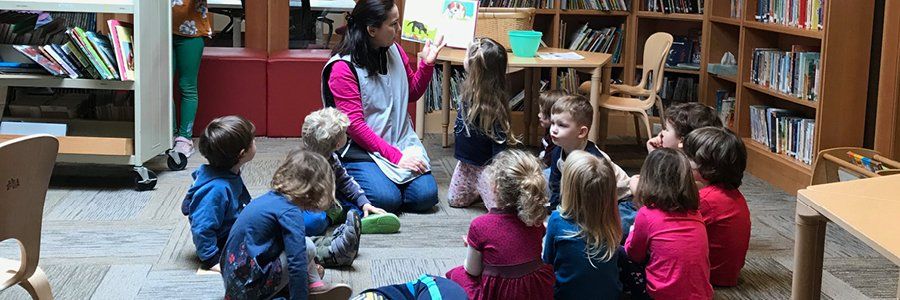
Guide sitting on the floor with a circle of preschool aged children, reading a book

“Establishing lasting peace is the work of education; all politics can do is keep us out of war.” –Dr. Maria Montessori


Peace can often seem like a lofty goal. Yet we believe it starts small, in our own families, our own communities, and in the ways we raise our children.


This week we share a list of books for you to explore as a family. Even infants and toddlers can start to learn about peace, and there are many incredible books available to older children, including adolescents. Please let us know if you give any of these a try, or if there are others you think should be added to the list.


Primary

The Peace Book by Todd Parr

Primary-aged children will certainly love this book, but so will infants and toddlers. Parr’s bright, bold illustrations, coupled with easy-to-understand text, give children an early idea of what peace means. Featuring diverse characters and actions children can actually put into practice, this book is a perfect introduction to peace.


The Peace Rose by Alicia Olson

The Peace Rose is a book loved by many Montessori educators. It revolves around the idea that children might use a rose to help them resolve conflicts amongst themselves, passing it to one another so that everyone has a turn to speak. Some primary classrooms use this technique, and many families have found it helpful to bring the practice into the home. (It’s especially helpful with siblings!)


All the World by Liz Garton Scanlon

A Caldecott Honor book, All the World sheds light on the importance of and the connections between all things - large and small. Young readers follow a day and night along with a group of family, friends, and the world they live in.


Elementary

A Little Peace by Barbara Kerley

During the elementary years, illustrations and images are still very important. They give young children a deep sense of meaning and help them enjoy books in a deeper way. This National Geographic book couples gorgeous photographs from around the world with important, reflective messages about how we might all create a more peaceful place.


Amazing Peace by Maya Angelou

The incredible Maya Angelou first shared this poem at the White House in 2005, during the annual tree lighting ceremony. It is a Christmas poem, but it is so much more than that. As frightening weather looms, a family embraces the Christmas holiday. Their celebrations extend outward into their community, to include neighbors of difference races, religions, and those in different socioeconomic situations.


One Hen: How One Small Loan Made a Big Difference by Katie Smith Milway, illustrated by Eugenie Fernandes

Based on the life and experiences of Kwabena Darko, this book is both lovely and informative. The main character, Kojo, is forced to quit school in order to help his mother after his father dies. Living in a village in Ghana, Kojo’s mother is able to secure a small loan and gives a bit of the money to her son. With it, Kojo purchases a single hen, which eventually grows into a substantial flock, earning him enough money to help support his family and allowing him to return to school. Microloans are an important part of working to lift up developing nations, and this book is a fantastic introduction.


Adolescent

Sadako and the Thousand Paper Cranes by Eleanor Coerr

Based on a true story, Sadako was a young girl who lived in Japan when the United States dropped an atom bomb on Hiroshima. She is lively, an excellent runner, and has the rest of her life ahead of her. Then she begins to feel ill and learns that she has leukemia as a result of the radiation. She recalls an old Japanese legend that states if a person folds a thousand paper cranes they will become healthy again. She sets out to do so, eventually gaining help from people around the world. Today, the thousand paper cranes are a symbol of peace in the aftermath of war.


A Young People’s History of the United States: Columbus to the War on Terror by Howard Zinn and Rebecca Stefoff

Twenty-five years after publishing a similarly named book for adults, Zinn shared this new perspective of United States history for a younger audience. Our history is often written by the perspective of a very limited group of people, often leaving out the stories of those affected most by events. Learning about the past should include the stories of everyone, especially those who have been marginalized and oppressed. This book does just that.


This Book is Anti-Racist: 20 Lessons on How to Wake Up, Take Action, and Do the Work by Tiffany Jewell, illustrated by Aurelia Durand

Jewell, a Montessori educator, has worked tirelessly to create more inclusive and accessible classrooms. This Book is Anti-Racist gives young people concrete steps to learn about themselves, learn about others, and go about changing the world. While this book is not about the peace that exists, it is absolutely about the peace that we must all work to create.
By Meagan Ledendecker February 23, 2026
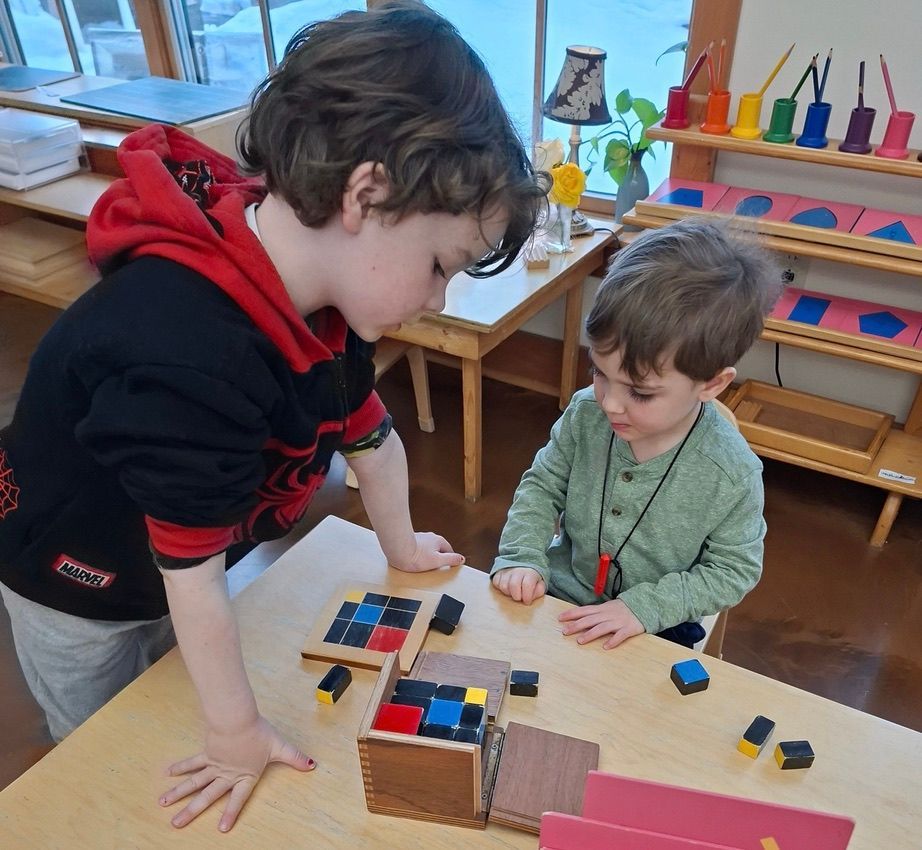
One of the quieter, less visible practices in a Montessori elementary classroom is the Child-Guide conference. You may never see it listed on a schedule or mentioned in a weekly update, yet it plays a profound role in children’s experience at school. Relationship Comes First The primary purpose of these conferences is to establish, maintain, and strengthen the relationship between the adult and each child. This focus shifts the dynamic from a teacher looking for faults or scolding about unfinished work. Rather, it’s a collegial conversation that enables children to take an active and engaged role in their own education. These connective conversations are grounded in relationship-building because when children feel emotionally safe and genuinely respected, they are far more willing to reflect, stretch themselves, and take responsibility for their growth. Every Child, as Often as They Need Montessori Guides aim to meet regularly with every child, but what “regularly” looks like can vary based on individual needs. Some children benefit from a longer, more formal conference every few weeks. Others need brief, frequent check-ins, sometimes lasting only a minute or two. These short moments might look like a quick conversation at the beginning of the morning, a gentle pause beside a table, or a quiet walk across the room together. The length of the meeting is not what matters. What is important is the message it sends: “I see you. I know your work. I care about how this is going for you.” What Happens in a Child-Guide Conference? While conferences vary based on each individual and the moment, they often include: The child bringing their learning journal or work (finished and unfinished) The guide bringing observational records A shared look at what has been accomplished Gentle reflection on what still feels unfinished Planning for what might come next Scheduling new lessons or presentations Support with larger projects: breaking them into steps, mapping timelines, imagining the finished product This collaborative time also provides an opportunity to experiment with new strategies (“Would you like to try creating a prioritized list?”), celebrate successes (“You worked so hard on your presentation! How did it feel to share your work?”), and reflect upon challenges (“It seems like you’ve been feeling a bit stuck in your research project. Tell me more about what is going on.”). Learning to Define “Finished” One of the most freeing lessons children learn in Montessori is that not every piece of work must be finished to an adult’s standard. Sometimes children accomplish exactly what they set out to do, and continuing would add nothing meaningful. Other times, interest has naturally ended, and letting go is healthy. This is not about lowering expectations. It is about honoring children’s internal sense of completion and learning when to release what no longer serves a purpose. Trusting Children’s Self-Assessment A cornerstone of these conferences is trust. Guides listen carefully to how children assess their own work and articulate their goals. When an adult truly accepts children’s self-assessment, something powerful happens: children begin to see themselves as capable, thoughtful, and worthy of being taken seriously. Children often receive more from the tone and sentiment of these meetings than from the actual content discussed. The Whole Child Matters Because Montessori education is concerned with the whole child, conferences may naturally move beyond academics. A Guide might gently offer support with social dynamics or ask about recent struggles during outdoor time. These moments provide a safe space for children to reflect on their own social, emotional, and physical development, and to recognize that there is a network of support. When Relationships Need Repair Even in the most thoughtful classrooms, relationships can become strained. What matters is how adults respond. It is never too late for a Guide to sit with a child and say, honestly: “I’ve been thinking about how we’ve been interacting recently, and I’d love to brainstorm with you about what I could do differently.” When an adult takes responsibility, without demanding the child do the same, something shifts. Trust begins to rebuild. Real dialogue becomes possible. Children learn from this modeling. In time, after they feel safe, they often step forward to take responsibility themselves. What Children Are Really Learning Through these quiet, intentional meetings, children learn that:  their thoughts and feelings matter, adults can be trusted, mistakes are part of growth, reflection leads to independence, and relationships can be repaired. And while these conferences may happen quietly in a corner of the classroom, their impact echoes far beyond it. This is true preparation for life. To learn more about the long-term benefits of Montessori, visit us here in Lenox, MA!
Image of a preschool aged student sitting on the floor with a moveable alphabet
By Meagan Ledendecker February 16, 2026
Explore how Montessori children learn to write through sound work, movable alphabet exploration, and a joyful, developmentally prepared process.
Image of two parents with two children hugging their children after school
By Meagan Ledendecker February 9, 2026
Learn why children need quiet decompression after school and how a “quiet landing” supports regulation, connection, and meaningful conversation.
Image of three elementary students sitting at a table with red equivalence shapes set in green frame
By Meagan Ledendecker February 2, 2026
Discover how Montessori geometry introduces equivalence through hands-on exploration, helping children build deep understanding of area, fractions, and mathematical reasoning.
Image of three elementary students holding a triangle of rope between them
By Meagan Ledendecker January 26, 2026
Explore the Montessori story of geometry’s origins, from ancient Egyptian rope-stretchers to modern classrooms, inspiring children’s wonder and curiosity.
By Meagan Ledendecker January 19, 2026
A Montessori approach to understanding disrespect: why children use strong words, how adults can stay calm, and ways to protect connection over conflict.
Show More