More Than a Method: Montessori's Vision for Humanity
Meagan Ledendecker • July 7, 2025

At the heart of Montessori education is a deep respect for human potential. The core of Montessori philosophy and practice originated when Dr. Maria Montessori, as part of her medical school training, worked with children who had developmental delays. Dr. Montessori observed that the children needed something different, so she provided them with materials and an environment that truly supported their development. The result? The children demonstrated remarkable growth. This discovery has forever changed our understanding of learning and the human experience.


A Scientific Lens on Human Nature


Dr. Montessori approached children and human development as a scientist. Through her observations, she recognized that humans possess innate, universal characteristics and follow predictable patterns of development. At our core, we are a species designed to learn, to adapt, and to grow.


By observing children through the lens of human development, Dr. Montessori identified specific stages of growth, which we now call the Planes of Development, and a set of Human Tendencies that drive learning and adaptation from birth to maturity. These tendencies are not random. They are evolutionary forces that guide humans to meet their needs and fulfill their potential.


Education That Aligns With Nature


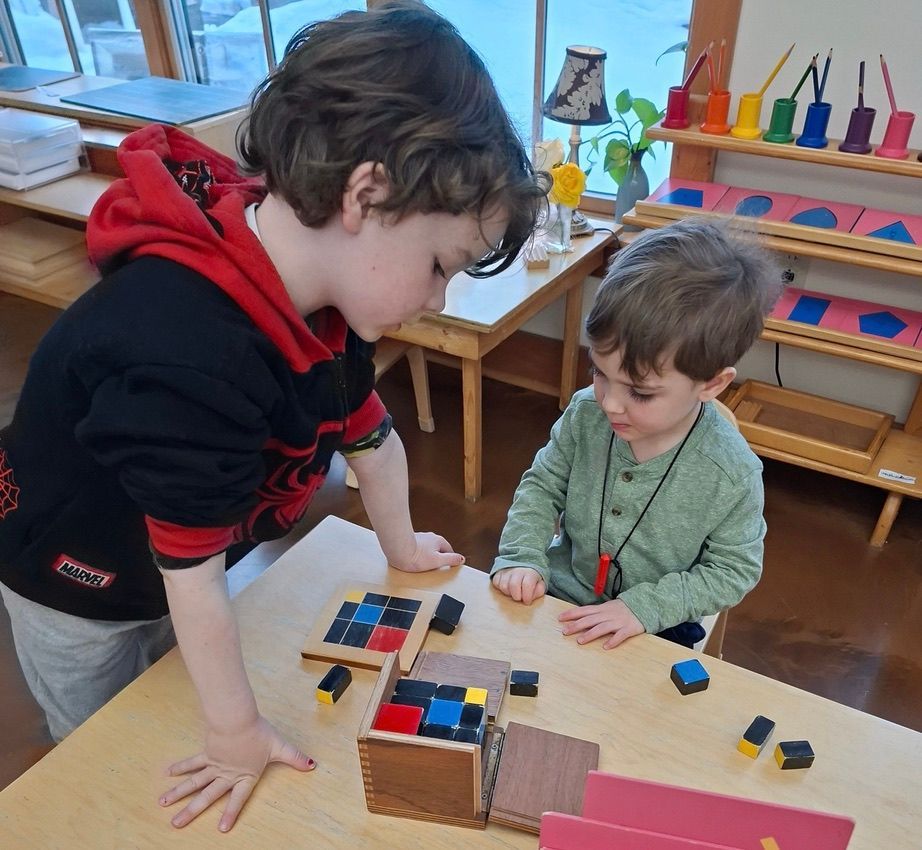
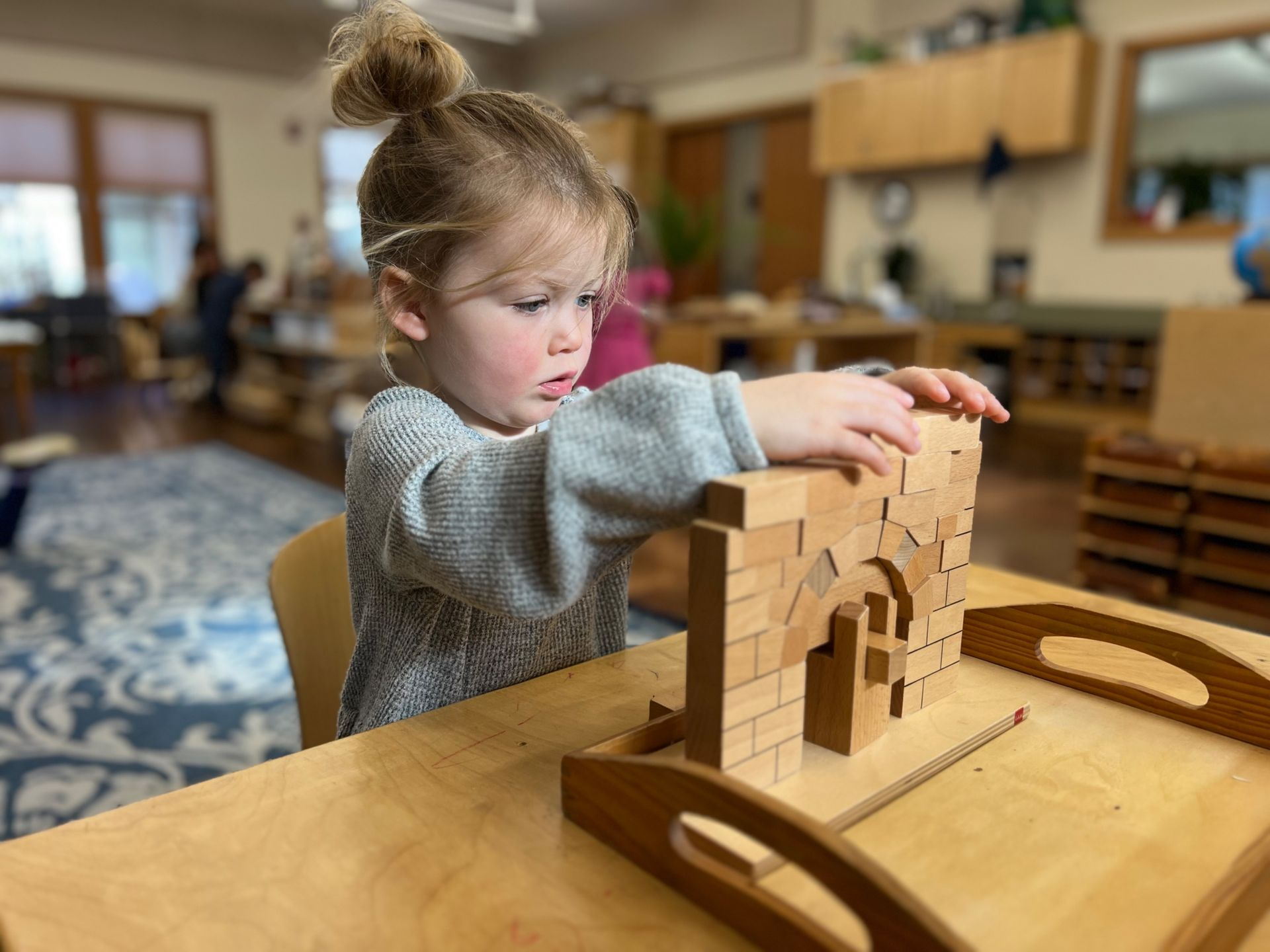
Montessori education is structured around supporting these stages and tendencies. Instead of imposing learning, we respect and reinforce the natural unfolding of each child’s abilities. Montessori learning environments are carefully prepared to meet developmental needs, and the adult’s role shifts from teacher to someone who serves as an aide to life. This means adults serve as guides who observe, prepare, and support rather than direct.


A Cosmic Perspective


Montessori’s vision of human development goes beyond the individual. She saw human beings as part of a cosmic web of interrelationships. In this interconnected system, each part plays a role in maintaining balance and harmony. Humans have a special place in this system, not only because of our capacity to adapt but because of our consciousness of that very role.


With this perspective, we recognize that education must also cultivate humility, wonder, and stewardship —qualities that enable us to live responsibly within this complex, interdependent world. In this context, education is not just about achieving success; it’s about supporting the growth of mature, adaptive, and aware human beings.


The Power of Adaptation


Humans are uniquely capable of adapting to a vast range of environments and social conditions. We have been able to move beyond survival and, in the process, have become creative, intelligent, and intentional in our adaptation. From birth, children adapt and evolve through interaction with their surroundings. Through their senses, hands, minds, and relationships, children construct themselves and their understanding of the world.


Dr. Montessori identified key characteristics that support this adaptation. Humans have a long childhood, noteworthy for the development of our hands, intelligence, imagination, and social interdependence. These capacities are guided by the Human Tendencies, which not only move development forward but also shape who we become.


The Human Tendencies


These universal tendencies include the drive to:

●      Orient to the environment

●      Explore the unknown

●      Order and make sense of the world

●      Abstract and think symbolically

●      Imagine possibilities

●      Calculate and reason

●      Work to shape and adapt the environment

●      Repeat and strive for precision

●      Perfect oneself through effort

●      Communicate and associate with others


These tendencies are innate, universal, lifelong, and evolutionary in nature. They cannot be eliminated, but they can be supported—or thwarted. When blocked, children will still try to meet their needs, often in less productive or more disruptive ways.


Observation and the Role of Adults


To truly support a child’s development, we observe with care to determine if children’s tendencies are being honored or obstructed. As Montessori-trained guides, we strive to look beneath behavior and recognize what drives it. This observational practice shifts our understanding of children and deepens our respect for their developmental process.


Dr. Montessori’s work challenges traditional views of education. Instead of seeing adults as the agents of growth, Dr. Montessori emphasized that children are self-constructing beings. Education should not be about imposing knowledge but about intentionally supporting the natural process of development.


Education as an Aid to Life


Ultimately, we believe that education should serve as a vital component of life itself. When we align learning environments with the science of human development, supporting children’s creative process of adaptation, we open the door to profound potential.


Montessori education offers not only a method but a visionary framework rooted in observation, science, and deep reverence for what it means to be human. It calls us to see children not as empty vessels, but as beings full of possibility, ready to become mature, capable, and compassionate citizens of the world.


We invite you to visit our school to see how Montessori environments support the potential of our young people!
By Meagan Ledendecker February 23, 2026
One of the quieter, less visible practices in a Montessori elementary classroom is the Child-Guide conference. You may never see it listed on a schedule or mentioned in a weekly update, yet it plays a profound role in children’s experience at school. Relationship Comes First The primary purpose of these conferences is to establish, maintain, and strengthen the relationship between the adult and each child. This focus shifts the dynamic from a teacher looking for faults or scolding about unfinished work. Rather, it’s a collegial conversation that enables children to take an active and engaged role in their own education. These connective conversations are grounded in relationship-building because when children feel emotionally safe and genuinely respected, they are far more willing to reflect, stretch themselves, and take responsibility for their growth. Every Child, as Often as They Need Montessori Guides aim to meet regularly with every child, but what “regularly” looks like can vary based on individual needs. Some children benefit from a longer, more formal conference every few weeks. Others need brief, frequent check-ins, sometimes lasting only a minute or two. These short moments might look like a quick conversation at the beginning of the morning, a gentle pause beside a table, or a quiet walk across the room together. The length of the meeting is not what matters. What is important is the message it sends: “I see you. I know your work. I care about how this is going for you.” What Happens in a Child-Guide Conference? While conferences vary based on each individual and the moment, they often include: The child bringing their learning journal or work (finished and unfinished) The guide bringing observational records A shared look at what has been accomplished Gentle reflection on what still feels unfinished Planning for what might come next Scheduling new lessons or presentations Support with larger projects: breaking them into steps, mapping timelines, imagining the finished product This collaborative time also provides an opportunity to experiment with new strategies (“Would you like to try creating a prioritized list?”), celebrate successes (“You worked so hard on your presentation! How did it feel to share your work?”), and reflect upon challenges (“It seems like you’ve been feeling a bit stuck in your research project. Tell me more about what is going on.”). Learning to Define “Finished” One of the most freeing lessons children learn in Montessori is that not every piece of work must be finished to an adult’s standard. Sometimes children accomplish exactly what they set out to do, and continuing would add nothing meaningful. Other times, interest has naturally ended, and letting go is healthy. This is not about lowering expectations. It is about honoring children’s internal sense of completion and learning when to release what no longer serves a purpose. Trusting Children’s Self-Assessment A cornerstone of these conferences is trust. Guides listen carefully to how children assess their own work and articulate their goals. When an adult truly accepts children’s self-assessment, something powerful happens: children begin to see themselves as capable, thoughtful, and worthy of being taken seriously. Children often receive more from the tone and sentiment of these meetings than from the actual content discussed. The Whole Child Matters Because Montessori education is concerned with the whole child, conferences may naturally move beyond academics. A Guide might gently offer support with social dynamics or ask about recent struggles during outdoor time. These moments provide a safe space for children to reflect on their own social, emotional, and physical development, and to recognize that there is a network of support. When Relationships Need Repair Even in the most thoughtful classrooms, relationships can become strained. What matters is how adults respond. It is never too late for a Guide to sit with a child and say, honestly: “I’ve been thinking about how we’ve been interacting recently, and I’d love to brainstorm with you about what I could do differently.” When an adult takes responsibility, without demanding the child do the same, something shifts. Trust begins to rebuild. Real dialogue becomes possible. Children learn from this modeling. In time, after they feel safe, they often step forward to take responsibility themselves. What Children Are Really Learning Through these quiet, intentional meetings, children learn that:  their thoughts and feelings matter, adults can be trusted, mistakes are part of growth, reflection leads to independence, and relationships can be repaired. And while these conferences may happen quietly in a corner of the classroom, their impact echoes far beyond it. This is true preparation for life. To learn more about the long-term benefits of Montessori, visit us here in Lenox, MA!
Image of a preschool aged student sitting on the floor with a moveable alphabet
By Meagan Ledendecker February 16, 2026
Explore how Montessori children learn to write through sound work, movable alphabet exploration, and a joyful, developmentally prepared process.
Image of two parents with two children hugging their children after school
By Meagan Ledendecker February 9, 2026
Learn why children need quiet decompression after school and how a “quiet landing” supports regulation, connection, and meaningful conversation.
Image of three elementary students sitting at a table with red equivalence shapes set in green frame
By Meagan Ledendecker February 2, 2026
Discover how Montessori geometry introduces equivalence through hands-on exploration, helping children build deep understanding of area, fractions, and mathematical reasoning.
Image of three elementary students holding a triangle of rope between them
By Meagan Ledendecker January 26, 2026
Explore the Montessori story of geometry’s origins, from ancient Egyptian rope-stretchers to modern classrooms, inspiring children’s wonder and curiosity.
By Meagan Ledendecker January 19, 2026
A Montessori approach to understanding disrespect: why children use strong words, how adults can stay calm, and ways to protect connection over conflict.
Show More