
Taking a Look at Homework
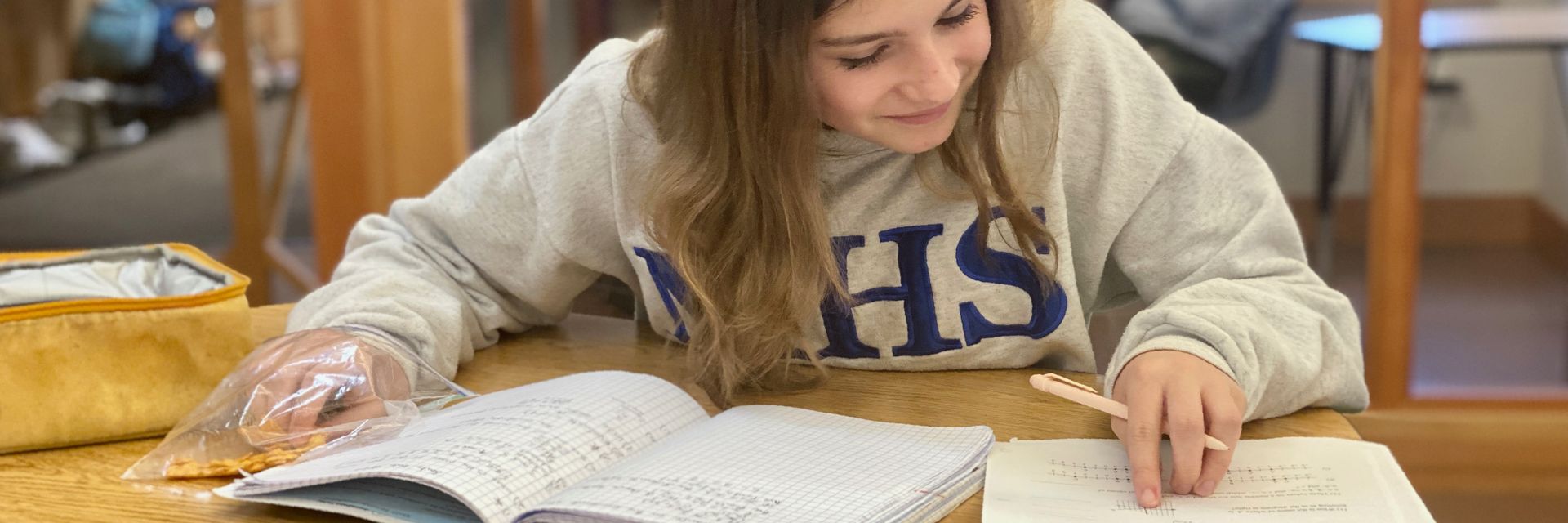
Many of us grew up with some form of homework, so it can feel a little strange when our Montessori kids come home without it. In fact, we may start to wonder what our children are missing by not having homework.
Perhaps some worries have crossed your mind: Don’t my children need additional practice to help improve their retention? Doesn’t homework help reinforce concepts learned in school? Doesn’t homework serve as a tool for teaching responsibility, self-discipline, and time management?
Let’s lean into these questions to explore what happens in Montessori classrooms and whether homework meets children’s developmental needs.
Do our children need additional practice to help improve their retention?
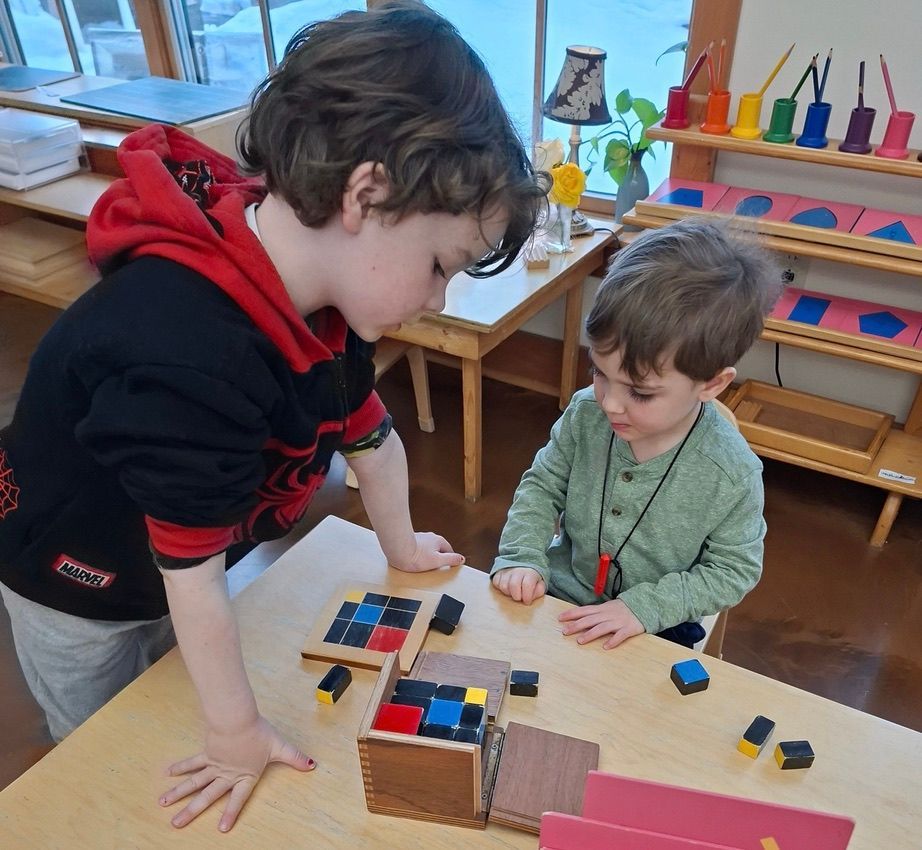
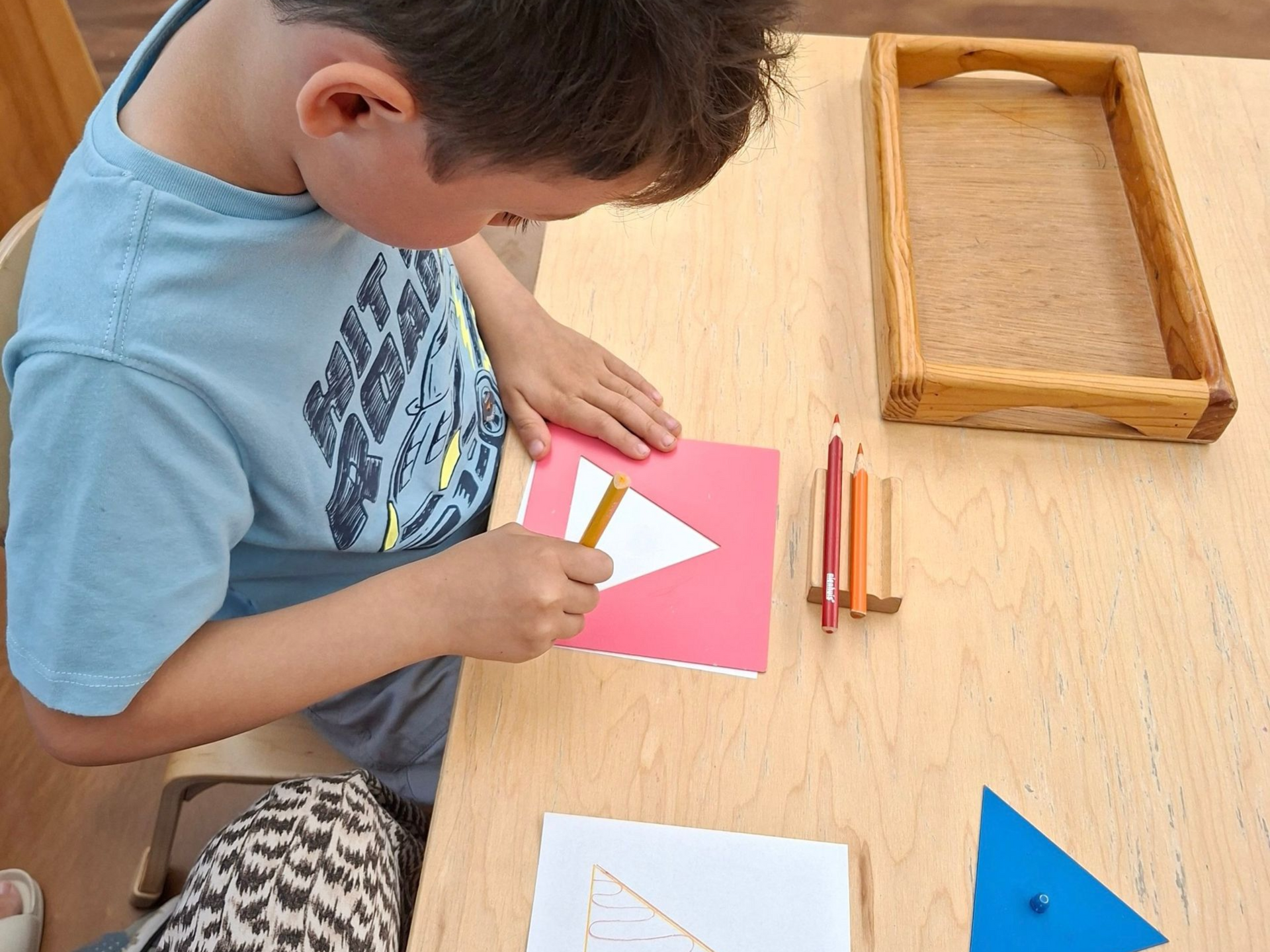
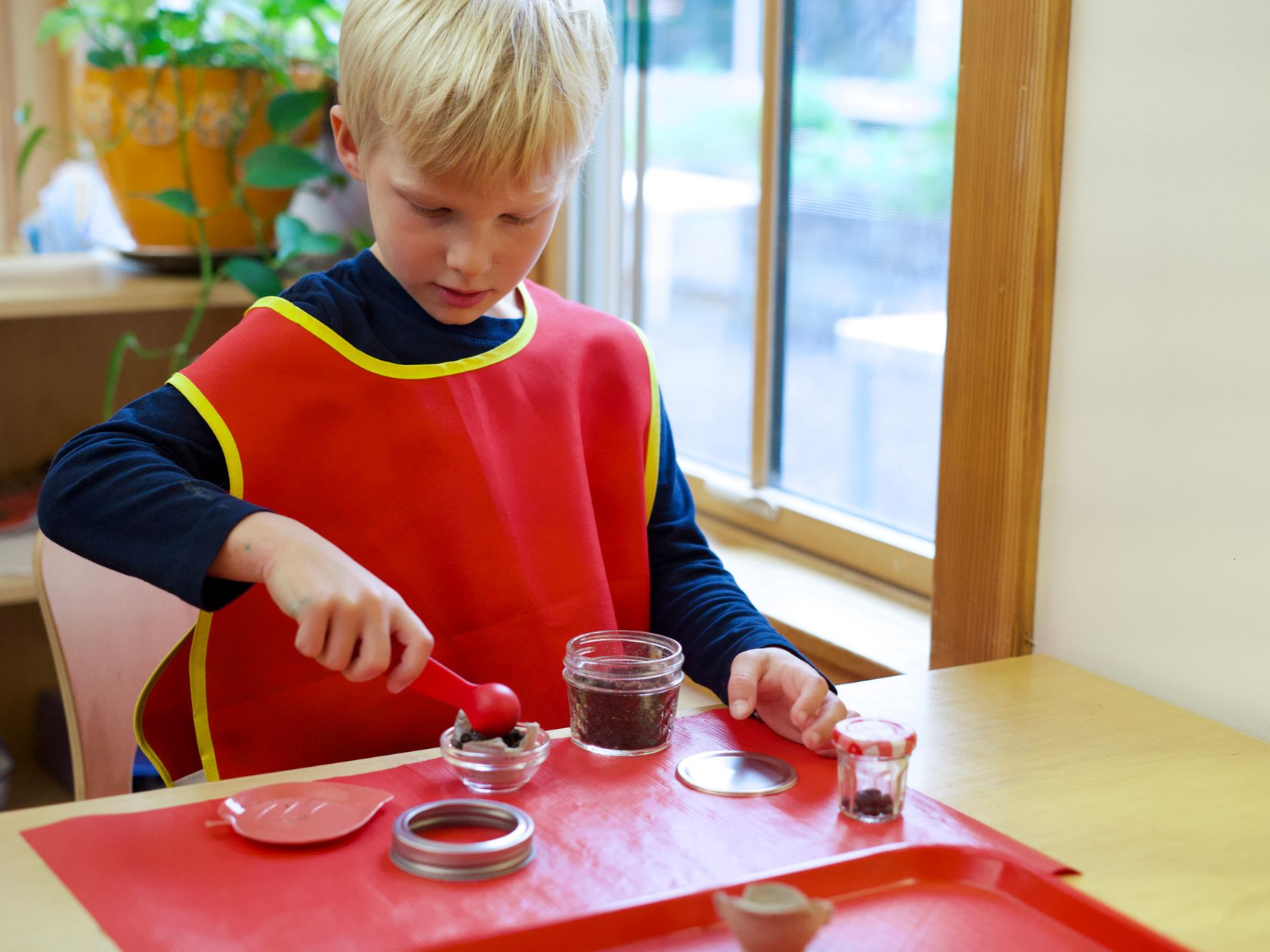
Unlike our youngest ones, who love endless repetition (it can be hard to read that favorite book one more time!), once our children reach the elementary years, they crave variety. Thus, the key is to provide lots of different kinds of opportunities for practice. For example, in Montessori classrooms, we have SO MANY ways for students to practice their multiplication facts: the large bead frame, bead bars, bead chains, multiplication board, checkerboard, and bank game, just to name a few.
We find that children love to practice and challenge themselves. So should we assign practice for them to take home? Author and researcher Alfie Kohn spent years reviewing the available research (as well as interviewing parents, teachers, and students), and he sums up his findings with the following statement: “Homework is all pain and no gain.” In fact, in studying the research, Kohn found that having and doing homework during the elementary years does not improve learning. That being said, in high school there is a small correlation between homework and test scores, although no clarity about whether doing the homework leads to higher test scores.
We’ve also found that when children are engaged and loving their varied practice at school, requiring that they continue the practice at home can actually backfire. For example, when children are made to do academic work at home, we see that they are less likely to engage with similar learning activities at school. That being said, when children are excited about their learning and initiate continuing at home, we encourage and celebrate this extension of their work!
Does homework help reinforce concepts learned in school?
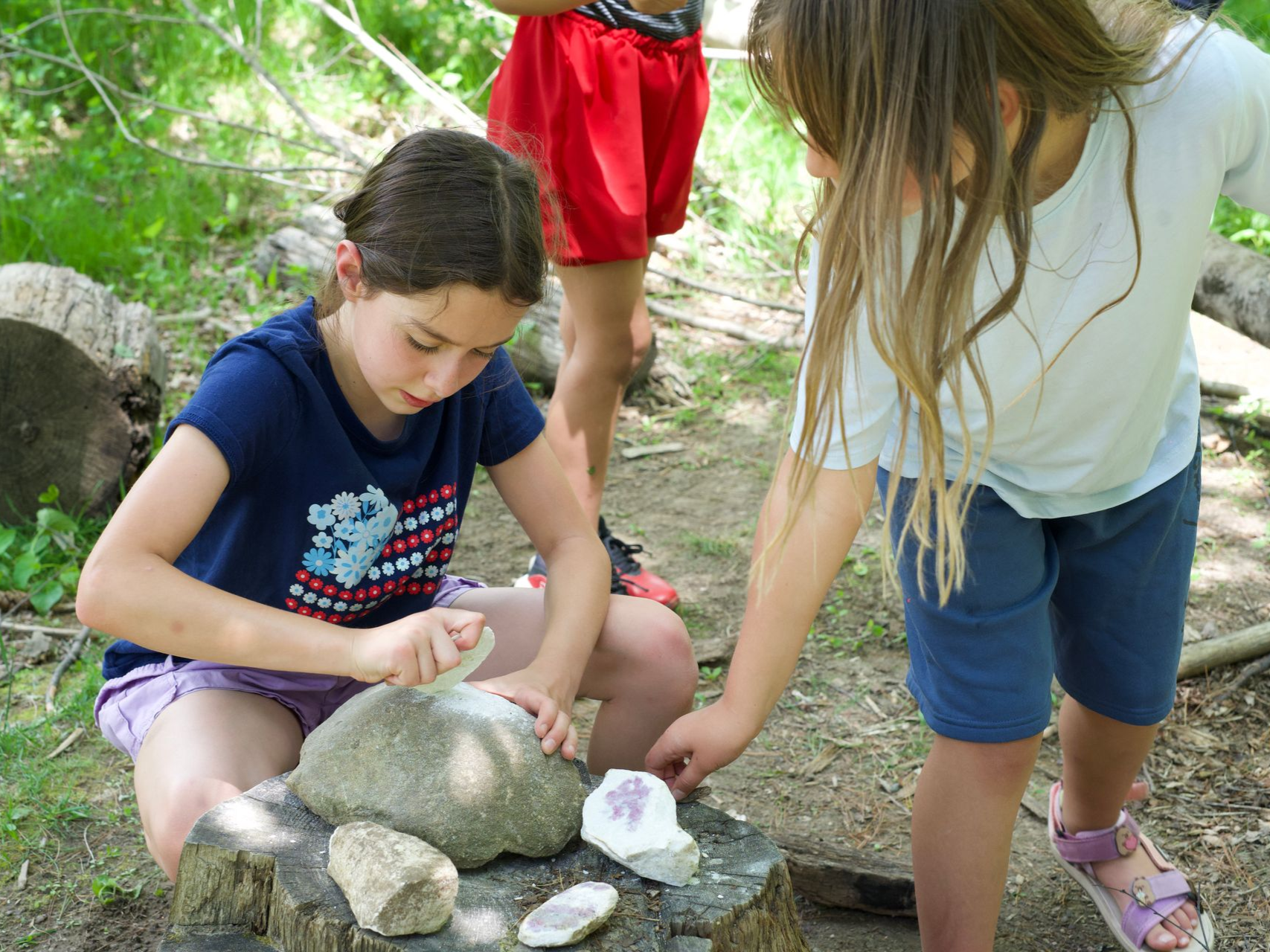
We want children to see themselves as life-long learners. One way we support this is to avoid the dichotomy of home versus school. Learning doesn’t stop or start at the classroom door! Perhaps at school, a child is suddenly passionate about sea turtles. We explore how this learning can extend into the community: visiting a local aquarium for a real-life encounter, finding sea turtle books from the local library, watching a sea turtle documentary, etc. Some of this could happen through going-out trips from school and just as easily could also be something the child’s family embraces to support the learning experience.
Home learning (rather than preassigned homework each night) is meaningful and relevant. Just as an adult might be motivated or excited about a project at work and want to continue some of the process at home at night or over the weekend, we want our students to realize that their learning has no bounds of time or space! This could work in the other direction, too. Maybe a child asks a question at home one night about how stars are formed, which leads to a deep dive at school into types of stars, galaxies, and even chemistry.
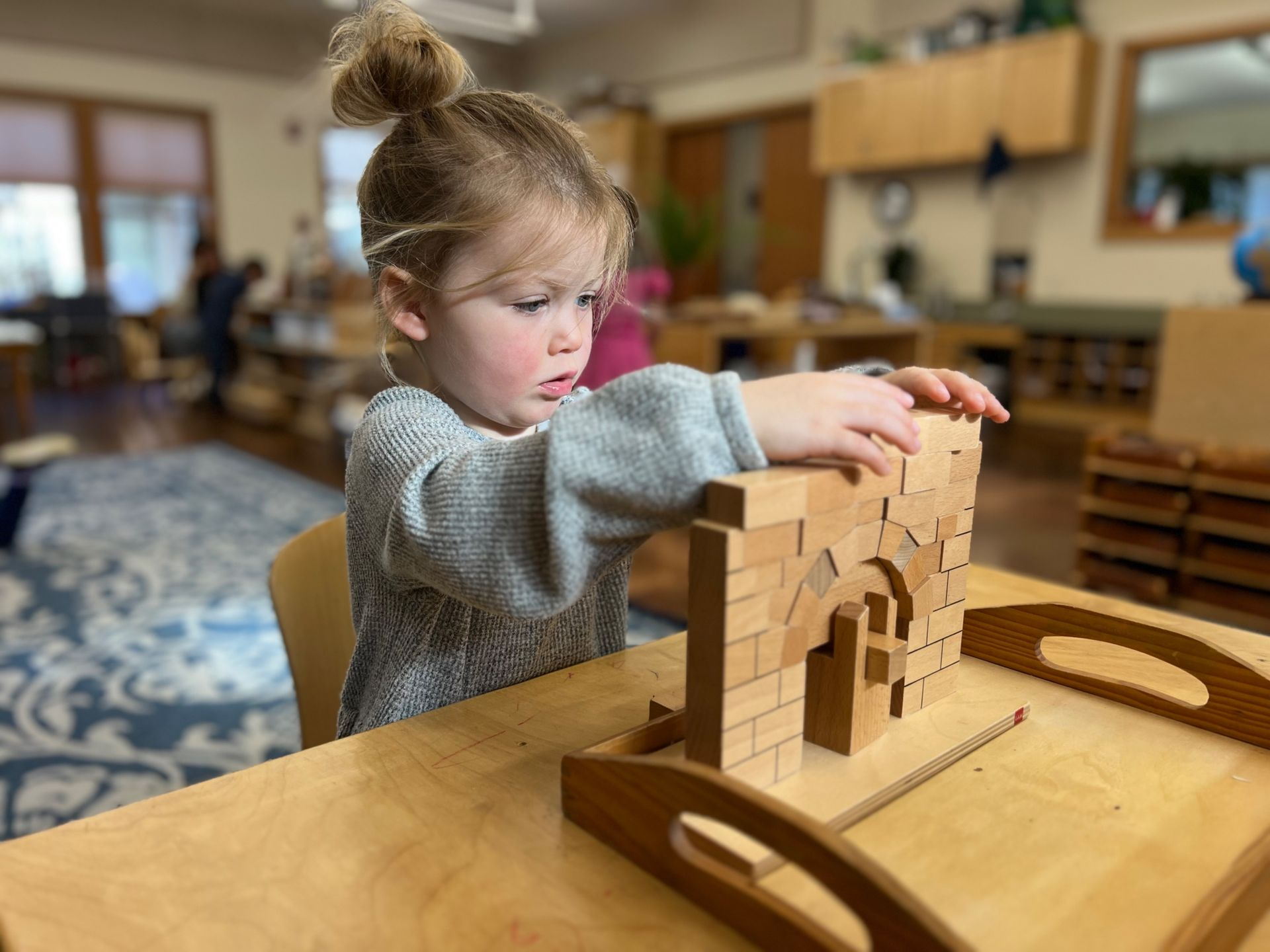
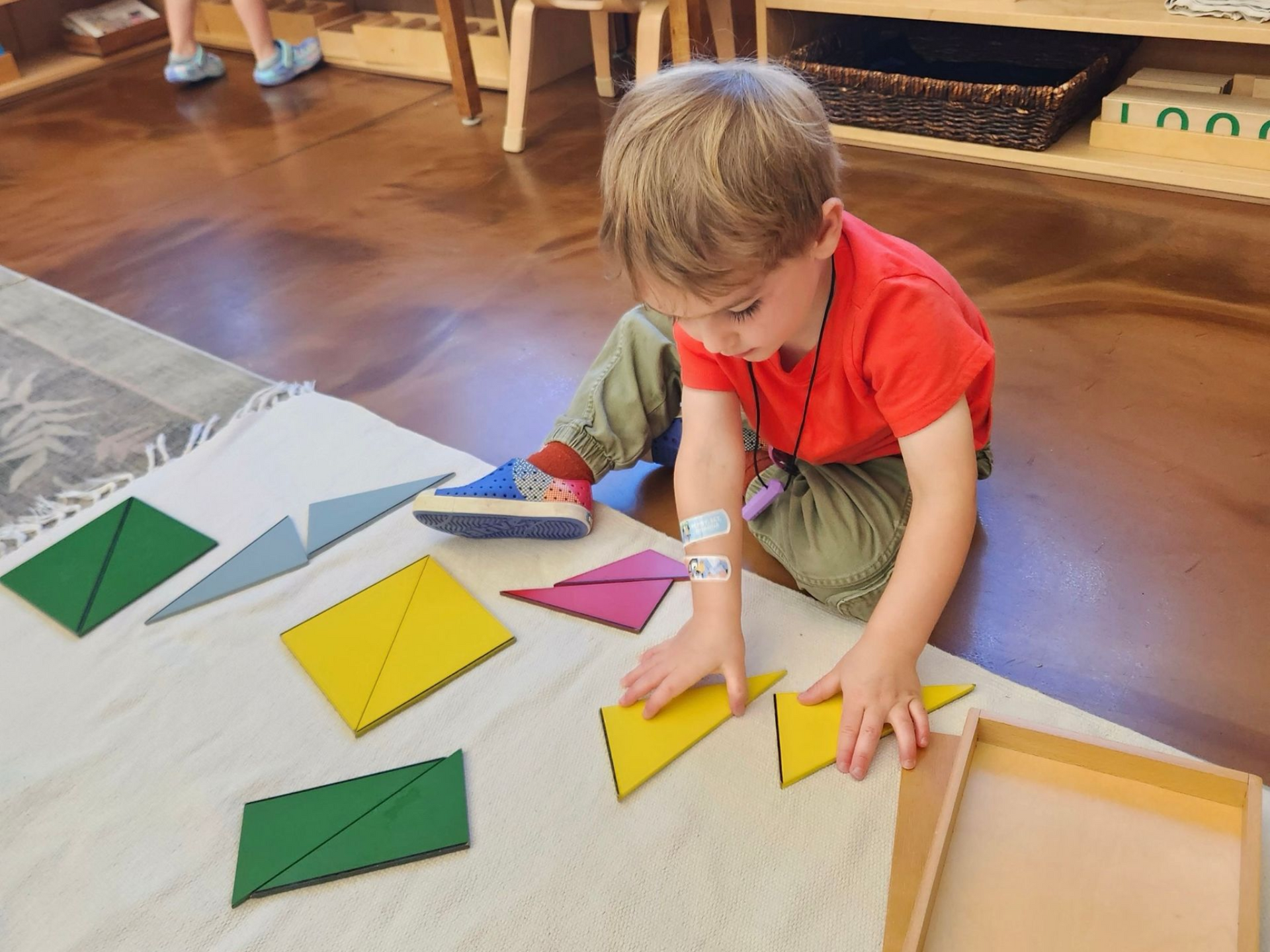
This understanding that learning happens throughout all the aspects of our lives is a hallmark of Montessori education. We emphasize deep, hands-on engagement with varied kinds of learning materials. Our curriculum is designed to support an explosion of imagination and curiosity. Children can ask questions, explore, and work through big concepts at their own pace.
Does homework serve as a tool for teaching responsibility, self-discipline, and time management?
Montessori education is grounded in a deep respect for young people. Our unique approach is designed to cultivate responsibility, self-discipline, and time management skills. Montessori classrooms provide children with the freedom to choose their work, but within a structured environment and framework. This freedom is tied together with responsibility and teaches students to make well-informed choices about how they spend their time and what tasks they prioritize. Through one-on-one conferencing and daily adjustments, classroom teachers provide guidance and reflection that empowers students to think about their own learning process, including what parts could use more attention.
Instead of relying on external rewards or punishments, Montessori emphasizes intrinsic motivation. Students engage in activities because they are interested and find satisfaction in completing them, which nurtures self-discipline. Plus, children work at their own pace without direct competition. This allows them to focus deeply on their tasks, developing concentration and persistence, which are core aspects of self-discipline.
Ultimately, there is work to be done and sometimes even deadlines to meet. As we experience in the adult world, if we have procrastinated, lost focus, or just had to tend to other things, the work doesn’t go away, and sometimes we have to bring it home to make sure we get it done. The same applies to Montessori students. Sometimes they will need to bring some work home to meet a deadline or work through a challenge that needs more attention.
Guides may also work with older students to create individual learning plans so that they can more consciously plan their day or week to meet their goals. We scaffold this skill so our young people can learn how to incorporate goal setting, planning, and time management into their lives.
In a supportive way, we integrate choice, autonomy, and responsibility into students’ daily routines. The result? Montessori students feel empowered, take ownership of their learning, and have the gift of devoting afternoons and evenings for rest, family bonding, and exploring personal interests.
Interested in seeing for yourself how all of this works?
Schedule a tour today!