The Power of Color

Meagan Ledendecker • May 13, 2024

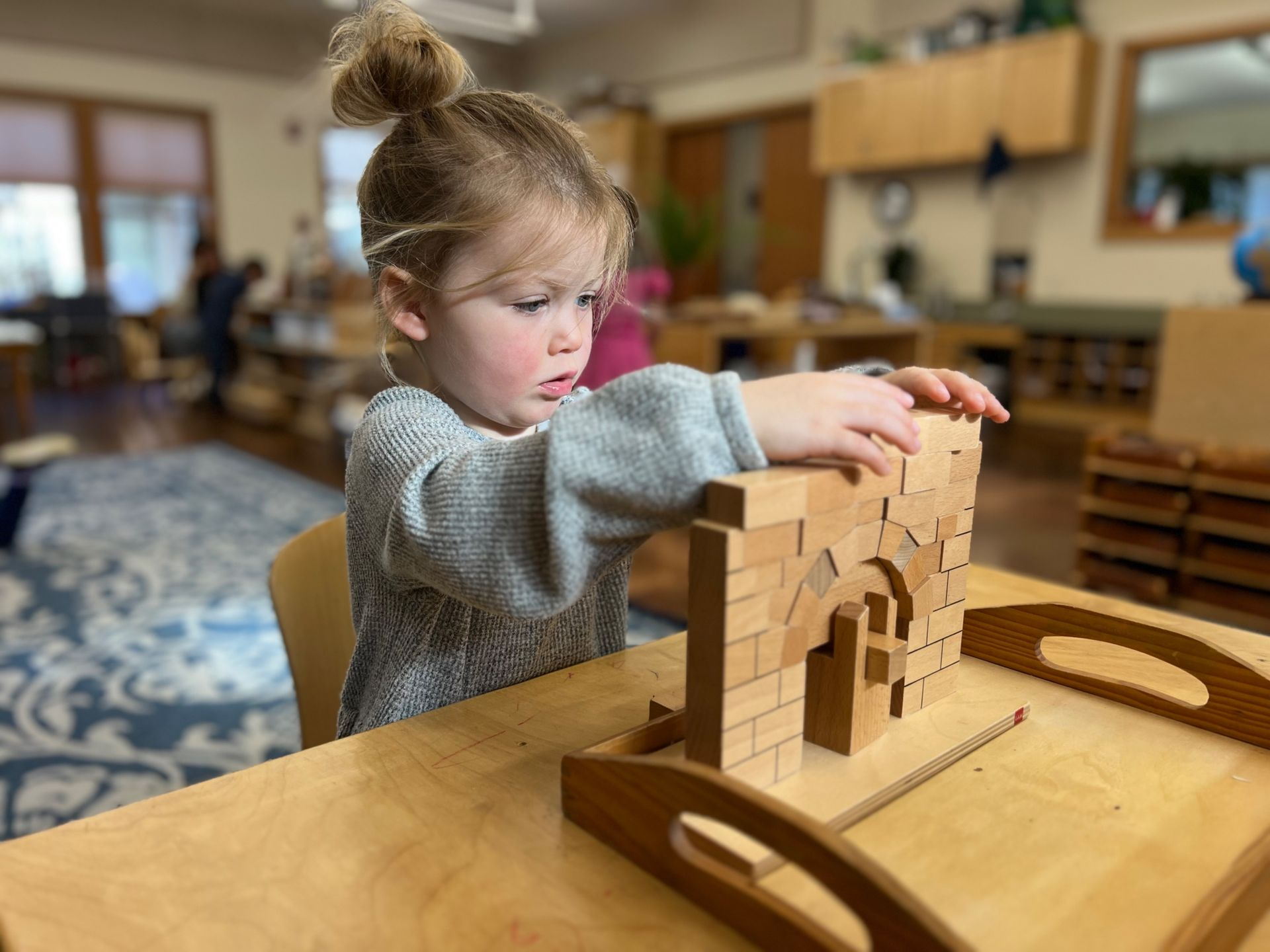
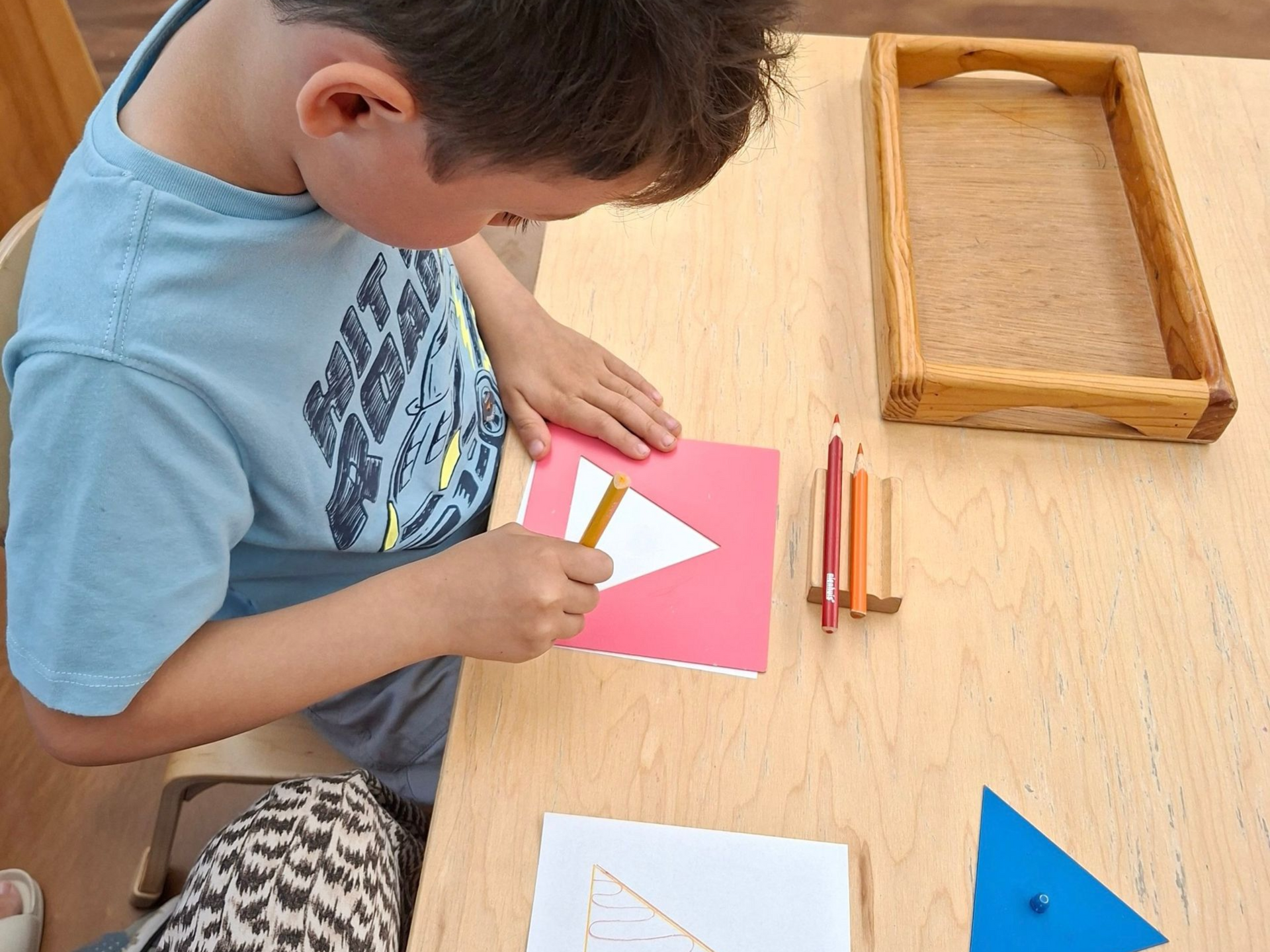
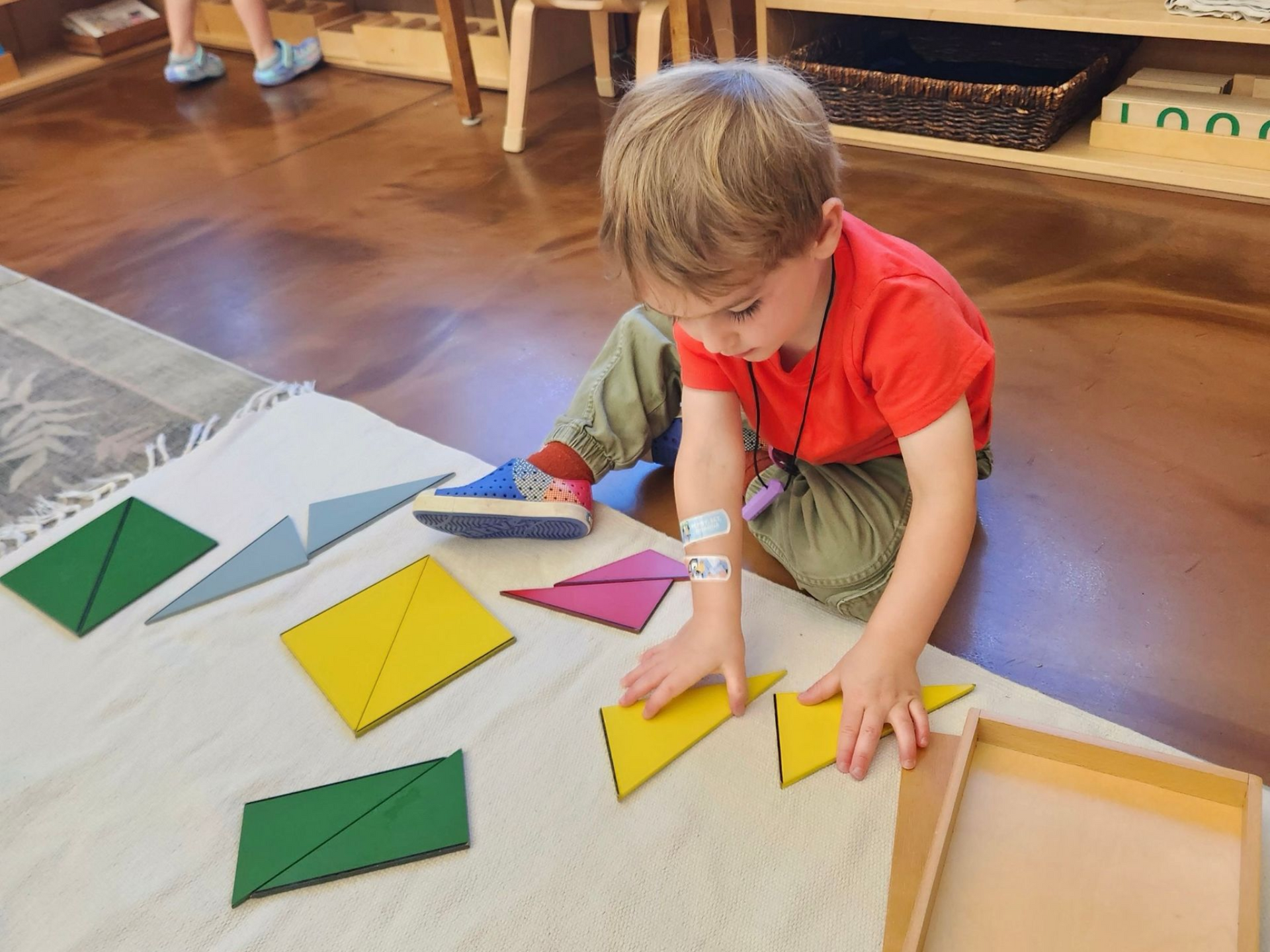
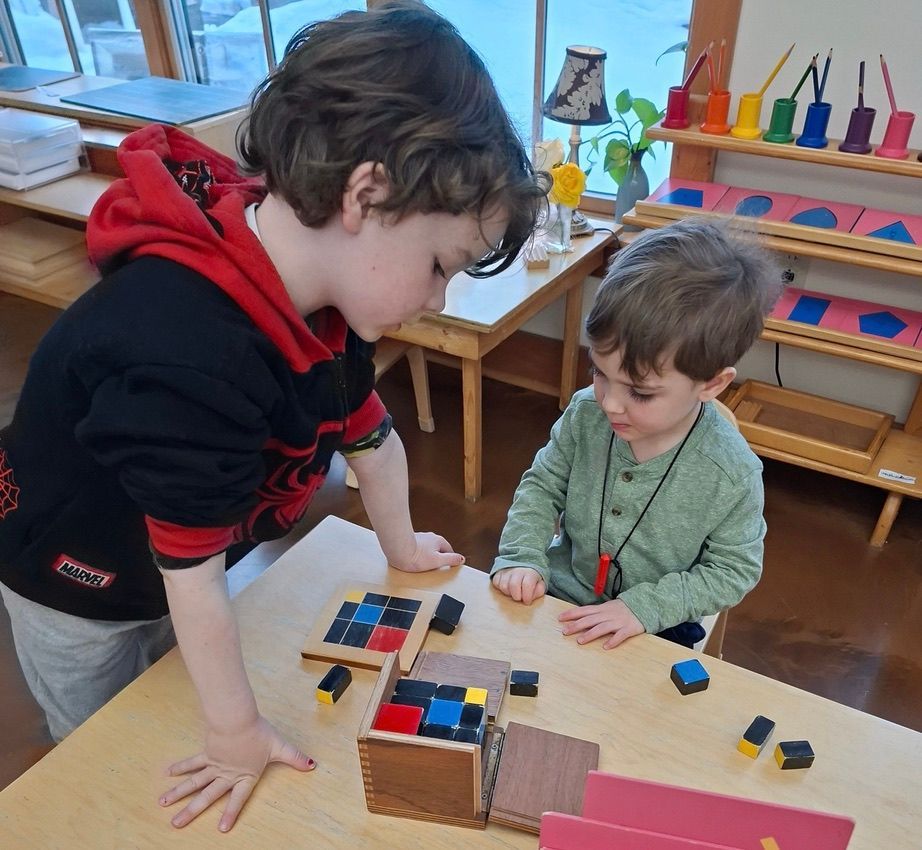
The body content of your post goes here. To edit this text, click on it and delete this default text and start typing your own or paste your own from a different source.When you look inside a Montessori classroom, you’ll notice the general attractiveness and warm quality of the room. As you peruse the environment, you may also notice the array of colorful materials on the shelves and how they stand out in contrast to some of the neutral feel of the rest of the room. 


These colorful learning materials are designed for beauty so that our young children will be drawn to them. However, this isn’t the only reason Montessori materials have distinct colors. The color-coding also helps with organization and structure in the learning environment, and perhaps even more importantly, plays an important role in facilitating children’s cognitive development and learning. 


Creating External and Internal Order


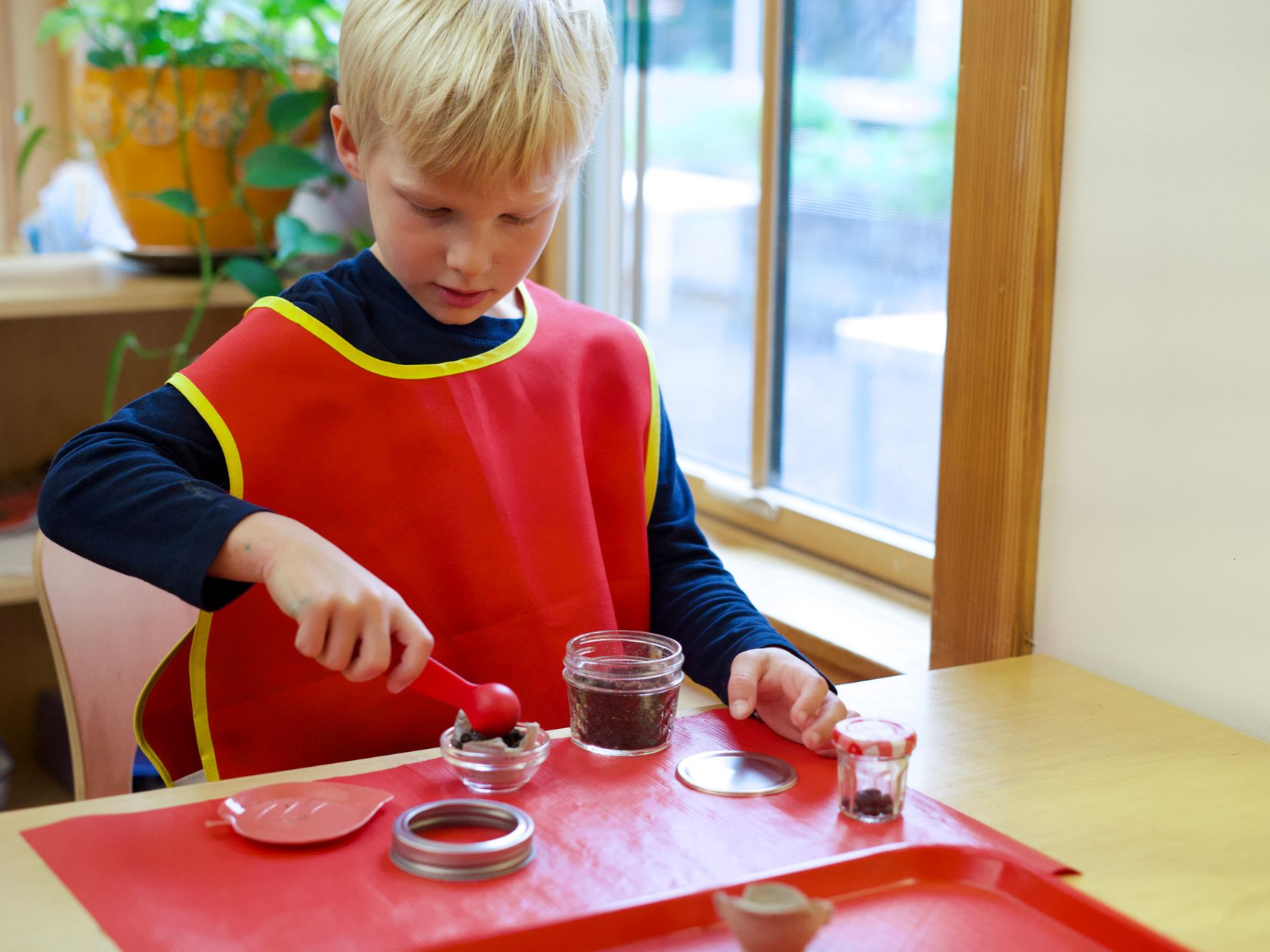
In our toddler and primary classrooms, practical life—activities like scrubbing a table, cleaning a window, watering a plant, or creating a flower arrangement—are set up so that all of the objects for a particular activity are arranged by color. This way young children can rely on color cues to know what objects go together and to independently access supplies, like getting a dry apron.


Sensorial materials often use color to help isolate a quality and help children develop their perception. For example, when discriminating dimensions with the pink tower, all of the cubes are the same shade of pink. Color-coding is also used to help children pair two identical sets of materials, like when matching sounds with the sound cylinders.


These forms of color-coding help children with both the order in their surroundings and also in constructing an internal sense of order.


Integrated Throughout


The color-coding gets even more interesting as children move into more academic subjects, like language, mathematics, and even geography.


When our primary children begin to use puzzle maps, they start with the continent map, a two-dimensional representation of Earth, and the continent globe, which shows the planet as a sphere. The puzzle map and the globe show the continents, and each is painted a distant color: North America is orange, South America is pink, Europe is red, Asia is yellow, Africa is green, Oceania is brown, and Antarctica is white. As children begin to learn the physical representation of each continent, they also associate a color with that continent. All other learning materials that involve the continents–such as picture packets, information cards, or booklets–maintain this color scheme. 


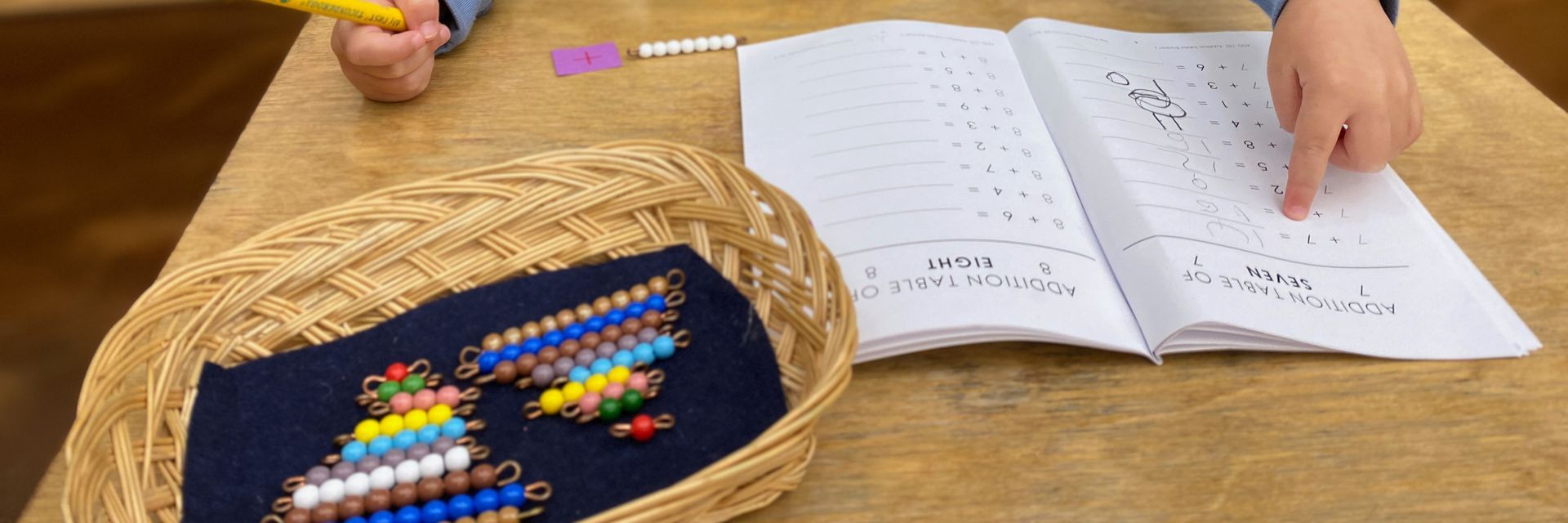
In the math materials, children learn to associate a quantity with both the number of beads represented and the color of those beads. The beads are the same size but change only by the number on the bead bar and the color. So a ten bar is always constructed of ten gold beads, a nine bar with nine dark blue beads, eight with brown, seven with white, six with light purple, five with light blue, four with yellow, three with pink, two with green, and one with red. This color scheme is consistent throughout all the math materials that use the bead bars, from the simplest lessons in the primary to advanced cubing and cube roots in the elementary and beyond. 


Similarly, there is clear and consistent color coding in other materials and concepts, such as with the hierarchy of numbers to designate place value or the role of different parts of speech with the grammar materials. 


Strengthening Neural Pathways


While this color coding does continue to help with organization and structure, now the color also helps children with their cognition and memory. Color has long been used as an effective tool in marketing, through brand recognition, consumer attitude, and purchasing decisions. 


How the brain processes color impacts our children’s attention, comprehension, and retention. Dr. Maria Montessori may not have had all the current-day studies at her disposal, but she did recognize the power of color in the learning process. 


We now know that color connects neural pathways and integrates different forms of intelligence, which allows learners to construct more consolidated meaning and make deeper cognitive connections with content. 


When learning the quantity of six, children count the six light purple beads on the bar to determine the quantity of six. At the same time, neurologically they are creating pathways in their brain for quick and easy recall when they see the light purple bead bar so they can immediately think “six” in the future rather than having to count the beads. 


Later, when children start to use the bead bars for advanced work with compound multiplication, the distributive law, squaring, cubing, and so much more, the neural connections they have are strengthened by both a clear and concrete understanding of the quantity and the associated color. 


Leading to Abstraction


The color-coding in math, language, and other subjects, also helps children move from the very concrete to more abstraction and symbolic representation. 


Because they learn to associate nouns with black equilateral triangles and verbs with red circles, as children analyze sentence structure they can begin to parse out the subject and predicate by using those two color-coded shapes and eventually even just the color. 


With the understanding that our decimal system place values have associated colors–units are in green, tens are blue, hundreds are red–children can better conceptualize the pattern in the numerical hierarchies because unit thousands are also green, ten thousands are blue, hundred thousands are red, and then unit millions are green, and so on. 


This color-coding also helps when we move into operations with larger numbers and quantities. When children move from very tangible representations of a bar of ten beads to represent ten and a square of one hundred beads to represent a hundred, they use small color-coded tiles with just the color and number. Thus children can manipulate a blue tile with 10 printed on it and a red tile with 100 printed on it, and (thanks to the neural pathways established) fully understand what those tiles represent as they add, subtract, multiply, and divide. 


A Powerful Aid


The power of color is fully integrated throughout Montessori classrooms and provides an amazing aid to children’s cognitive development. In addition to helping memory and learning, the color brings beauty and appeal to our learning environments while also supporting children’s independence!


We recommend coming to see this for yourself. There are so many examples of how color brings learning to light. Schedule a tour today!
Preschool aged child sitting on the floor with a puzzle map of Australia
By Meagan Ledendecker June 1, 2026
Montessori geography materials help children explore the world through hands-on learning, imagination, and real-world discovery.
Two preschool aged children sitting at the top of a slide, smiling and holding hands
By Meagan Ledendecker May 28, 2026
Discover how Montessori nurtures intrinsic motivation by replacing rewards and punishment with curiosity, confidence, and self-discipline.
Image of a preschool aged girl standing in front of an ironing board with a spray bottle and fabric
By Meagan Ledendecker May 25, 2026
When children struggle, Montessori asks: what's in the way? Explore how the prepared environment helps children find their way back to themselves.
By Meagan Ledendecker May 18, 2026
If you've spent any time in a Montessori early childhood classroom, you've likely noticed the sandpaper letters on the shelf: elegant, tactile, traced by small fingers again and again. And if you've looked closely, you may have noticed something that surprises many families. Those letters are in cursive. In a world where most children learn to print first, Montessori's cursive-first approach raises questions. Why cursive? Why so early? The answers reach back to Dr. Maria Montessori's own careful observations of children, as well as forward to what modern neuroscience is now confirming about the developing brain. What Dr. Montessori Actually Observed Dr. Montessori was a meticulous observer of children, and her thinking about writing developed through years of direct experimentation. One of her core observations was that children naturally gravitate toward curved, flowing lines rather than the rigid, straight strokes that were (and often still are) the starting point for teaching print. She noticed this pattern across multiple contexts. When children who were learning to write began with rows of straight strokes, their attention would gradually drift, and the straight lines would slowly transform into curves, as if the child's hand were following its own natural inclination. And when children drew spontaneously by tracing figures in sand with a fallen twig, or scribbling freely on paper, they rarely produced short, straight lines. Instead, they made long, flowing, interlaced curves. Dr. Montessori paid attention. Rather than something random, she recognized the hand's natural motion expressing itself. Critical of standard teaching approaches that began with isolated geometric strokes, or regimented mark-making, Dr. Montessori saw that cursive script, with its connected, flowing letters, aligned far more naturally with the motions children were already making. It worked with the child's hand, rather than against it. The Neurological Case for Cursive Thanks to her keen observations, Dr. Montessori intuited benefits that research is now beginning to confirm. Modern brain science provides a compelling case for the value of cursive writing. This is especially powerful in early childhood, when the brain is forming the connections that will support reading, fine motor coordination, and cognitive development for years to come. Dr. William R. Klemm, writing in Psychology Today, summarized findings showing that learning cursive trains the brain to develop what researchers call “functional specialization,” or the capacity for optimal efficiency. Brain imaging studies show how multiple areas of the brain are activated simultaneously during cursive writing in a way that doesn't happen with typing or print. The integration of sensation, movement control, and thinking that cursive requires appears to support broader cognitive development in genuinely significant ways. Klemm also suggested that learning cursive trains the brain for more effective visual scanning, with potential benefits for reading speed and hand-eye coordination. In other words, the child who traces cursive sandpaper letters with their fingertips is developing neural pathways that support a wide range of future learning. Clarity, Beauty, and the Practical Benefits Beyond the neurological research, there are practical reasons that Montessori educators have observed over generations of practice. Cursive provides a better visual distinction between letters that are easily confused in print. Think about the pairs that trip up so many young learners: b and d, p and q. In cursive, these letters look different from one another, which reduces the visual confusion that causes so many children to struggle in the early stages of reading and writing. And then there is the matter of beauty, something Dr. Montessori took seriously in everything she prepared for children. She wrote that, in teaching writing, we should pay close attention to "the beauty of form" and "the flowing quality of the letters." Cursive handwriting, when developed well, is genuinely lovely. It is a form of penmanship that connects children to a long tradition of human expression through the written word. The Montessori approach treats handwriting as a craft worth caring about. What This Looks Like in the Classroom In a Montessori early childhood environment, the path to writing begins long before a child picks up a pencil. Practical life activities like pouring, spooning, buttoning, and lacing quietly help children develop the fine motor control and hand-eye coordination that writing requires. The sensorial materials train children’s pincer grip and refine the precision of small muscle movements. And the metal insets give children practice with the flowing, curved lines that build cursive letters. Then children begin using the sandpaper letters. While verbalizing the phonetic sound, children trace the letter with two fingers. Children feel the letter, produce its sound, and see its form. This multi-sensory experience engages multiple brain areas simultaneously and creates rich, layered associations that support both writing and reading development. By the time children are ready to write independently, they have been preparing their hand and mind for months, often without even realizing it. A Method Ahead of Its Time Dr. Montessori consistently arrived at insights that research has later confirmed. Her reasons for emphasizing cursive were rooted in direct observation of children. She watched children’s hands and their natural movements. She also looked to see what helped them and what created unnecessary struggle. Dr. Montessori wasn't following a trend or a theory. She was following the child. Decades later, brain imaging technology and developmental research are catching up to what Dr. Montessori saw. Flowing lines of cursive script, the sandpaper letters on the shelf, the careful preparation of the hand before children ever pick up the pencil. This is a deep and practical understanding of how children's minds and bodies actually work. For families curious about why Montessori makes this choice, the short answer is this: because children's hands already know how to make these movements. Montessori simply listens to what the hand is already telling us and builds from there. Visit our school in Lenox, MA and see the sandpaper letters and writing materials in action. We'd love to show you how the path to writing unfolds in Montessori.
Group of elementary students sitting cross legged on the floor looking at maps and timelines
By Meagan Ledendecker May 11, 2026
See how Montessori timelines make abstract time tangible for children, building historical thinking, imagination, and inner order through hands-on work.
Group of toddlers exploring various materials in a grassy, sunny outdoor space
By Meagan Ledendecker May 4, 2026
Discover how Montessori education nurtures children's deepest human needs — from exploration and meaningful work to belonging and spiritual growth.
Show More