The Significance of Food
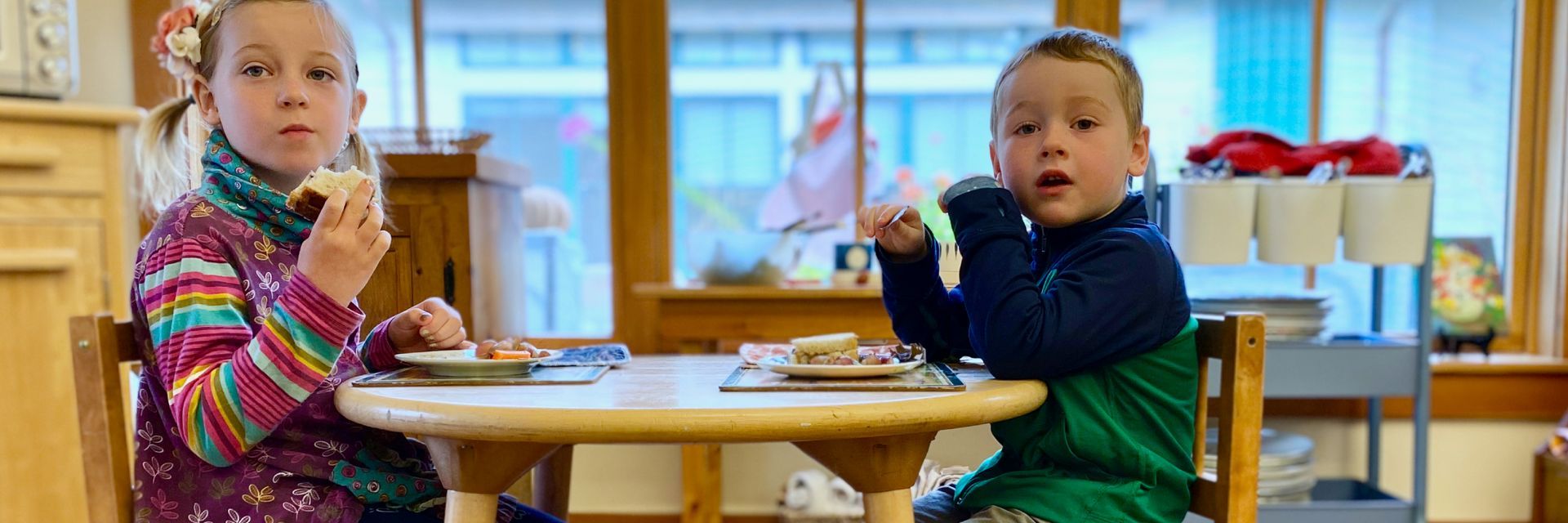
Throughout history, human survival has depended upon finding, preparing, and consuming different kinds of food. It is certainly understandable why food is a central part of our lives!
In Montessori, we recognize that food plays a bigger role in our young humans’ development. While nutrition is key, food also represents so much more! Therefore, we offer children the opportunity to use food as a way to develop a richer understanding of the world, master abilities to function independently, and develop a rich language for communication.
Understanding the World
As children develop their relationship with food, it’s important that they get to experience food in its natural state rather than only prepackaged. During the sensitive period for refining their senses, young children need to be able to explore their food sensorially so they can experience the taste, texture, smell, appearance (uncooked and cooked), and even any sound food might make.
In Montessori environments, we offer children opportunities to see and taste fresh foods, and even experience creating homemade breads and soups. Rather than opening a can or package, we start with natural raw ingredients and let the children put all the pieces together so they can see the steps involved in making different foods.
Whenever possible, we also try to give children meaningful connections to nature and its bounty, including when foods are in season. It’s a bonus when we can have fruits, vegetables, and herbs growing in planters or in the outdoor environment! Our goal is for children to develop a connection to food and its growth cycle throughout the year. In the process, children can learn about the parts of plants we eat: leaves, stems, roots, seeds, and flowers.
As children get older, they become more involved with the production and exchange aspects of food, from purchasing ingredients to preparing whole meals for others.
Mastering Abilities & Movement
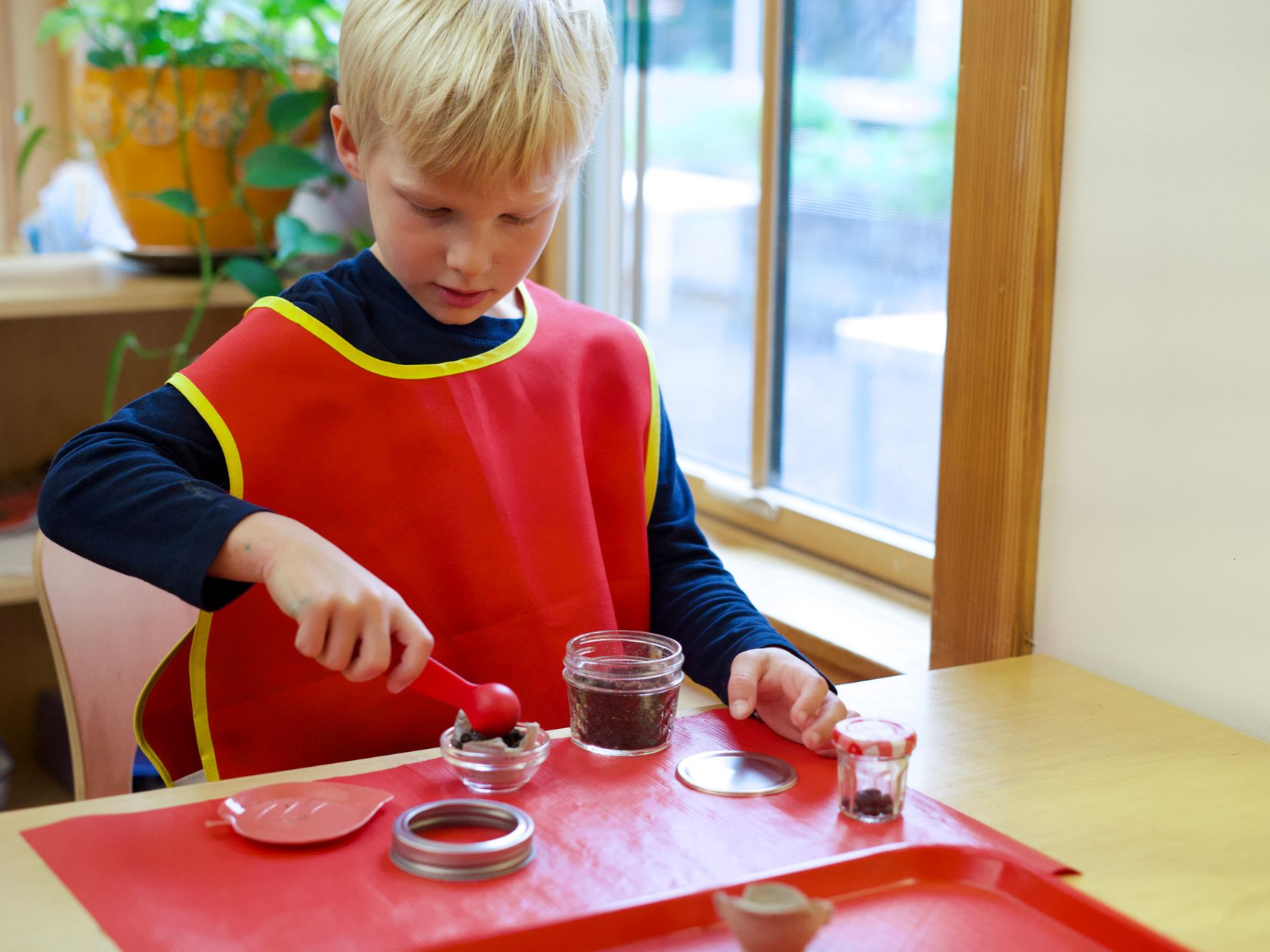
When children are preparing food, we start with basic skills such as cutting, dicing, peeling, grating, and juicing. As children gain more dexterity and skill, like holding and using a knife, we move toward teaching more complex skills, such as how to prepare the ingredients when following a recipe, or how to operate kitchen appliances such as toasters, openers, coffee makers, juicers, mixers, etc.
Whether using simple or complex equipment, children need items that they can learn to manage on their own. As such, we provide kitchen items that are sized appropriately. So children can master their movements and abilities, the kitchen tools must work for children and not cause unnecessary obstacles. Through plenty of repetition with food preparation and the varied kinds of tools involved, children begin to coordinate their movements and refine their skills.
Developing Language
While children are working with food preparation activities, adults take care to use precise terminology to name the ingredients, materials, and actions involved. When we do this, we help increase and expand children’s language and more permanently fix the concepts in their memory.
Table setting also offers a wonderful opportunity for language development. For the youngest children, we can say, “We need four plates.” Then together the adults and children can count to four. While our youngest children may not have an idea of the concept, they will set the plates one to one and lay the foundation for future math work. Table setting can also be an indirect lesson about prepositions. In a very natural way, we can ask children to put the spoon next to the plate, or to the right of the plate, or a napkin on top of the plate. The word “preposition” is never spoken but the experience gives children exposure to the concept of the function of a preposition in a sentence.
As children get older, we can introduce more complex language and also offer opportunities for them to interpret recipes, write their own instructional steps, and even tap into the expressive creativity involved with food preparation and presentation.
Cultural Importance
Where we live in the world dictates how and what we eat. Different cultures have disparate expectations about cooking or consuming. Yet in all cultural groups, people have explored and experimented with food. This makes sense, of course. People have needed to know what they can eat, if food needs to be cooked to be edible, how foods can be combined, and how our bodies might react to particular foods or food combinations.
Food also plays a key role in rituals and customs, from people coming together socially to religious ceremonies to relying on food for medical purposes. All cultures have some kind of beliefs about both the significance of food and different foods’ ability to make our bodies feel better or worse.
With all of the cultural richness woven into food, bringing in family traditions, customs, favorite recipes, and rituals around food can enhance the classroom community’s experience and provide a culturally responsive school-family partnership.
Food preparation is an essential part of our learning communities and a significant part of our children’s development. Please schedule a time to visit the school, see this work for yourself, and perhaps even share a bit about your own culinary traditions!