
5 Great Ways to Give This Spring
Research has shown time and again that giving boosts our own positive wellbeing and feelings of happiness. Read more about that here and here. As spring approaches, we are often reminded of new beginnings and may be filled with a new sense of energy and possibility. That’s why we thought this would be a perfect time for inspiration to tap into a spirit of generosity. We share five simple ways to give, and we hope these ideas will be easy to incorporate as a family!
Let’s make the early days of spring a time of joy and connection - for everyone.
1. Connect with your community
Think locally. What are some needs in your local neighborhood, town, or city? Are there already groups in place that are working to find solutions to problems? Are there organizations that support your community that could use some support themselves? Once you figure out who or what you’d like to help, find out what would be the most helpful action your family could take, and what would be a meaningful experience for both you and your child. Some ideas to consider:
- Libraries
- Animal shelters
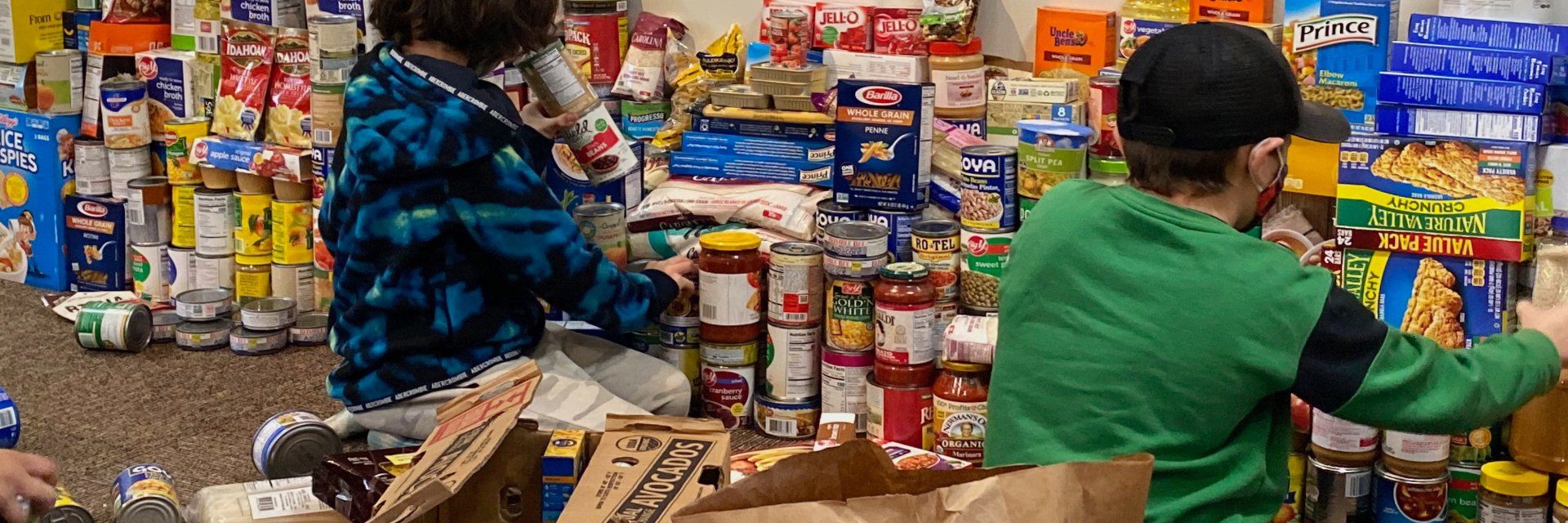
- Food pantries
- Community supported agriculture
- Nursing homes
- Land stewardship organizations
Volunteering your time together as a family will not only nurture your own sense of well- being, but will strengthen relationships and strengthen your community.
2. Find small ways to make someone smile
This tip is possibly the easiest and has some pretty big payback. The goal here is just to complete a random act of kindness for someone you know, or even a stranger. While this could be a one-time action, you and your child may enjoy it so much you might decide to do it more often! A few ideas:
- Bake cookies for friends and family and leave them in their mailboxes
- Help an elderly neighbor with yard work
- Give a genuine compliment to a complete stranger
- Write a thank-you note to someone who works hard for others
- Pay for the person behind you in the drive-through
3. Give to the earth
This is the time of year many of us wake up to the incredible changes all around us. The grass is growing, flowers are blooming, and baby animals are being born everywhere. While the earth goes through its annual renewal, it’s a nice time for us to reflect on ways we might do work to help it along. Children are especially attuned to these efforts, and there are many ways to get them involved.
The best part about this type of giving? You don’t even have to leave your own backyard. Simply participating in and taking a closer and more regular look at the ecosystem will be beneficial for everyone involved. Plant a garden, plant a tree, start composting, find ways to support pollinators, pick up trash in your neighborhood...the possibilities are endless.
If you have older children and are interested in expanding your horizons, you might participate in or organize a cleanup of a local park, greenspace, or waterway. Another option for teens might be to help with trail maintenance.
4. Create a list of worthy causes
Sometimes, a monetary gift is the best way to help an organization. We recognize that this is not an option that is available to everyone, and for those that are able to give financially, it might be $2 or $200. Consider what is possible for you and find ways to include your children! Some families encourage their children to give financially; others engage their children in the process of deciding who to give to.
There are many ways to go about this type of giving, but one idea might be to make a list of twelve organizations and give to one each month of the year. With the decision-making out of the way, you’ll get to look forward to each new month and the satisfaction we feel when contributing to a worthy cause.
5. Give to your school
We welcome any and all contributions. Some families are able to contribute financially, while others donate their time, talents, or resources.
- Do you have a flexible schedule? We are always looking for volunteers. Perhaps you are interested in substitute teaching, organizing events, or helping our guides gather and create resources and learning materials? If this sounds appealing, check in with our administration or your child’s guide to learn more.
- Do you have a skill or business that might benefit the school? We are always looking for ways to form new partnerships that are helpful to everyone involved; reach out if you have ideas.
- Giving might be as simple as an in-kind donation. Montessori families have given books for students, plants to beautify the campus, and building materials for special projects. If you have a special idea or think you might be able to help out with any ongoing work around the school, please reach out and let us know. We would love to chat!
No matter how you decide to give of yourself, we hope you find ways to involve the whole family. By instilling a sense of altruism when our children are young, this important characteristic will carry them through well into adulthood. They will know the joy of helping others, and the effects will outlast any single act.