A Booklist for Dog Lovers

Meagan Ledendecker • March 11, 2022
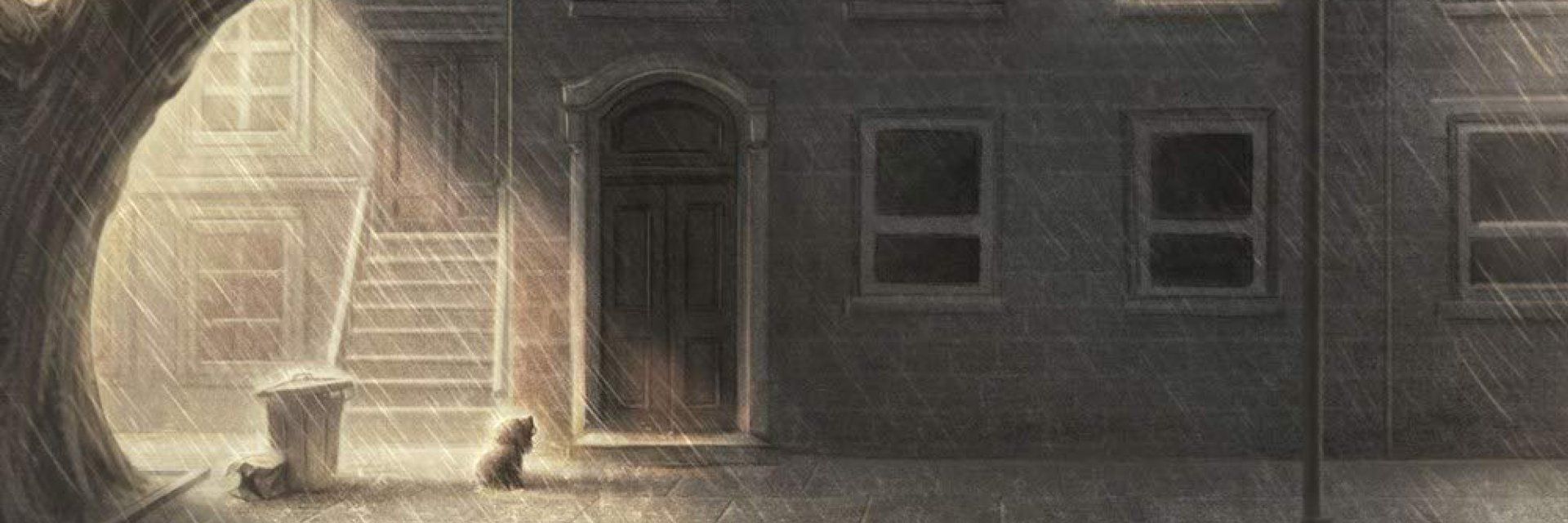
Illustration of a dog sitting outside a building in the rain

Last week we shared a lengthy list of books for cat lovers, so it’s only fair that we give dogs a turn. Where would we be without their lovable slurps, silly tail wags, and unwavering loyalty? So whether you and your family have a house full of dogs, or you just like to admire them from afar, these are the books for you.


As always, we have included titles for all levels. We always encourage families to visit their local public libraries, but links are included in case you’d like to purchase books (or just to learn more about them).


Enjoy!


Picture Books

Stormy: A Story About Finding a Forever Home by Guojing

This book will probably make you cry, and in the very best way possible. A gorgeously illustrated wordless picture book, it features a sweet and scraggly stray dog. A patient and kind woman notices it in the park one day, and takes her time gaining its trust. The two form a beautiful bond, which is tested one day when a terrible storm arrives.


Early Reader/First Chapter Books

Biscuit Goes to School by Alyssa Satin Capucilli, illustrated by Pat Schories

What child hasn’t dreamed of taking their pet to school? It’s easy to imagine that dogs feel the same way, especially when they look at you with those eyes as you leave the house. Biscuit definitely didn’t want to be left behind, and found a way to surprise everyone. This book is one in a classic series, so readers will have plenty more to enjoy.


Charlie & Mouse Lost and Found by Laurel Snyder, illustrated by Emily Hughes

This book somehow manages to be relatable, funny, inclusive, and adorable - all using language that is perfect for emerging readers. Charlie and Mouse go about their everyday life: searching for a lost blanket, going for errands with their mother, and (of course) falling in love with a lost dog. While the dog only stays with them for a little while, it sure makes a big impression. We especially love the page when Charlie and Mouse’s parents debate a big decision in front of their children.


Graphic Novels

Bear by Ben Queen and Joe Todd-Stanton

Patrick is 28 years old, lives alone, and repairs vending machines for a living. He’s also blind. When he decides a guide dog might be right for him, he ends up matched with Bear, a two-year-old lab-retriever mix. The two are perfectly suited to one another, and share a deep and special bond. One day, Bear begins to lose his own eyesight, which triggers the beginning of several challenging (yet beautiful) journeys.


Allergic by Megan Wagner Lloyd and Michelle Mee Nutter

Maggie just wants to feel a little less alone. Her twin brothers have each other and her parents are hyper-focused on a new baby that will soon join the family. Could getting a dog be the answer to her troubles? She pins all her hopes on a new pet, until she learns she is seriously allergic. She learns some lessons the hard way, but develops resilience, friendships, and bonds with her siblings along the way…in addition to finding a solution to her dilemma!


Middle Grade Fiction

Rez Dogs by Joseph Bruchac

This book written in verse is both timely and relatable. Malian takes a trip to visit her grandparents on a Wabanaki reservation. She loves spending time with them, but the whole world grinds to a halt with the arrival of the coronavirus in early 2020, and Malian ends up staying longer than she’d planned. A dog named Malsum shows up and becomes a part of her story. When everyone was adjusting to a new normal around the globe, some communities were reminded of complicated and painful parts of their collective past. This beautiful story illustrates how families care for one another in difficult times, and how the companionship of animals brings us more than we sometimes expect.


Both Can Be True by Jules Machias

A Pomeranian in need of rescue is central in this story about two middle schoolers who find themselves dealing with the complexities of growing up. Ash is non-binary (sometimes feeling like a boy and other times like a girl), which makes life pretty challenging. Daniel cries a lot and wishes he didn’t. Chewbarka needs to be cared for after being whisked away from a shelter that was going to euthanize him, so the two children team up to help. Feelings, misunderstandings, and society’s expectations complicated the situation as Daniel and Ash find their way.


Nonfiction

Bringing Back the Wolves: How a Predator Restored An Ecosystem by Jude Isabella, illustrated by Kim Smith

“In the late 1800s, The American government offered money - a bounty - to encourage people to hunt top predators: cougars, grizzly bears and wolves. The goal was to tame the West, the heart of cattle ranching, and rid the landscape of all threats to livestock. The results: hunters killed so many wolves that by 1926 there were no wolf packs left in Yellowstone National Park.” This book teaches readers about the importance of apex predators, how they affect local ecosystems and food webs, and what scientists and conservationists began doing at the end of the twentieth century to fix mistakes that had been made in the past. The trickle effect of wolves returning to Yellowstone has been astounding and will fascinate and educate readers.
Group of elementary students sitting cross legged on the floor looking at maps and timelines
By Meagan Ledendecker May 7, 2026
See how Montessori timelines make abstract time tangible for children, building historical thinking, imagination, and inner order through hands-on work.
By Meagan Ledendecker May 7, 2026
If you've spent any time in a Montessori early childhood classroom, you've likely noticed the sandpaper letters on the shelf: elegant, tactile, traced by small fingers again and again. And if you've looked closely, you may have noticed something that surprises many families. Those letters are in cursive. In a world where most children learn to print first, Montessori's cursive-first approach raises questions. Why cursive? Why so early? The answers reach back to Dr. Maria Montessori's own careful observations of children, as well as forward to what modern neuroscience is now confirming about the developing brain. What Dr. Montessori Actually Observed Dr. Montessori was a meticulous observer of children, and her thinking about writing developed through years of direct experimentation. One of her core observations was that children naturally gravitate toward curved, flowing lines rather than the rigid, straight strokes that were (and often still are) the starting point for teaching print. She noticed this pattern across multiple contexts. When children who were learning to write began with rows of straight strokes, their attention would gradually drift, and the straight lines would slowly transform into curves, as if the child's hand were following its own natural inclination. And when children drew spontaneously by tracing figures in sand with a fallen twig, or scribbling freely on paper, they rarely produced short, straight lines. Instead, they made long, flowing, interlaced curves. Dr. Montessori paid attention. Rather than something random, she recognized the hand's natural motion expressing itself. Critical of standard teaching approaches that began with isolated geometric strokes, or regimented mark-making, Dr. Montessori saw that cursive script, with its connected, flowing letters, aligned far more naturally with the motions children were already making. It worked with the child's hand, rather than against it. The Neurological Case for Cursive Thanks to her keen observations, Dr. Montessori intuited benefits that research is now beginning to confirm. Modern brain science provides a compelling case for the value of cursive writing. This is especially powerful in early childhood, when the brain is forming the connections that will support reading, fine motor coordination, and cognitive development for years to come. Dr. William R. Klemm, writing in Psychology Today, summarized findings showing that learning cursive trains the brain to develop what researchers call “functional specialization,” or the capacity for optimal efficiency. Brain imaging studies show how multiple areas of the brain are activated simultaneously during cursive writing in a way that doesn't happen with typing or print. The integration of sensation, movement control, and thinking that cursive requires appears to support broader cognitive development in genuinely significant ways. Klemm also suggested that learning cursive trains the brain for more effective visual scanning, with potential benefits for reading speed and hand-eye coordination. In other words, the child who traces cursive sandpaper letters with their fingertips is developing neural pathways that support a wide range of future learning. Clarity, Beauty, and the Practical Benefits Beyond the neurological research, there are practical reasons that Montessori educators have observed over generations of practice. Cursive provides a better visual distinction between letters that are easily confused in print. Think about the pairs that trip up so many young learners: b and d, p and q. In cursive, these letters look different from one another, which reduces the visual confusion that causes so many children to struggle in the early stages of reading and writing. And then there is the matter of beauty, something Dr. Montessori took seriously in everything she prepared for children. She wrote that, in teaching writing, we should pay close attention to "the beauty of form" and "the flowing quality of the letters." Cursive handwriting, when developed well, is genuinely lovely. It is a form of penmanship that connects children to a long tradition of human expression through the written word. The Montessori approach treats handwriting as a craft worth caring about. What This Looks Like in the Classroom In a Montessori early childhood environment, the path to writing begins long before a child picks up a pencil. Practical life activities like pouring, spooning, buttoning, and lacing quietly help children develop the fine motor control and hand-eye coordination that writing requires. The sensorial materials train children’s pincer grip and refine the precision of small muscle movements. And the metal insets give children practice with the flowing, curved lines that build cursive letters. Then children begin using the sandpaper letters. While verbalizing the phonetic sound, children trace the letter with two fingers. Children feel the letter, produce its sound, and see its form. This multi-sensory experience engages multiple brain areas simultaneously and creates rich, layered associations that support both writing and reading development. By the time children are ready to write independently, they have been preparing their hand and mind for months, often without even realizing it. A Method Ahead of Its Time Dr. Montessori consistently arrived at insights that research has later confirmed. Her reasons for emphasizing cursive were rooted in direct observation of children. She watched children’s hands and their natural movements. She also looked to see what helped them and what created unnecessary struggle. Dr. Montessori wasn't following a trend or a theory. She was following the child. Decades later, brain imaging technology and developmental research are catching up to what Dr. Montessori saw. Flowing lines of cursive script, the sandpaper letters on the shelf, the careful preparation of the hand before children ever pick up the pencil. This is a deep and practical understanding of how children's minds and bodies actually work. For families curious about why Montessori makes this choice, the short answer is this: because children's hands already know how to make these movements. Montessori simply listens to what the hand is already telling us and builds from there. Visit our school in Lenox, MA and see the sandpaper letters and writing materials in action. We'd love to show you how the path to writing unfolds in Montessori.
Image of a preschool aged girl standing in front of an ironing board with a spray bottle and fabric
By Meagan Ledendecker May 7, 2026
When children struggle, Montessori asks: what's in the way? Explore how the prepared environment helps children find their way back to themselves.
Group of toddlers exploring various materials in a grassy, sunny outdoor space
By Meagan Ledendecker May 4, 2026
Discover how Montessori education nurtures children's deepest human needs — from exploration and meaningful work to belonging and spiritual growth.
image of an adult and an elementary student sitting together on the floor reviewing a lesson
By Meagan Ledendecker April 27, 2026
Discover how peer learning, meaningful context, adult interaction, and order align Montessori with the science of how children learn best.
Image of three elementary students standing and crouching around a raised garden bed
By Meagan Ledendecker April 20, 2026
Does Montessori work? Explore the research behind movement, choice, interest, and intrinsic motivation in Montessori: The Science Behind the Genius.
Show More