
Discipline: The Positive Way
We are often asked about how we handle discipline in Montessori. It’s a great question because we think differently about discipline. Ultimately, we want our children to develop self-discipline and to understand how to balance being an individual within a community. We know that children need to have a sense of belonging and significance; they want to feel and be capable in the world. In the process of learning how to use their power constructively, we understand they will make mistakes along the way.
In thinking about discipline, it can be helpful to consider how we, as adults, want to be treated when we make a mistake. If we start arriving late for work, for example, how would we want our supervisor to respond? Imagine if we were reprimanded, especially publicly. We might slink into discouragement, feel resentful, or even lash out. Or maybe our supervisor doesn’t hold us to expectations of timeliness and we eventually don’t even feel the need to get to work promptly. However, if our supervisor kindly and quietly reminds us about arrival time expectations, perhaps even checking in about what is going on in our lives, their warmth and understanding can inspire us to do better.
Our children deserve and need the same kind of respect. They do best when they are encouraged rather than punished or pampered. Yet often we get caught in a cycle with our children. We punish or cajole. Our children rebel, maybe get back at us, or perhaps retreat. Things get worse. We may react and layout more consequences, as if making life more miserable will help our children make better choices. In reality, we are all more likely to do better if someone supports us to figure out what went wrong and how to make things right.
The practice of Positive Discipline aligns well with Montessori philosophy and helps us shift from being punitive or reward-based to being kind and firm at the same time. Positive Discipline is a respectful approach that acknowledges that when children feel worse, they do worse, and when children feel better, they do better.
To balance being kind and firm at the same time, while also ensuring that we are supporting our children in healthy ways, we can listen to what we sound like when we communicate with children. Are we issuing directives or asking for cooperation? Are we forging relationships or cutting off connections? Are we brashly belittling or kindly reminding?
One way to become more aware of talking
with our children rather than
to our children is to practice the Positive Discipline principle of connection before correction. Connection before correction means that we focus on creating closeness and trust instead of distance and hostility. If we notice a child has left their coat on the floor, it’s most effective to first connect with them in a loving way before reminding them to clean up after themselves.
Basic brain science explains why this is the case. Scolding, nagging, lecturing, blaming, shaming, yelling – all cause the recipient’s brain to shift into “flight, fright, or freeze” mode. Children (and adults, too) function best when they feel safe, trusted, and accepted.
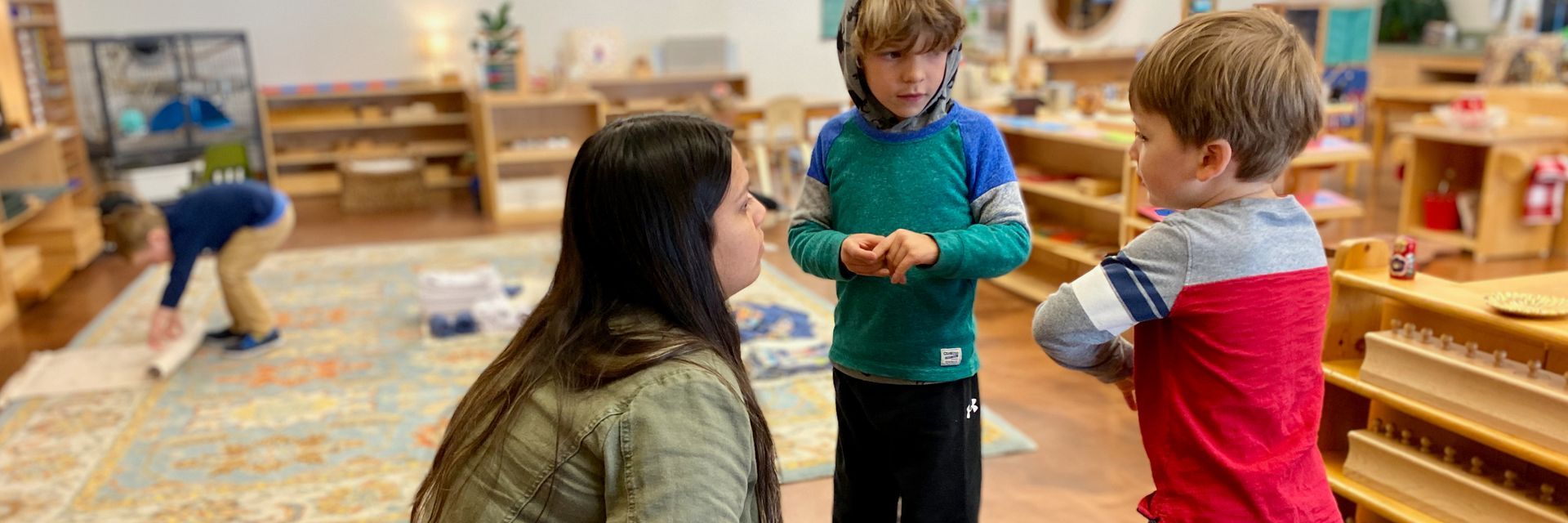
Connection before correction can be as simple as first getting to a child’s eye level and smiling before addressing the need at hand. Or perhaps it’s saying, “I love you, and the answer is no.”
Other ways of making a connection include active listening, spending special time together, validating feelings, asking questions, and giving hugs. Effective connections are made when everyone involved feels significance and belonging.
When children feel a connection, their sense of belonging and significance increases. Often this connection is enough to stop misbehavior and facilitate cooperation. The real bonus is that when we take the time to first connect rather than correct, we actually end up feeling better ourselves. Everyone benefits.
Positive discipline practices are an essential component of how Montessori communities function so effectively. We would love for you to come to visit our school and see how we are kind and firm at the same time, how we practice connection before correction, and how we see mistakes as opportunities to learn.
Schedule a tour to learn more!