
Power & Potential: The Sensitive Periods
Meagan Ledendecker • December 12, 2022

Have you ever noticed how sensitive young children can be to changes in routine? Even the slightest schedule adjustment can throw things off. On the positive side, young children also have an incredible ability to internalize the order of their daily activities. They intuitively know when something is supposed to happen during a regular day.


It’s also pretty amazing how quickly young children absorb the intricacies of language, how they progress so seamlessly from sitting to crawling to walking to running, or how they can be so focused on tiny details and objects. 


During these times in their lives, children seem to be compelled by an irresistible force. Think of the little one who wants to climb up the steps again and again. We can try to stop them, but they are undeterred! And despite the great effort involved, the activity almost seems effortless to them. 


In Montessori, we pay close attention to these periods of time when children show intense focus on mastering a new skill, creating deep understanding, or refining their abilities. We call these times “sensitive periods.” 


What are Sensitive Periods?

To paint the picture of sensitive periods, Dr. Maria Montessori used the example of newly hatched caterpillars. These young caterpillars hatch from eggs in protected nooks but are drawn toward the light where they can eat soft, young leaves at the ends of branches. The young caterpillars aren’t aware of the fact that going toward light will provide them with a food source. Rather, they are responding to a biological impetus. Once that need is satisfied, the caterpillars no longer have the desire to move toward bright light. That sensitive period is over and they shift into the next stage of their development.


Like the young caterpillars, young children in a sensitive period become incredibly absorbed with acquiring or mastering a new skill and hone in on the activity that aids their development. Neurologically, this is the time when groups of neurons become more active than others and establish key neural networks in children’s developing brains. These windows of opportunity are transitory and marked by children’s passionate focus on mastering a skill or characteristic. 


In Montessori we focus on four main sensitive periods:

  • Order
  • Language
  • Refinement of the Senses
  • Movement


Sensitive Period for Order

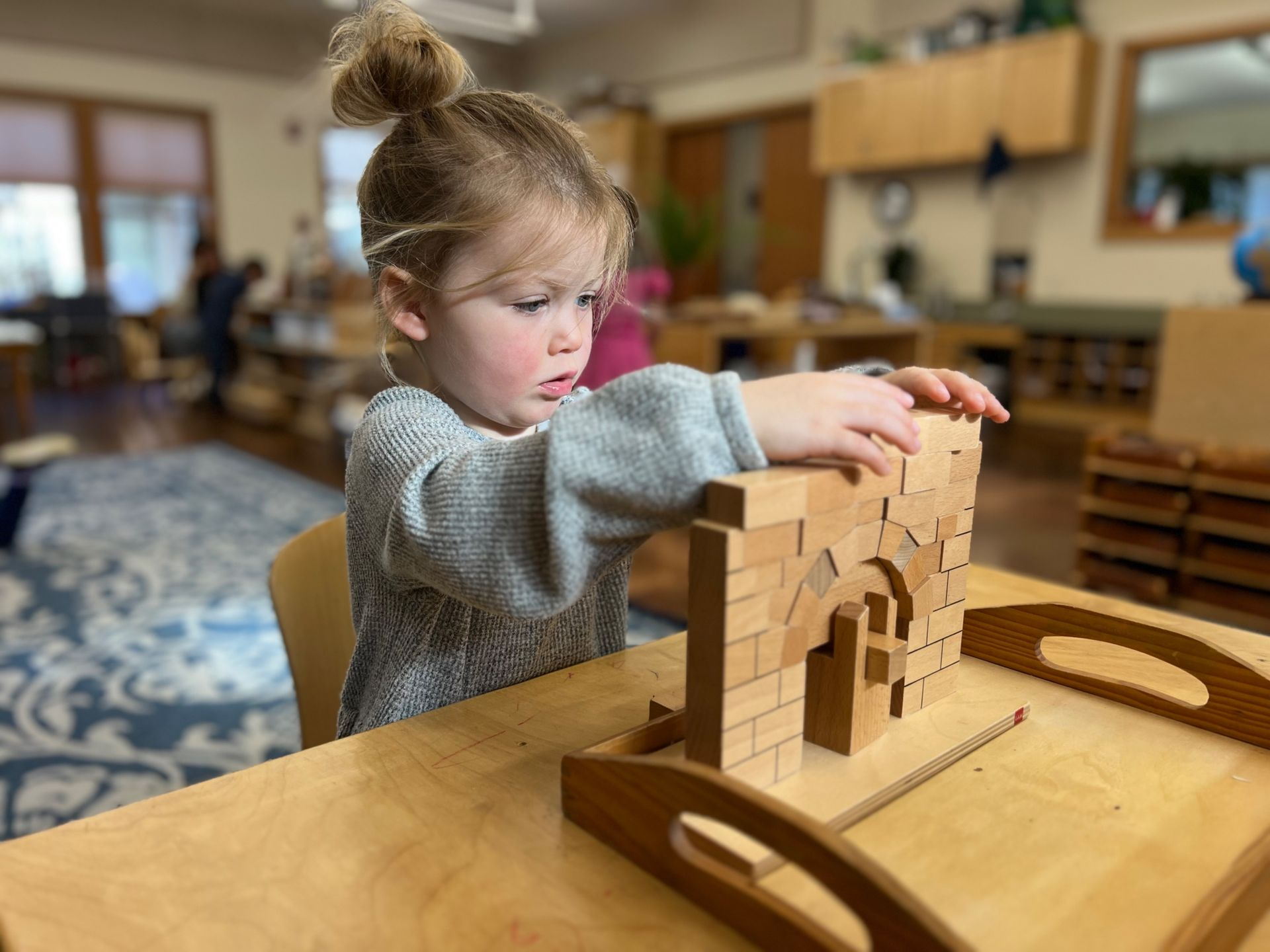
The sensitive period for order is most intense from birth to three years of age, although it does continue through age six. When children are under the influence of the sensitive period for order, we see their intense interest in the order of things, both in routines (time, order of events in day, etc.) and in their environment. Young children can show great distress if this order changes. 


As adults, we can appreciate that order makes our lives easier; planning our meals and picking out clothes ahead of time makes our week flow more smoothly. Organization and order are a convenience and make us more efficient. But young children need orderly environments in a different way. The order in their surroundings or routines becomes the basis for their relationship with the world. If that foundation of order is changing all the time, it’s like trying to build a house on a shifting foundation. Lots of changes in the environment or schedule cause children to have to constantly adapt, which diverts their energy away from other necessary forms of their development. When children have a predictable and ordered environment, they feel secure, trust their environment, and establish an internal order.


Sensitive Period for Language

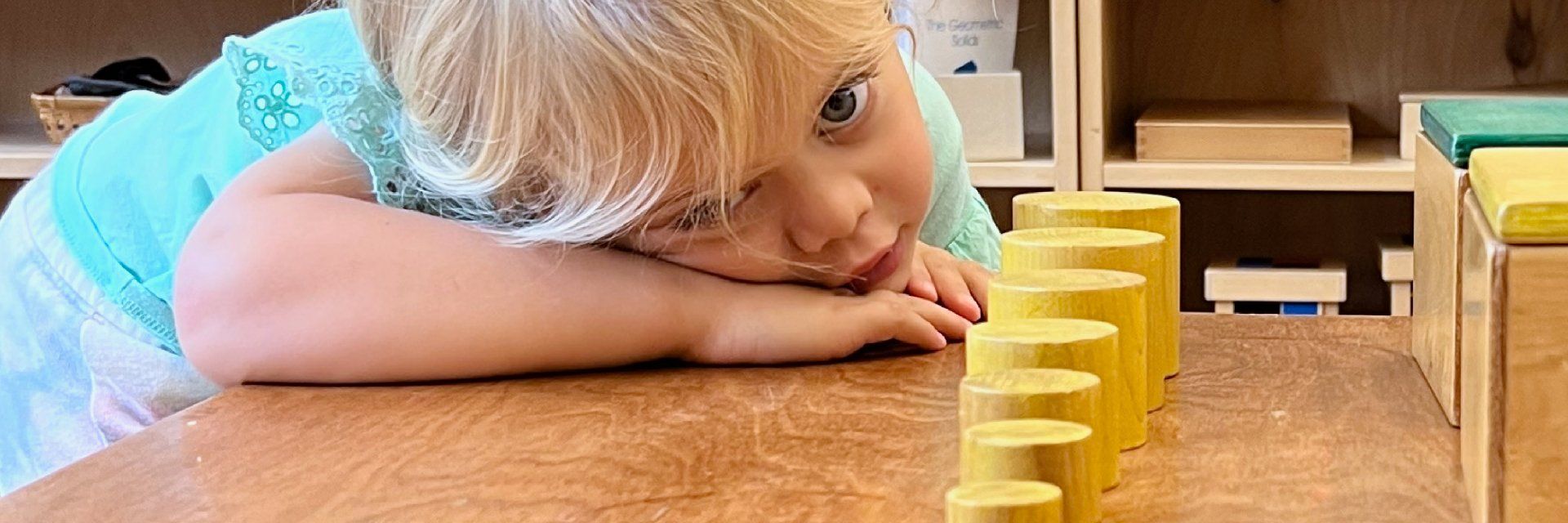
Children are effortlessly absorbing language from birth. The first three years of life are focused on the development of spoken language and the last three years are focused on the expansion and refinement of language, including writing and reading. During this sensitive period, children are learning the intricacies of the language spoken around them. They hear sounds and begin to try to imitate them. They hear the rhythm of phrases and sentences. They begin to internalize the nuances of grammar. 


Because children are absorbing all aspects of language, they need rich language experiences. Thus, we want to provide lots and lots of vocabulary by naming real things in the environment and engaging in meaningful conversation, even with our infants!


Sensitive Period for Refinement of the Senses

Young children are learning about their world through sensory experiences. The sensitive period for refinement of sensory perceptions starts at birth and begins to fade around four and a half.


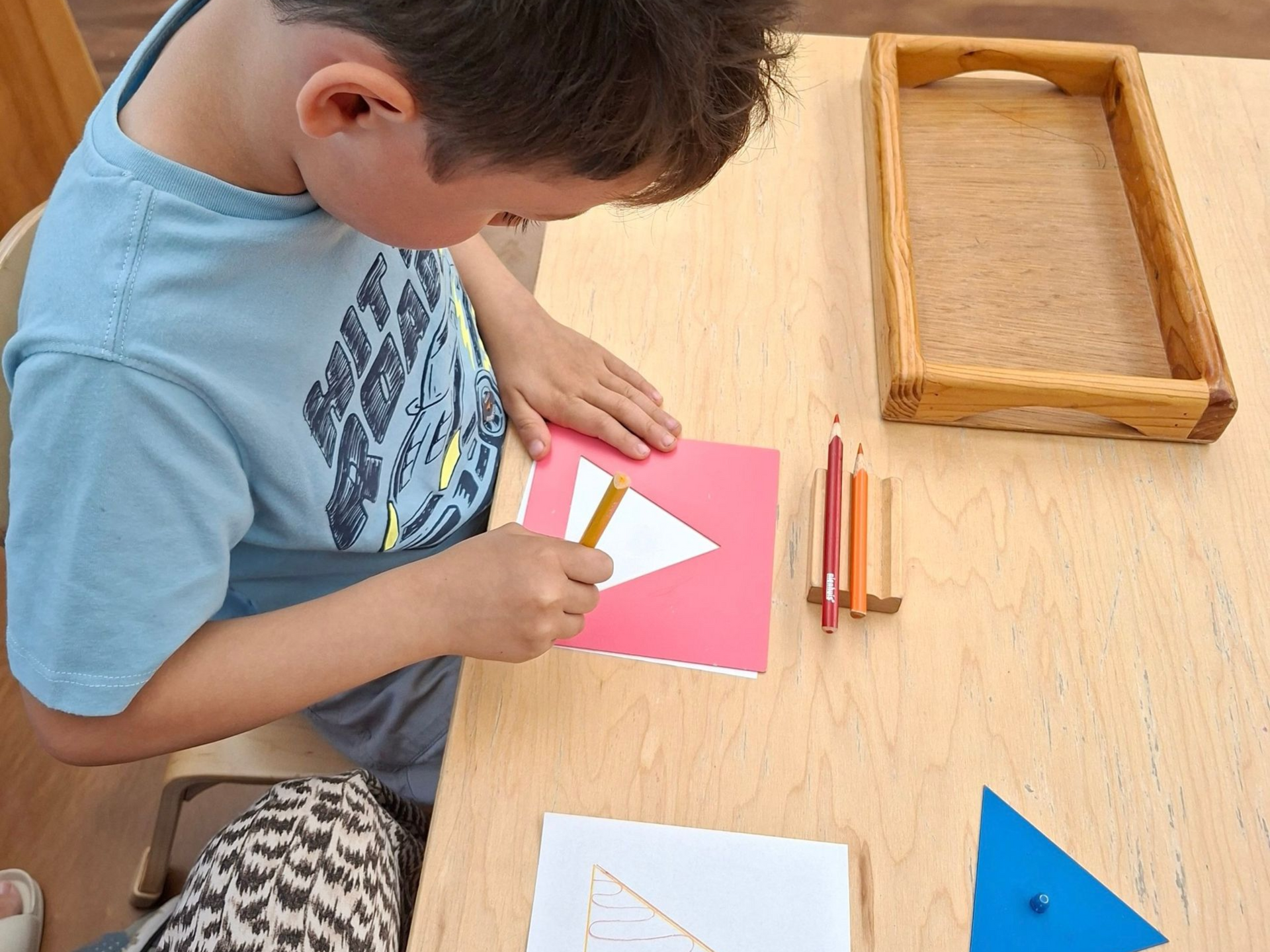
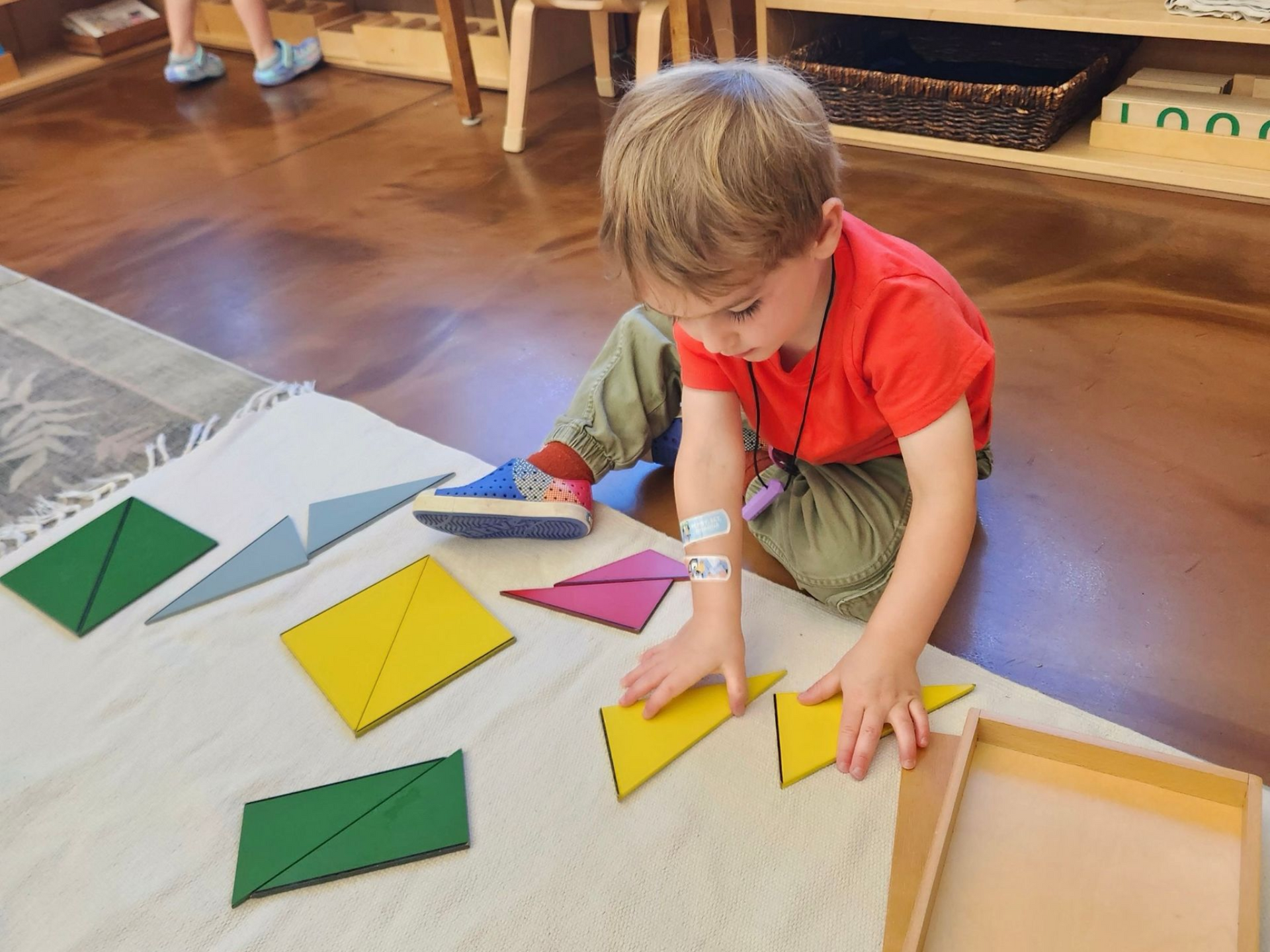
This sensitive period does not make children’s eyes see better, ears hear better, or tongue taste better, but it does help children distinguish between finer and finer differences. Children who have access to sensorially rich environments can begin to refine their senses, have clearer perceptions, and be able to organize and classify their impressions. Neurologically, this sensitive period is when children are creating neural networks that help them interpret their environment through visual, auditory, olfactory, gustatory, and tactile perceptions. An enriched experience gives children the opportunity to develop powers of sensory discrimination, like perfect pitch, that will last throughout a lifetime.


Sensitive Period for Movement

Movement is how children come into contact with their environment, express their developing personality, and develop their independence. So much movement development happens from birth, and then, from about ages two and a half to four, children focus on refining their movements.


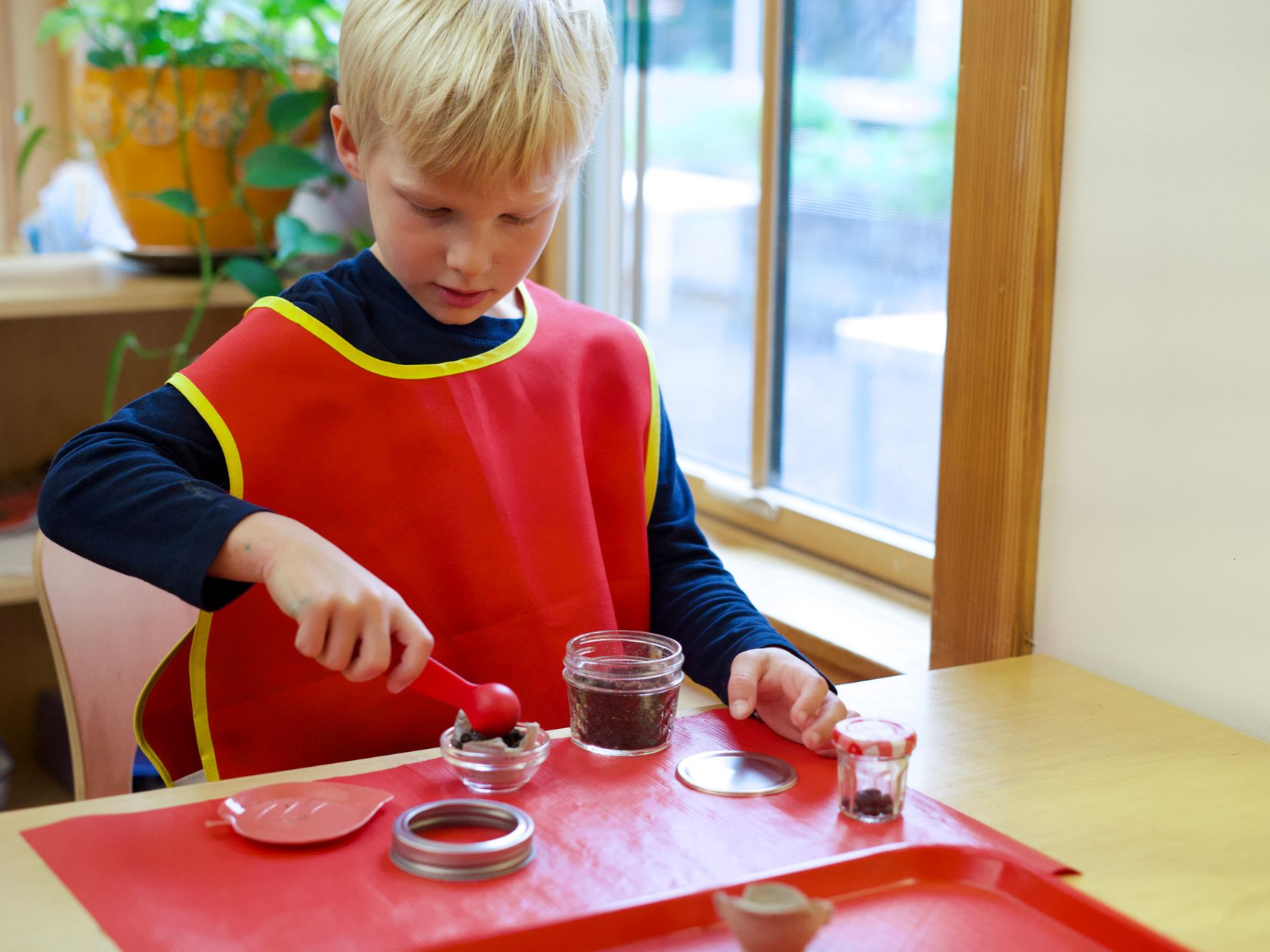
Children in this sensitive period benefit from having their movements directed toward some purposeful aim. For example, children want to imitate and participate in daily life, like cooking and preparing food. As parents, we often give our children play kitchens. With no other options, children will play with the pretend kitchen for a while, but this doesn’t satisfy them for long. They are much happier preparing real food for themselves and those around them. Meaningful activity, like food preparation, helps children refine their movement, adapt to their culture, and contribute to their community in a purposeful way. 


Power & Potential

Although “sensitive periods” refer to the particular times when children are most open to developing a particular skill or trait, the name is a profound reminder. We need to be sensitive–treading mindfully and with great care–to the power and potential of these periods of development. 


During the sensitive periods, children develop the skills and characteristics of order, language, refinement of the senses, and development and refinement of movement without apparent effort. Once the sensitive periods have faded, children can still achieve and develop certain characteristics, but they have to do so using work and effort. Plus, the skill or characteristic isn’t as fully integrated and absorbed. Think about how hard it is to learn a second language as an adult! 


Most delightfully, when children are in a sensitive period and their needs are met, they experience deep inner joy and a sense of satisfaction. We invite you to schedule a tour so you can come visit our school and see this joy and satisfaction in action! 
Preschool aged child sitting on the floor with a puzzle map of Australia
By Meagan Ledendecker June 1, 2026
Montessori geography materials help children explore the world through hands-on learning, imagination, and real-world discovery.
Two preschool aged children sitting at the top of a slide, smiling and holding hands
By Meagan Ledendecker May 28, 2026
Discover how Montessori nurtures intrinsic motivation by replacing rewards and punishment with curiosity, confidence, and self-discipline.
Image of a preschool aged girl standing in front of an ironing board with a spray bottle and fabric
By Meagan Ledendecker May 25, 2026
When children struggle, Montessori asks: what's in the way? Explore how the prepared environment helps children find their way back to themselves.
By Meagan Ledendecker May 18, 2026
If you've spent any time in a Montessori early childhood classroom, you've likely noticed the sandpaper letters on the shelf: elegant, tactile, traced by small fingers again and again. And if you've looked closely, you may have noticed something that surprises many families. Those letters are in cursive. In a world where most children learn to print first, Montessori's cursive-first approach raises questions. Why cursive? Why so early? The answers reach back to Dr. Maria Montessori's own careful observations of children, as well as forward to what modern neuroscience is now confirming about the developing brain. What Dr. Montessori Actually Observed Dr. Montessori was a meticulous observer of children, and her thinking about writing developed through years of direct experimentation. One of her core observations was that children naturally gravitate toward curved, flowing lines rather than the rigid, straight strokes that were (and often still are) the starting point for teaching print. She noticed this pattern across multiple contexts. When children who were learning to write began with rows of straight strokes, their attention would gradually drift, and the straight lines would slowly transform into curves, as if the child's hand were following its own natural inclination. And when children drew spontaneously by tracing figures in sand with a fallen twig, or scribbling freely on paper, they rarely produced short, straight lines. Instead, they made long, flowing, interlaced curves. Dr. Montessori paid attention. Rather than something random, she recognized the hand's natural motion expressing itself. Critical of standard teaching approaches that began with isolated geometric strokes, or regimented mark-making, Dr. Montessori saw that cursive script, with its connected, flowing letters, aligned far more naturally with the motions children were already making. It worked with the child's hand, rather than against it. The Neurological Case for Cursive Thanks to her keen observations, Dr. Montessori intuited benefits that research is now beginning to confirm. Modern brain science provides a compelling case for the value of cursive writing. This is especially powerful in early childhood, when the brain is forming the connections that will support reading, fine motor coordination, and cognitive development for years to come. Dr. William R. Klemm, writing in Psychology Today, summarized findings showing that learning cursive trains the brain to develop what researchers call “functional specialization,” or the capacity for optimal efficiency. Brain imaging studies show how multiple areas of the brain are activated simultaneously during cursive writing in a way that doesn't happen with typing or print. The integration of sensation, movement control, and thinking that cursive requires appears to support broader cognitive development in genuinely significant ways. Klemm also suggested that learning cursive trains the brain for more effective visual scanning, with potential benefits for reading speed and hand-eye coordination. In other words, the child who traces cursive sandpaper letters with their fingertips is developing neural pathways that support a wide range of future learning. Clarity, Beauty, and the Practical Benefits Beyond the neurological research, there are practical reasons that Montessori educators have observed over generations of practice. Cursive provides a better visual distinction between letters that are easily confused in print. Think about the pairs that trip up so many young learners: b and d, p and q. In cursive, these letters look different from one another, which reduces the visual confusion that causes so many children to struggle in the early stages of reading and writing. And then there is the matter of beauty, something Dr. Montessori took seriously in everything she prepared for children. She wrote that, in teaching writing, we should pay close attention to "the beauty of form" and "the flowing quality of the letters." Cursive handwriting, when developed well, is genuinely lovely. It is a form of penmanship that connects children to a long tradition of human expression through the written word. The Montessori approach treats handwriting as a craft worth caring about. What This Looks Like in the Classroom In a Montessori early childhood environment, the path to writing begins long before a child picks up a pencil. Practical life activities like pouring, spooning, buttoning, and lacing quietly help children develop the fine motor control and hand-eye coordination that writing requires. The sensorial materials train children’s pincer grip and refine the precision of small muscle movements. And the metal insets give children practice with the flowing, curved lines that build cursive letters. Then children begin using the sandpaper letters. While verbalizing the phonetic sound, children trace the letter with two fingers. Children feel the letter, produce its sound, and see its form. This multi-sensory experience engages multiple brain areas simultaneously and creates rich, layered associations that support both writing and reading development. By the time children are ready to write independently, they have been preparing their hand and mind for months, often without even realizing it. A Method Ahead of Its Time Dr. Montessori consistently arrived at insights that research has later confirmed. Her reasons for emphasizing cursive were rooted in direct observation of children. She watched children’s hands and their natural movements. She also looked to see what helped them and what created unnecessary struggle. Dr. Montessori wasn't following a trend or a theory. She was following the child. Decades later, brain imaging technology and developmental research are catching up to what Dr. Montessori saw. Flowing lines of cursive script, the sandpaper letters on the shelf, the careful preparation of the hand before children ever pick up the pencil. This is a deep and practical understanding of how children's minds and bodies actually work. For families curious about why Montessori makes this choice, the short answer is this: because children's hands already know how to make these movements. Montessori simply listens to what the hand is already telling us and builds from there. Visit our school in Lenox, MA and see the sandpaper letters and writing materials in action. We'd love to show you how the path to writing unfolds in Montessori.
Group of elementary students sitting cross legged on the floor looking at maps and timelines
By Meagan Ledendecker May 11, 2026
See how Montessori timelines make abstract time tangible for children, building historical thinking, imagination, and inner order through hands-on work.
Group of toddlers exploring various materials in a grassy, sunny outdoor space
By Meagan Ledendecker May 4, 2026
Discover how Montessori education nurtures children's deepest human needs — from exploration and meaningful work to belonging and spiritual growth.
Show More