Summer Is a Biology Lesson: Family Explorations of the Living World
Summer opens a door that the school year can only partially prop open. Suddenly, there is time (unhurried, generous time!) to kneel beside a flower and really look at it. To follow a beetle across a garden path. To press a leaf between the pages of a book and wonder later what kind of tree it came from. To ask questions that don't have quick answers and feel good about the not-knowing.
This is exactly the spirit of Montessori biology. And summer is perhaps the most natural season to live it.
What Montessori Biology Is Really About
In a Montessori Children's House, biology is woven into daily life through care of classroom plants, observation of animals, and walks outside where we can pause and say: Look at this. Our goal is not to produce children who can recite facts. We are focused on guiding children’s natural exploration through mystery, revelation, and wonder. The wonder that is caught rather than taught is as important as any information or structure we provide.
The adult's role in Montessori biology is less about knowing everything and more about modeling the joy of not knowing. When a child holds out a leaf or an insect and asks what it is, the most Montessori response in the world is: I'm not sure. Let’s find out together! A good field guide, a magnifying glass, and genuine curiosity are all the materials needed.
The Two Worlds: Botany and Zoology
Montessori biology in the early childhood years focuses on two interconnected worlds: the world of plants and the world of animals. Both are available everywhere this summer: in backyards, on neighborhood walks, at parks, along streams, in gardens, and even on window ledges.
The World of Plants
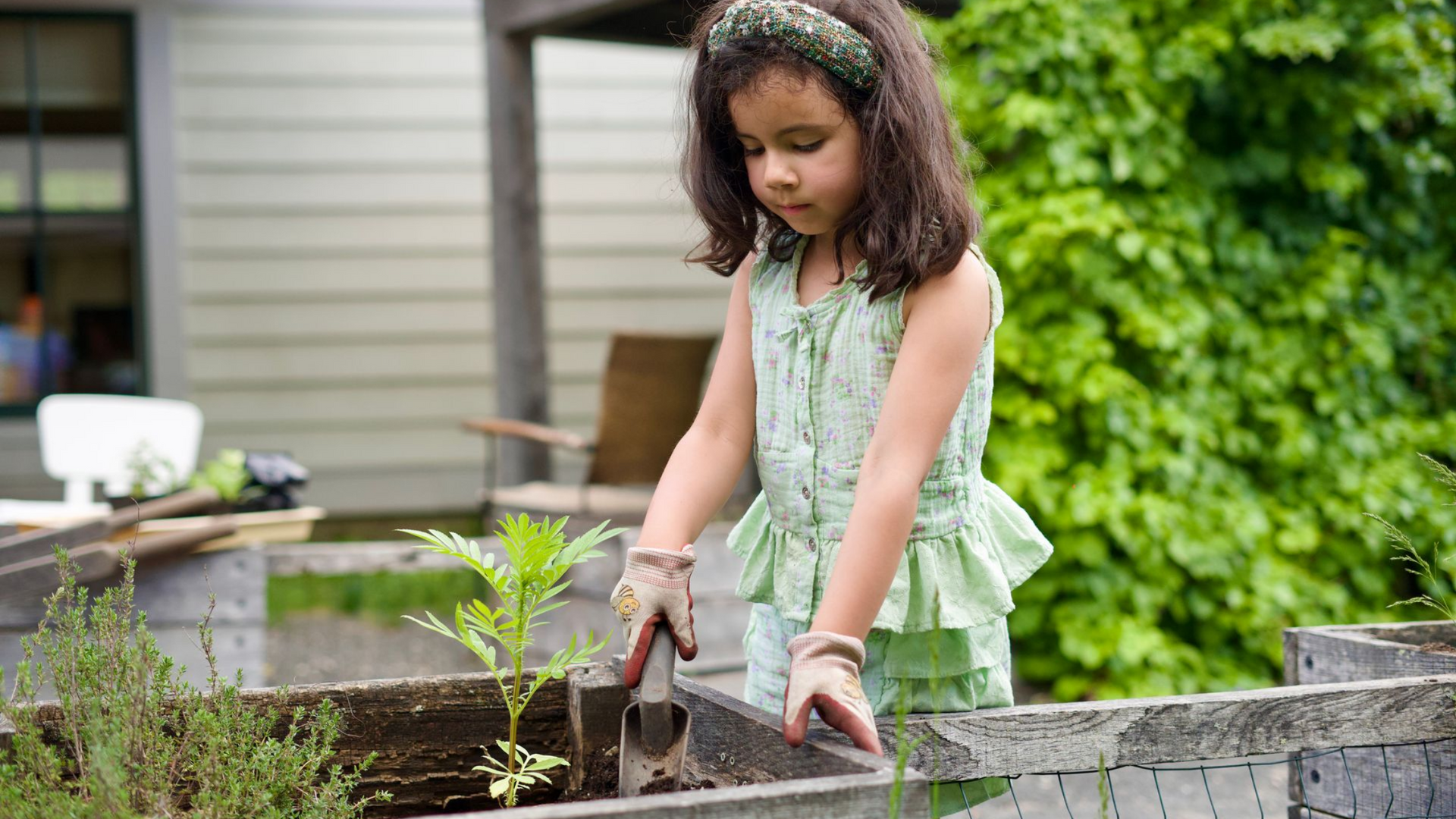
Daily life in summer naturally brings children into contact with plants in ways the school year rarely allows. The foundation of botanical awareness can come from a garden to tend, a flower to examine, and a walk where the trees change as you move from sun to shade.
For families wanting to bring more intentionality to this exploration, here are some Montessori-inspired ideas.
Begin with naming. Provide the real names of plants in your yard or neighborhood. Rather than commenting on the "flower" or the “tree," spend time learning the names of specific plants. It’s worth visiting the library to pick up a simple field guide. Children love to hear descriptive names, like black-eyed Susan or red maple, connected to living things they can see and touch.
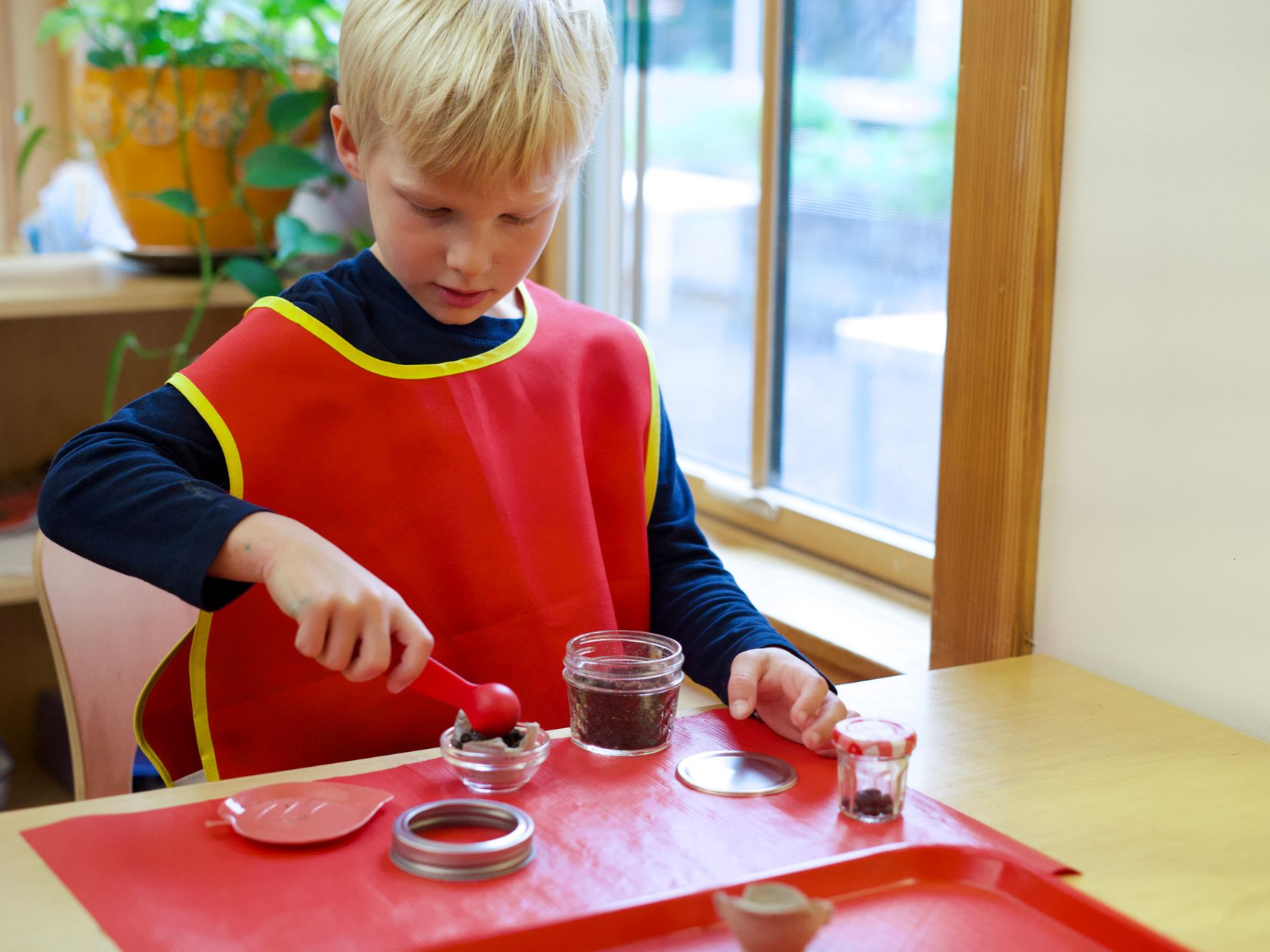
Explore the parts of plants. Pick a flower together and examine its parts: the petals that make up the corolla, the green sepals of the calyx beneath them, the stamen and pistil at the center. A magnifying glass makes this even more extraordinary. Use the real vocabulary: corolla, calyx, stamen, pistil. Young children absorb precise language with remarkable ease when we share it alongside the actual thing.
Examine leaves. Collect leaves of different shapes on a walk and look at them together. Notice the veins running through the blade, the petiole connecting leaf to stem, and the varying shapes of the apex and margin. Press a few between the pages of a heavy book, and return to them in a week, when they are dry, flat, and perfect.
Sketch and label. Older children who are reading and writing might enjoy keeping a simple nature journal this summer. They might draw what they observe and add labels to their illustrations. Rather than a formal exercise, think of it as an invitation to look closely enough to draw what they see.
The World of Animals
Summer brings the animal world into vivid focus. Birds at the feeder. Insects on the milkweed. Frogs at the edge of the pond. Earthworms surfacing after rain. Each of these gives a chance to observe, name, and wonder.
Here are a few Montessori-inspired approaches for summer zoology:
Set up an observation station. Having a bird feeder or bird bath in the yard or on a balcony is a simple invitation to at-home animal observation. Keep a bird book nearby and together practice using the guide to identify birds you see. Children who learn to identify the specific birds that visit their yard are building a foundation for scientific observation that will serve them throughout their lives.
Explore classification together. In Montessori zoology, children learn about the five classes of chordates (mammals, birds, reptiles, amphibians, and fish), as well as the broader world of invertebrates. Summer is full of concrete examples of every category! If you come across a frog, share that an amphibian is an animal that hatches in water, breathes through gills as a tadpole, and transforms into an adult that breathes through lungs and lives on land. When you spot a snake, point out that reptiles are cold-blooded and covered in scales. These simple descriptions provide a structure to help children organize what they are observing.
Follow a life cycle. Summer is a perfect time to observe metamorphosis in real time. Caterpillars becoming butterflies. Tadpoles becoming frogs. If possible, collect a few tadpoles in a jar of pond water and observe them over several weeks, returning them when the transformation is complete. Few experiences are more powerful for a young child than watching something change so completely and so slowly that they can follow every stage.
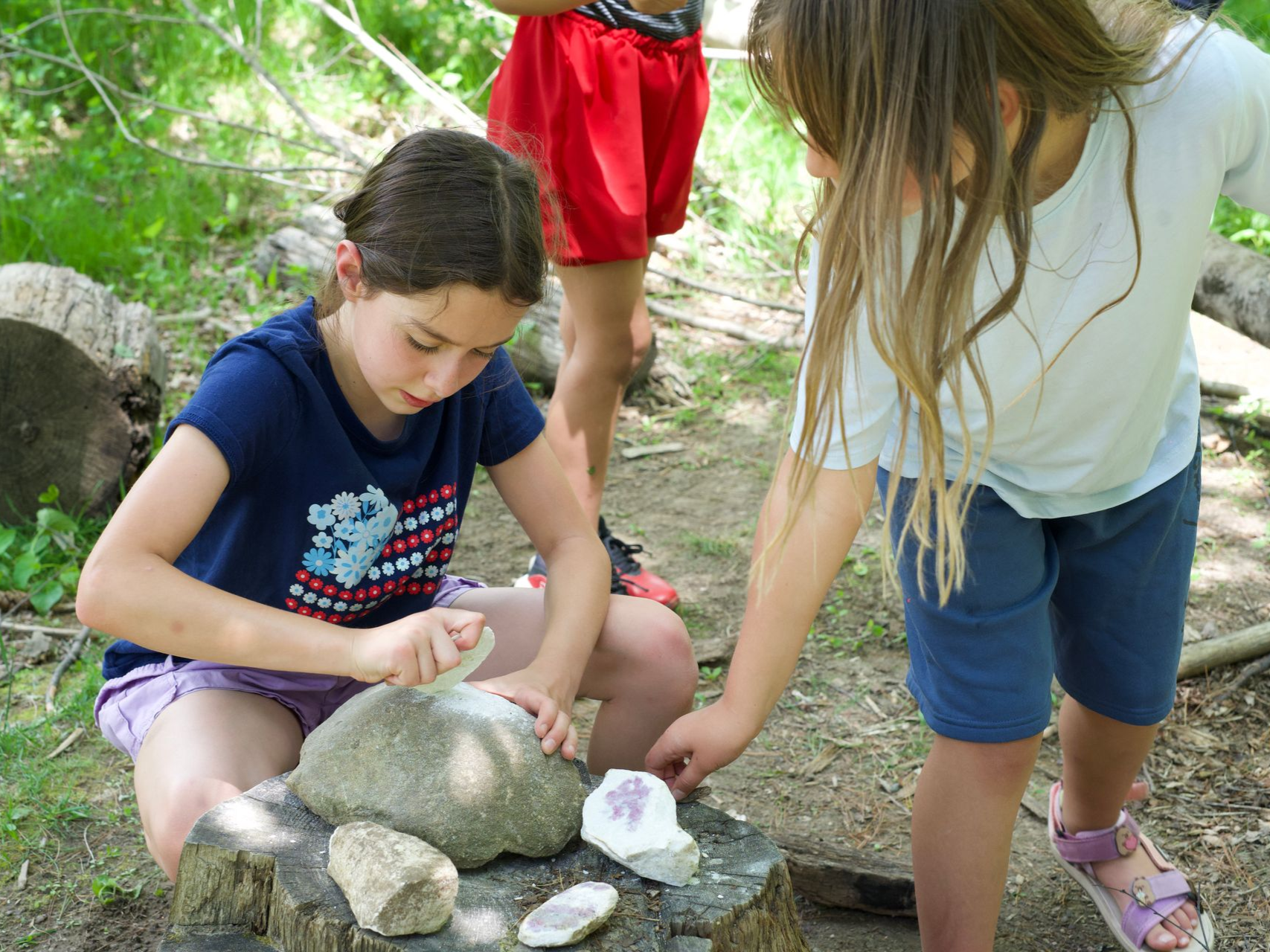
Look for invertebrates. Lift a rock in the garden and see what lives beneath it. Examine the underside of a leaf for insect eggs or larvae. Observe a spider's web in the early morning when it is covered in dew. Collect a few interesting insects and look at them with a magnifying glass before releasing them. This world of arthropods and annelids and mollusks is underfoot and all around, and children who learn to notice it are rarely bored outdoors again.
The Most Important Thing
In all of this, the spirit matters more than any specific activity. Montessori biology in the early childhood years is not about accumulating knowledge. Instead, it is about developing the habit of noticing. We want children to develop the disposition to stop, look, and ask. We also want children to understand, in the most concrete and living way possible, the interconnectedness of the world: how the flower and bee rely upon each other, how the earthworm nourishes the soil that provides nutrients for the plant. Each living thing has its place in a fascinating web of interconnections.
As adults, we don’t need to know everything. What we need to do is show our care about what is alive and growing and moving in the world around us. Children who grow up beside adults who pause to look at things become adults who pause to look at things.
We'd love to hear what your family discovers this summer. If you want to learn more about the gift of Montessori biology,
schedule a time to visit the campus in Lenox, MA.